What if the person pointing out roof damage is also the one who created it? Unsolicited inspections and urgent repair offers can make it hard to know what’s real. When you’re avoiding roofing scams in Hamilton, remember this: a credible decision starts with evidence, a clear scope of work and time to review, not pressure to sign.
It’s reasonable to feel uneasy when someone says your roof needs immediate, expensive work, especially after a storm. A useful assessment should help you understand your roof’s condition, not rush you into a purchase. Take time to review the findings and make an informed choice.
This guide covers common warning signs, ways to document and report suspicious activity, and practical steps to take if you’ve already signed a contract or paid. You’ll also learn about Ontario’s 10-day cancellation period for qualifying door-to-door contracts valued over C$50 and signed in your home. Verify the offer and decide what your roof actually needs.
Key Takeaways
- Hamilton Police’s March 2026 advisory highlights seasonal renovation-scam concerns. Unsolicited roof visits and claims of leftover materials warrant closer scrutiny.
- For avoiding roofing scams in Hamilton, compare what a salesperson says with details you can verify, including the written scope, price changes and payment terms.
- Document roof concerns with photos taken safely from the ground, and keep messages, estimates, contracts and payment records together.
- If an offer feels suspicious, pause, review any commitments and seek appropriate reporting guidance. Don’t confront anyone if you feel unsafe.
- NanoTech Exteriors serves Hamilton with roof repair, residential roofing and roof rejuvenation, plus a free roof assessment to help you understand your roof’s condition before deciding.
Avoiding roofing scams in Hamilton: why a roof concern deserves a calm response
An unexpected warning about roof damage can put any homeowner on edge. It can feel more urgent when someone at your door says they spotted a problem and can fix it right away. You don’t have to make a roofing decision on the spot. First, separate the claim about your roof from the pressure attached to the offer.
Hamilton Police’s March 2026 advisory warned homeowners about seasonal renovation scams during the spring and summer. The warning is a reason to stay alert, not to assume every contractor who approaches you is dishonest. An unsolicited visit alone doesn’t prove fraud. Consider the person’s conduct, whether the damage can be documented, and whether the proposed work is clearly explained.
A sound decision starts with evidence and time to review it. The guidance below explains why sudden roof claims can feel compelling and what Hamilton Police identified as warning signs. It also covers how to verify details and respond if an offer doesn’t feel right.
Why roofing offers can feel urgent
“I noticed damage while working nearby” can sound credible, especially if your roof is out of sight and a storm has just passed. A person may point to a shingle, flashing or another area and describe a leak risk. But an alarming explanation isn’t proof that damage exists, that it’s new, or that extensive work is needed.
A genuine concern can be checked and described without forcing an immediate commitment. Ask what area is affected, what evidence supports the claim and what work is proposed. A real roof issue deserves attention; pressure to sign before you can consider the details is a separate matter. Keep those questions distinct.
What Hamilton Police say homeowners should watch for
In its March 2026 advisory, Hamilton Police warned about unsolicited door-to-door renovation offers and seasonal scam patterns. The advisory identifies unusually discounted work and claims that a contractor has leftover materials as red flags to approach cautiously. These details don’t establish fraud by themselves, but they are good reasons to slow the conversation down and request clear, written information.
For example, a caller may say they can repair your roof at a steep discount because they have materials from another job nearby. Instead of treating the claimed deal as proof of value, look for a specific description of the damage and proposed work. A legitimate roof concern should be supported by evidence, not a “today only” opportunity or an explanation that can’t be checked.
That is the practical starting point for avoiding roofing scams in Hamilton: stay calm, record what you’re told and assess the evidence before agreeing to work. The next section covers warning signs in the approach, sales pressure, payment request and work itself, so you can judge the offer by its details rather than its urgency.
Roofing scam warning signs: spot pressure, changing prices, and mismatched details
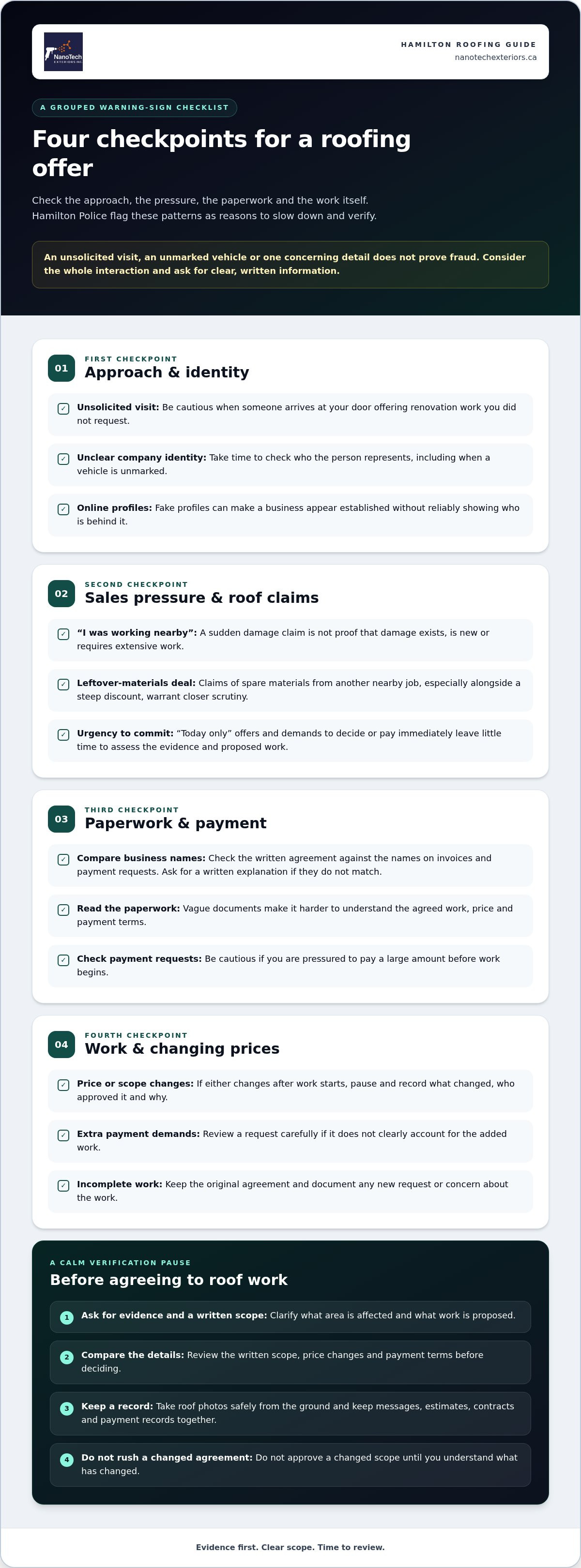
A roofing offer can look credible at first, then become harder to assess as details shift. Hamilton Police identify warning signs that may appear at different stages, from the first knock to the completed work. Look at the whole interaction, not just one detail. An unsolicited offer or an unmarked vehicle doesn’t prove fraud, but it’s reasonable to pause and verify before agreeing or paying.
How urgency and surprise damage claims work
A visitor may say they were working nearby and spotted serious roof damage, then offer to fix it using leftover materials at a steep discount. The claim may be genuine, but pressure to decide or pay immediately leaves little time to examine the evidence or understand the proposed work. Ask for the concern and scope in writing, then review them at your own pace.
- Approach: Be cautious with an unsolicited visit, an unmarked vehicle or a person whose company identity is unclear. Hamilton Police also flag fake online profiles, which can make a business appear established without reliably showing who is behind it.
- Sales pressure: Immediate-decision demands, claims that a deal is available only today, or promises based on leftover materials are reasons to slow down. A discount doesn’t show what work is needed or whether the offer’s details are consistent.
- Payment and paperwork: Compare the business name on the written agreement with the names on invoices and payment requests. A mismatch needs a clear explanation in writing. Be cautious of vague paperwork or pressure to pay a large amount before work begins.
- Work and price changes: If the price or scope changes after work starts, pause and document what changed, who approved it and why. Keep the original agreement and any new request. Incomplete work or a demand for extra payment without a clear account of the added work deserves careful review.
When the paperwork, payment, or work raises questions
Hamilton Police list sudden price increases after work begins and mismatched company names among warning signs. For example, an agreement may name one business while a payment request directs funds to a different name. Don’t assume the difference is harmless or proof of wrongdoing. Ask for a clear written explanation, keep copies, and don’t approve a changed scope until you understand what has changed.
Use the same evidence-led approach for online profiles and completed work. Look for consistency between the business name, contact details and written documents. A polished profile alone doesn’t establish legitimacy. If work appears unfinished, photograph what you can observe safely and compare it with the agreed scope. These checks turn a worrying interaction into specific questions you can assess.
For avoiding roofing scams in Hamilton, focus on whether the claim, paperwork, payment details and work align. NanoTech Exteriors offers a free roof assessment for Hamilton homeowners who want to understand their roof’s condition.
How to assess a Hamilton roof-damage claim without rushing into work
Assess a roof-damage claim rather than accepting or dismissing it on the spot. Separate what you can observe from what someone says it means. A ceiling stain, for example, is a visible symptom; it doesn’t establish where water entered, how extensive the damage is, or what repair is required. The same goes for shingles that appear displaced from the ground.
Separate visible roof symptoms from sales conclusions
Write down the specific observation and the salesperson’s explanation separately. If they point to an area you can see safely, note its location and take a photo from the ground. Don’t climb a ladder or walk on the roof to investigate. A photo can preserve what was visible, but it can’t confirm the full condition or cause of a roofing problem.
Use this comparison to keep the conversation evidence-led:
Pressure-based statement: “The roof is badly damaged and needs a full replacement today.” Document instead: The exact area identified, what damage the person says they observed, any photos or written findings they provide, and the reason given for immediate work.
Pressure-based statement: “Those shingles are definitely causing a leak.” Document instead: Whether you can see a leak or water stain from inside, when you noticed it, and where it appears. A visible symptom doesn’t prove its source.
Pressure-based statement: “The repair will cost more once we start.” Document instead: The original written scope and price, the proposed change, why it’s needed, and any revised amount or authorization request. Don’t rely on a verbal explanation alone.
Create a record before making a decision
Make a simple record while the details are fresh. Note the date and time of the visit, the person’s name, company name and contact information, and the exact claims made about the roof. Keep the estimate, written scope, payment request, contract, emails and text messages together. If the offer changes, save the earlier version as well as the new one.
From a safe spot on the ground, take clear photos of visible areas the person identified. You can also photograph an interior water stain or keep a dated image if a leak appears, without disturbing the roof. Compare your record with the written description: does it identify the same roof area and specific work, or move from a small visible symptom to a broad conclusion? Note any difference rather than trying to diagnose the roof yourself.
For more context on what a roof repair can involve, consult the article on roof repair in Hamilton. A documented symptom and a clear description of the proposed work make it easier to understand the claim and decide what questions remain. This measured approach supports avoiding roofing scams in Hamilton without assuming every reported concern is false or every symptom requires extensive work.
What to do after a suspicious roofing visit or request
A worrying interaction doesn’t mean you need to solve everything at once. Focus on preserving information and choosing a safe, informed next step. Don’t confront anyone or go to a work site if you feel unsafe. If there’s immediate danger, call 9-1-1.
- Pause further decisions. Don’t make another payment or approve additional work under pressure. If work is underway, avoid a confrontation and keep a record of what is happening from a safe place.
- Preserve the evidence. Save the offer, contract, estimate, payment requests, receipts, messages, emails, photographs and any online profile or advertisement. Keep original files where possible, and note when each item was received.
- Review what you agreed to. Compare the written scope, payment terms and company details with later requests or work performed. Record discrepancies without altering documents or making assumptions about intent.
- Seek appropriate guidance. For suspected fraud or a financial loss, check Hamilton Police’s current official reporting instructions before reporting. Consumer Protection Ontario can provide guidance on consumer and contract concerns, and the Canadian Anti-Fraud Centre accepts reports about fraud. Use official sources for current processes.
If you haven’t agreed to the work
An unsolicited pitch doesn’t require an immediate answer. Tell the person you need time to review the offer, and don’t let a claimed deadline rush you into signing or paying. Keep any written quote, business name, contact details, messages and other material they leave behind. If you decide to report suspicious conduct, consult Hamilton Police’s official website for current local instructions rather than relying on a number or process supplied by the visitor.
If you’ve signed, paid, or work has started
Put the paperwork and timeline in order. Save the signed agreement, invoices, receipts, bank or card records, photos of the work and all communications. Write a factual chronology while you remember the details: dates, who attended, what was promised, what was paid and when the scope or price changed. Keep your wording neutral. Authorities and qualified legal professionals can assess what the facts mean; avoid making legal conclusions yourself.
In Ontario, a qualifying door-to-door contract for goods or services valued over C$50 and signed in your home has a 10-day cooling-off period, during which you can cancel without giving a reason. If this may apply, review the contract and consult Consumer Protection Ontario promptly for guidance on your circumstances. Don’t assume every roofing agreement qualifies, or that this is the only possible remedy. If you paid by card or another payment method, contact the relevant payment provider through its official channel to ask about its dispute process.
Clear records make it easier to explain what happened and seek appropriate guidance. If you’re in Hamilton and need to understand your roof’s condition before deciding on work, book a free roof assessment with NanoTech Exteriors. A calm, evidence-led approach is central to avoiding roofing scams in Hamilton.
A clear next step for Hamilton homeowners: understand your roof before deciding
After a surprising roof claim, a useful next step is to understand the roof itself. NanoTech Exteriors serves homeowners in Hamilton with roof repair, residential roofing and roof rejuvenation. The company also serves Burlington, Oakville, Niagara, Kitchener, Guelph and Cambridge. A free roof assessment helps you understand the roof’s condition and consider relevant options before deciding on work.
What a free roof assessment can help clarify
An assessment gives you an opportunity to discuss observed roof concerns and understand what they may mean for your home. It doesn’t mean that a particular repair or treatment is automatically needed. The appropriate work depends on the roof’s actual condition. Cost varies by location, roof complexity and condition, so an accurate quote requires a free roof assessment.
This distinction matters. A roof concern should lead to an explanation of the findings and possible next steps, not an automatic recommendation for replacement. Depending on the assessment, the discussion may involve roof repair, residential roofing or roof rejuvenation. Not every aging roof needs treatment or replacement. The goal is to understand the roof before deciding what, if anything, should happen next.
Choose an informed next step, not a rushed one
Use the assessment to gather information, then take time to review it. Note the areas discussed, ask for the proposed scope in writing and compare the findings with your own records and observations. If replacement has been raised, learn what signs can indicate that a roof may need replacing before treating a salesperson’s conclusion as settled. Decide once the condition and options are clearer.
A credible process leaves room for questions. Review the assessment and tailored quote before making a decision. That calm, evidence-led approach is central to avoiding roofing scams in Hamilton, and it helps ensure the work you choose reflects your home’s needs rather than someone else’s urgency.
NanoTech Exteriors provides a free roof assessment for Hamilton homeowners seeking a clearer picture of their roof. The assessment informs a tailored quote based on location, roof complexity and condition. Take time to understand the findings before deciding on work.
Arrange a free roof assessment with NanoTech Exteriors and take a measured next step toward understanding your roof.
Make your next roofing decision on your terms
A roof concern can feel urgent, but your decision doesn’t have to be. Give yourself room to understand the situation, consider the information in front of you and choose a next step that makes sense for your home. That steady approach is at the heart of avoiding roofing scams in Hamilton: urgency alone shouldn’t decide what happens to your roof.
If you’d like a practical starting point, NanoTech Exteriors serves Hamilton and offers a free roof assessment with a tailored quote. It’s a way to better understand your roof before deciding how to proceed, without letting an unexpected offer set the pace.
Arrange a free roof assessment with NanoTech Exteriors and move forward with clearer information and greater confidence.
Frequently Asked Questions
Is every door-to-door roofing offer in Hamilton a scam?
No. An unsolicited approach alone doesn’t prove fraud, but Hamilton Police identify door-to-door offers as a warning sign to assess alongside other evidence. Notice whether the person pushes for an immediate decision, changes the price after work begins, or uses different business names on documents and payment requests. For avoiding roofing scams in Hamilton, consider the whole interaction, not just how the conversation began. Pause and review current official guidance before agreeing to work.
What should I do if someone says my Hamilton roof needs urgent repairs?
Don’t agree to work based only on a verbal warning. Ask what the person observed and where, then make your own note of the claim. Save any written scope or photos they provide, and photograph visible concerns from a safe place, such as the ground or inside your home. A leak or displaced shingle is a symptom, not a complete diagnosis. If the interaction feels threatening, step away and prioritize your safety.
Can a roofing scammer pretend to be working nearby?
Yes. Hamilton Police warn that renovation scammers may approach residents door-to-door, claiming to be working nearby or to have noticed a property problem. That statement alone doesn’t establish whether the offer is legitimate. Record the person’s name, business details and proposal if you can do so safely. Be especially cautious if the claim comes with pressure to sign immediately, a discount tied to leftover materials, or terms that change during the conversation.
What if a roofer raises the price after starting the work?
Hamilton Police list sudden price increases after work begins as a warning sign. Compare the new request with your original agreement: is it a different task, an expanded scope, or simply a higher amount for the same work? Keep both versions, along with related messages and payment records, and note when the change was raised. If you suspect fraud or feel unsafe, consult Hamilton Police’s current official reporting guidance rather than relying on an explanation given under pressure.
How can I report a suspected roofing scam in Hamilton?
Check Hamilton Police’s current official reporting instructions and follow the route that fits your circumstances. A concise, factual account can help: include when the interaction happened, what was offered, who contacted you and what followed. Keep supporting documents available, but don’t post accusations or personal details online while the matter is being assessed. If someone is in immediate danger, use the appropriate emergency channel. Reporting options and instructions can change, so verify them through official sources.
What if I already paid someone who may have been running a roofing scam?
Paying doesn’t mean you should delete messages or give up on getting guidance. Preserve the transaction confirmation and any invoice, contract or receipt, then write down what was agreed, what was paid and what work, if any, was completed. If you paid by card, contact your card provider using its official contact details and ask about its dispute process. For suspected fraud, check current Hamilton Police instructions; a qualified professional can advise on your specific agreement.