The best roofing window may be the one you didn’t expect: waiting for fall can be the wrong move when a roof is already letting water in. The best time of year for roof work in Ontario depends on more than the calendar. Temperature, precipitation, roof condition and the type of work all affect whether a project can proceed safely and effectively.
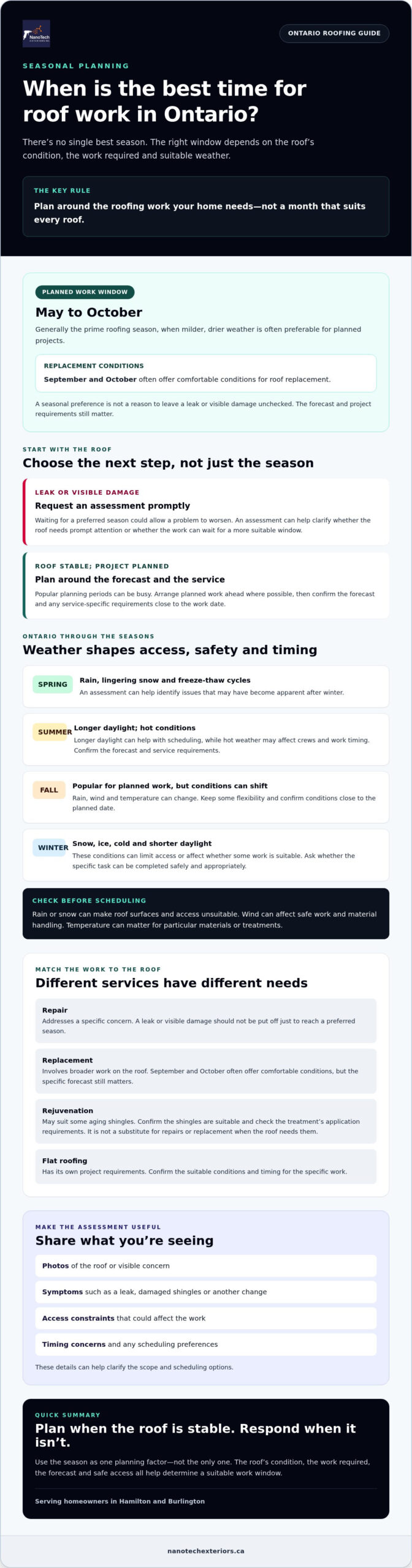
Milder, drier weather is often preferable for planned roofing. May to October is generally the prime roofing season, with September and October often offering comfortable conditions for replacement. But a seasonal preference isn’t a reason to leave a leak or visible damage unchecked. An assessment can help clarify whether the roof needs prompt attention or whether the work can wait for a more suitable window.
This guide explains how Ontario’s spring, summer, fall and winter conditions can affect roof repairs, replacement and rejuvenation. You’ll learn what to consider before booking, how weather can cause delays, and when it’s wiser to request an assessment than wait for an ideal season.
Key Takeaways
- The best time of year for roof work in Ontario depends on the roof’s condition, the work needed and suitable weather, not just the season.
- Rain, snow, wind and temperature can affect safe access and work conditions, so the forecast matters when choosing a date.
- Repairs, replacement, rejuvenation and flat roofing can have different timing needs; an assessment helps identify the right approach.
- Share photos, symptoms, access constraints and timing concerns during an assessment to help clarify the scope and scheduling options.
- Roof rejuvenation may suit some aging shingles, but it isn’t a substitute for repairs or replacement when the roof needs them.
What Is the Best Time of Year for Roof Work in Ontario?
There’s no single best season for every roofing project in Ontario. A suitable work window depends on three things: the weather, the roof’s condition and the requirements of the service. If the roof is intact and the project is planned, you may have time to choose a convenient forecast. An active leak or visible damage is different. Waiting for a preferred season could allow the problem to worsen, so arrange an assessment rather than relying on the calendar.
Quotable rule: The best seasonal window is determined by the roofing work your home needs, not by a month that suits every roof.
Why spring, summer, and fall are common planning windows
Homeowners often plan roof projects for spring, summer or fall, when they hope for milder, more settled conditions. But Ontario’s weather shifts across the province and from week to week. The climate of Ontario includes seasonal differences in temperature and precipitation, so a calendar season can’t guarantee a suitable workday.
Demand is another scheduling consideration. Popular planning periods can be busy, which may affect how far ahead you need to arrange planned work. A booked date still needs to suit the roof, the forecast and the service’s application requirements. Confirm conditions for the specific project instead of assuming a season automatically makes the work suitable.
Why the roof and the work matter more than the calendar
Different projects have different needs. A repair addresses a specific concern; replacement involves broader work on the roof; rejuvenation may be an option for suitable aging shingles; and flat roofing has its own project requirements. For each service, consider the roof and weather conditions. If rejuvenation is being considered, confirm that the shingles are suitable and check the treatment’s application requirements for that roof.
If you’ve noticed a leak, damaged shingles or another change, don’t postpone an assessment just to reach a preferred season. The right next step depends on what’s causing the problem and how the roof is holding up. If you’re unsure whether the damage points to a repair or a larger project, read “How to Tell if Your Roof Needs Replacing” for signs to discuss with a roofing professional.
For homeowners in Hamilton and Burlington, the practical approach is simple: plan ahead when the roof is stable, but respond promptly when you see signs of damage. An assessment can help match the work to the roof’s condition and identify a suitable scheduling window.
How Ontario Weather Affects Roof Work Through the Seasons
Weather affects more than the start date. Rain or snow can make roof surfaces and access conditions unsuitable, while wind can affect safe work and material handling. Temperature may also matter for particular roofing materials or treatments. Ontario’s changing conditions can interrupt construction schedules, a challenge explored in research on extreme weather impacts. For homeowners, the practical takeaway is to plan around both the forecast and the specific work involved.
| Season | Typical considerations | Planning note |
|---|---|---|
| Spring | Rain, lingering snow, and freeze-thaw cycles can affect roof conditions and access. | Consider an assessment to identify issues that may have become apparent after winter. |
| Summer | Longer daylight can help with scheduling, but hot conditions may affect crews and work timing. | Ask about forecast conditions and any service-specific requirements. |
| Fall | A popular period for planned work, though rain, wind, and temperature can still change. | Keep some flexibility in the schedule and confirm conditions close to the planned date. |
| Winter | Snow, ice, cold, and shorter daylight can limit access or affect the suitability of some work. | Ask a roofing professional whether the particular task can be completed safely and appropriately. |
Spring and summer roof work: planning around changing conditions
Spring is a useful time to check the roof after winter. An assessment can help determine whether visible changes need attention and what work may be appropriate. Freeze-thaw cycles are one factor to consider when evaluating roof condition, but they don’t establish on their own what service a roof needs.
Summer schedules can be busy, and hot weather may affect crew conditions and the timing of work. A forecast is only one part of the plan. Before setting a date, confirm with the contractor which conditions and requirements apply to your particular service.
Fall and winter roof work: suitability depends on the task
Fall is a popular time to plan roofing, but it doesn’t guarantee a run of dry, calm days. Winter work may be possible for some projects, depending on the roof, weather and work involved. Repairs, replacement, rejuvenation and flat roofing can each have different requirements.
A forecast window is a planning signal, not a confirmed project schedule. If there’s an active leak or exposed damage, don’t wait solely for your preferred season. Seek an assessment to understand the roof’s condition and discuss appropriate next steps. You can also review roof repair and rejuvenation options as part of planning.
Which Season Suits Roof Repair, Replacement, or Rejuvenation?
The best time of year for roof work in Ontario depends partly on what the roof needs. A repair, a full replacement, roof rejuvenation and flat roofing don’t automatically share the same ideal conditions or urgency. The season can help with planning, but it can’t determine which service is appropriate. A qualified assessment considers the roof’s condition, the scope of work, the weather and service-specific requirements before a schedule is chosen.
- Roof repair: Address active leaks, exposed areas or worsening damage promptly. Start by understanding the issue and suitable next steps.
- Replacement: For a planned project, coordinate the work with roof condition, weather and installation requirements. Damage may mean waiting isn’t sensible.
- Rejuvenation: Consider it only if the roof and shingles are assessed as suitable. Confirm treatment conditions for the specific service.
- Flat roofing: Timing depends on the roof, the work required and the conditions needed for that project. Ask which requirements apply before setting a date.
When roof repairs should take priority over seasonal preferences
An active leak, an exposed section or damage that appears to be getting worse calls for a prompt assessment, not simply a note to revisit the roof next season. Water entering the home or vulnerable areas left open to the elements may require timely attention. A roofing professional can advise whether temporary protection should be considered while permanent work is scheduled. Don’t climb onto the roof to investigate; share what you can observe safely from the ground or indoors.
Homeowners looking into repair options can consult information titled Roof Repair Hamilton Ontario. The next step still depends on the roof’s specific condition, rather than the page title or season alone.
How to schedule replacement or rejuvenation responsibly
For a planned replacement, ask how forecast conditions and the work involved affect the proposed timing. For rejuvenation, first confirm that the shingles are suitable for treatment. NanoTech Exteriors’ spray-applied roof rejuvenation treatment is designed to restore flexibility to aging shingles and may extend a roof’s lifespan by up to 15 years. It isn’t a universal alternative to repair or replacement, so confirm suitability and application requirements for the specific roof before choosing a date. Readers considering the treatment can look for information titled Roof Rejuvenation in Burlington, Ontario, then confirm suitability through an assessment.
Make the decision in order: assess the roof, establish the right scope, confirm service-specific conditions, then schedule around a suitable weather window. That approach helps avoid choosing a treatment or installation date before you know what the roof actually needs.
How to Choose a Roof-Work Window in Ontario
A good schedule starts with the roof, not a date circled on the calendar. Use this five-step process to distinguish urgent concerns from planned work, confirm what the project requires and leave room for Ontario’s changing weather. The best time of year for roof work in Ontario is the window that fits the roof’s condition, the service and the forecast.
A five-step seasonal roof-work planning checklist
- 1. Identify the concern. Note whether there’s an active leak, exposed area or damage that appears to be worsening. If so, seek an assessment promptly rather than waiting for a preferred season.
- 2. Arrange an assessment. Share clear photos taken safely from the ground, symptoms such as signs of water entry, and when you first noticed them. Don’t climb onto the roof to take pictures.
- 3. Confirm the recommended scope. Ask what work suits the roof’s condition, whether it’s repair, replacement, rejuvenation or flat-roof work, and which service-specific requirements apply.
- 4. Check practical constraints. Discuss roof and property access, any preparation needed around the home, your timing concerns and the forecast flexibility needed for the work. Confirm application conditions for a treatment before choosing its date.
- 5. Agree on a schedule and backup plan. Contractor availability matters alongside your preferred season. Ask how much flexibility may be needed if weather changes and what happens if the planned conditions aren’t suitable.
Questions to ask before confirming a date
Before the work is booked, get clear answers to a few practical questions. Which weather conditions could postpone or change the planned work? What should you move, cover or make accessible around the home? Who will let you know if the schedule changes, and how will updates be shared? These details help set expectations without treating a tentative forecast as a firm start date.
When discussing timing, mention anything that could affect access, such as a narrow driveway, an area that needs to remain clear or a schedule constraint at home. Useful context helps the contractor discuss a workable plan and weather buffer. If the roof concern changes while you’re waiting, share that update rather than assuming the original scope still fits.
If you’re weighing a seasonal window against the roof’s current condition, discuss your roof-work timing with NanoTech Exteriors. An assessment can help clarify the scope and the conditions to confirm before scheduling.
Plan Roof Work With a Local Ontario Roofing Professional
For planned work, schedule around the roof’s condition and the service requirements, then use the forecast to refine the timing. If there’s active leaking or exposed damage, seek an assessment promptly rather than waiting for a preferred season. A local roofing professional can help determine whether the roof needs repair or replacement, or may be suitable for rejuvenation.
What a local assessment can clarify
An assessment helps connect visible concerns with an appropriate scope of work. Ask what the findings mean, which service is recommended and why. If rejuvenation is being considered, confirm that the roof is suitable and ask about the treatment’s application requirements. Before scheduling, request a clear description of the work and discuss weather dependencies that could affect the date.
NanoTech Exteriors offers roof repair, residential roofing, roof rejuvenation and flat roofing. These services aren’t interchangeable: rejuvenation may be an option for suitable aging shingles, but it isn’t a universal replacement for repairs or a new roof. The recommendation should reflect the roof’s assessed condition, not simply the season or a homeowner’s preferred project.
Choosing a local service area and next step
NanoTech Exteriors serves homeowners in Burlington, Hamilton, Oakville, Niagara, Kitchener, Guelph and Cambridge. For broader service guidance, look for Residential Roofing in Burlington, Ontario. When discussing your project, share the signs you’ve noticed, any photos taken safely from the ground, access constraints and timing concerns. This context can help clarify the scope and scheduling considerations.
The decision rule is straightforward: address urgent concerns promptly, and schedule planned work when the roof, forecast and service requirements align. If you’re unsure what your roof needs, contact NanoTech Exteriors to ask about an assessment or learn more about its roofing services. There’s no need to choose a treatment or set a project date before understanding the roof’s condition and the work involved.
Choose a Roofing Plan That Fits Your Home
The best time of year for roof work in Ontario depends on the roof’s condition, the work required and suitable weather. Planned projects can be scheduled around service requirements and forecast flexibility. Active leaks or exposed damage call for a prompt assessment, not a wait for the preferred season.
A professional assessment can help determine whether repair, replacement, refurbishment, rejuvenation or flat roofing may be appropriate. Rejuvenation is an option only for roofs assessed as suitable, and treatment conditions should be confirmed before scheduling. That clarity helps you choose a sensible next step with fewer assumptions.
NanoTech Exteriors is a Burlington-based provider serving homeowners across Southern Ontario communities, including Burlington, Hamilton, Oakville, Niagara, Kitchener, Guelph and Cambridge. Its services include roof repair, rejuvenation, residential roofing, refurbishment and flat roofing. If you’re ready to discuss your roof’s condition and timing, request a roof assessment and plan your next step with NanoTech Exteriors.
Start with the roof, then choose the season. With a clear scope and a suitable weather window, you can move forward with greater confidence.
Frequently Asked Questions
What is the best month for roof work in Ontario?
There isn’t one best month for every roof or project. The best time of year for roof work in Ontario depends on the roof’s condition, the service required and suitable weather. Homeowners often plan work in spring, summer or fall, but conditions can change quickly and contractor schedules vary. For planned work, arrange an assessment and ask which weather and application requirements affect your project before choosing a date.
Can roof work be done in winter in Ontario?
Yes, some roof work may be possible in winter, but suitability depends on the task, roof conditions and weather. Snow, ice, cold temperatures, wind and shorter daylight can affect access, safety or the work itself. Ask a roofing professional to assess the specific project and explain any limitations. If you have an active leak or exposed damage, seek an assessment promptly rather than waiting for warmer weather.
Is summer the best time to replace a roof in Ontario?
Not automatically. Summer offers a common planning window, but busy contractor schedules and hot conditions can affect timing. Replacement needs to suit the roof’s condition, forecast and installation requirements. Ask how much flexibility to allow if weather changes, and confirm what conditions are needed for the work. If the roof has damage, don’t assume it should wait until summer; an assessment can clarify the urgency and suitable next step.
When should I repair a roof leak in Ontario?
Arrange an assessment as soon as you notice a leak, exposed roofing or worsening damage. Delaying solely to reach a preferred season may allow the concern to change or worsen. Describe where and when you’ve noticed water, and share photos taken safely from the ground if available. A roofing professional can assess the concern, discuss appropriate repair options and explain whether temporary protection should be considered while permanent work is planned.
Does roof rejuvenation have to be done in a particular season?
There isn’t one season that suits every roof rejuvenation project. First, the roof and shingles need to be assessed for treatment suitability. Then confirm the specific application requirements and weather conditions before choosing a date. Rejuvenation may be an option for suitable aging shingles, but it isn’t a universal replacement for repair or roof replacement. Ask the roofing professional to explain why the treatment fits your roof before scheduling.
How far ahead should I schedule roof work in Ontario?
There’s no single lead time that applies to every project. Contractor availability, seasonal demand, the work required and weather flexibility can all affect scheduling. For planned work, arrange an assessment early enough to understand the scope and discuss possible schedule changes. NanoTech Exteriors serves homeowners in Burlington, Hamilton, Oakville, Niagara, Kitchener, Guelph and Cambridge. Ask about current availability and the timing considerations for your specific roof.