The cheaper option can become the costlier mistake. DIY vs professional roof rejuvenation comes down to whether your shingles are suitable for treatment and whether you can prepare and apply it safely. Rejuvenation may help aging shingles, but it won’t fix leaks, damaged shingles, failed flashing or structural problems.
It’s reasonable to compare a DIY materials bill with professional work, especially when full replacement feels like a major expense. But a fair comparison also accounts for roof condition, pitch, access, preparation and the risk of overlooking damage. This guide explains how rejuvenation works, which roofs may be suitable, and how to compare DIY and professional costs without mistaking a surface treatment for a repair. You’ll also find a practical way to choose your next step.
Key Takeaways
- Rejuvenation may suit aging shingles that remain structurally sound, but it won’t fix leaks, failed flashing or widespread damage.
- Learn what the treatment is designed to do and why preparation and roof condition affect the result.
- Compare DIY and professional costs by accounting for materials, roof access, preparation and the work needed, not just the treatment itself.
- Use the decision guide to weigh roof age, shingle condition and safety before choosing rejuvenation, repair or replacement.
Does roof rejuvenation actually work?
Roof rejuvenation may help aging asphalt shingles, but it cannot repair roof failures. Results depend on the shingles’ condition, surface preparation and application.
Problems Treatments Cannot Repair
Rejuvenation is a surface treatment, not a repair for active leaks, failed flashing, damaged roof penetrations, missing shingles or structural problems. It also can’t replace lost granules or repair severely cracked or curling shingles. Those issues need repair or replacement; treatment alone may leave water pathways and underlying damage untouched.
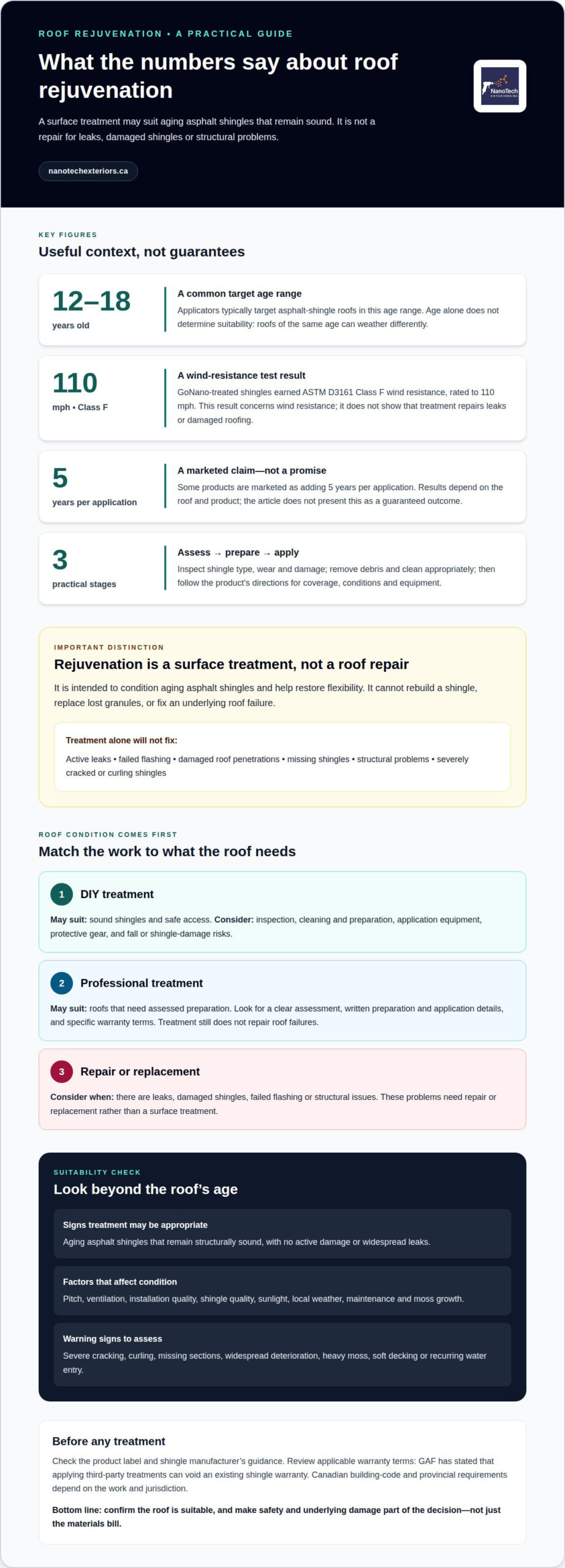
GoNano-treated shingles earned ASTM D3161 Class F wind resistance, rated to 110 mph. That test result concerns wind resistance; it does not show that a treatment fixes leaks or damaged roofing.
Rules and Warranty Restrictions
Canadian building-code and provincial requirements depend on the work and jurisdiction, so don’t assume rejuvenation can stand in for required repairs. Warranty terms also matter: GAF has stated that applying third-party treatments can void an existing shingle warranty. Before treatment, review the applicable warranty language and identify whether coverage comes from the contractor, manufacturer or both.
When choosing professional roof rejuvenation, look for a clear assessment, a written description of preparation and application, and specific warranty terms. These details help you understand the work and determine whether treatment suits your roof.
DIY Steps, Materials, and Risks
A DIY application generally involves inspecting the roof, removing moss and debris, cleaning and preparing the shingles, then applying a treatment according to its label. Materials depend on the product and roof, but may include cleaner, application equipment and protective gear. Reapplication guidance varies: products are marketed as adding 5 years per application, while some forum users suggest applying restoration products every 3rd or 4th year. These are not universal schedules.
Falls and shingle damage are real risks. The European Commission describes work at height as activity with fall risk relative to a stable floor, requiring training and adequate protective equipment. Walking on brittle shingles or using unsuitable cleaning pressure can also cause damage.
| Option | Best suited to | Main limitation |
|---|---|---|
| DIY treatment | Sound shingles and safe access | Preparation and fall risks |
| Professional treatment | Roofs needing assessed preparation | Doesn’t repair roof failures |
| Repair or replacement | Leaks, damaged shingles or structural issues | Addresses problems rejuvenation cannot |
Consider rejuvenation when the roof is suitable and the work can be completed safely. If it has active damage or structural problems, prioritize repair or replacement.
How asphalt-shingle rejuvenation products are supposed to work
Roof rejuvenation is a surface treatment intended to restore flexibility to aging asphalt shingles. Products are formulated for particular roofing materials, so an asphalt-shingle treatment shouldn’t be assumed suitable for metal, tile or flat roofing. Check the product label and the shingle manufacturer’s guidance before choosing an application method.
As asphalt shingles weather, their protective components can become less flexible. A rejuvenation treatment is designed to condition the shingles and help restore flexibility. It doesn’t rebuild a shingle, replace missing granules or restore material that has broken away. The purpose is rejuvenation, not replacement.
The application process generally follows three practical stages:
- Assess the surface. Identify the shingle type, visible wear, moss and damage before applying a product.
- Prepare the roof. Remove debris and complete product-appropriate cleaning so the treatment can reach the intended surface.
- Apply the treatment. Follow the manufacturer’s directions for coverage, conditions and application equipment.
Preparation affects how evenly treatment reaches the shingles. Moss or debris left on a roof, for example, can interfere with contact. Cleaning methods matter too: aggressive pressure can dislodge granules and damage shingles, while inadequate preparation can leave some areas untreated.
Canadian rain, ultraviolet exposure, freeze-thaw cycles and seasonal temperature changes all affect roofing. A suitable product and application process should account for the roof’s condition, pitch and exposure. GoNano’s spray-applied treatment is designed to protect against harsh Canadian weather, but suitability still depends on the individual roof.
Some treatments are marketed as extending shingle life, but results depend on the roof and the product’s intended use. A treatment won’t correct failed flashing, active leaks or structural damage. Think of it as a maintenance option for appropriate shingles, not a substitute for roofing repairs or roof replacement.
Roof age and condition when considering treatment
Age is a useful starting point, not a verdict. Applicators typically target asphalt shingle roofs that are 12 to 18 years old, but two roofs installed together can weather differently. Pitch, ventilation, installation quality, shingle quality, sunlight, local weather, maintenance and moss growth all influence performance.
A suitable candidate is an aging roof that remains structurally sound, without active damage or widespread leaks. A professional assessment examines the shingles and roof condition before treatment. Intact shingles with no active leaks, for example, call for a different approach from soft decking or recurring water entry.
- Check shingle condition: Severe cracking, curling, missing sections or widespread deterioration point away from treatment.
- Look for moisture clues: Heavy moss can retain moisture and contribute to premature material deterioration if left unchecked.
- Assess the whole roof: Flashing, penetrations and roof structure matter alongside the visible shingle surface.
These signs help distinguish age-related wear from damage that needs repair or replacement. The installation date alone can’t show whether the decking is sound or water has reached hidden layers. A useful assessment considers visible symptoms, attic or interior evidence, and the roof’s components together.
Consider warranty terms before treatment. Roof age, shingle type and condition can affect suitability, while manufacturer warranties depend on their own coverage terms. NanoTech Exteriors’ GoNano treatment does not void warranties from IKO, Owens Corning, BP or GAF. The treatment’s warranty is separate from the manufacturer’s coverage.
Use a simple decision sequence: first, establish whether the roof is structurally sound; next, identify active leaks, damaged shingles or failed components; then consider treatment only for suitable, intact shingles. Severe or widespread damage calls for a different solution than rejuvenation. In Canada, seasonal temperature changes and freeze-thaw cycles add context, but the roof’s condition remains the key test.
DIY and professional repair costs
DIY may appear cheaper because you buy materials yourself, but the full cost includes preparation, equipment, access and time. A professional’s price reflects roof area, pitch, accessibility, shingle condition, moss or algae, cleaning and the selected treatment. Testing and inspection also matter: they can reveal structural damage that a surface application won’t address.
Can homeowners safely rejuvenate an asphalt shingle roof themselves? Only when the roof is accessible and dry, the shingles are suitable, and fall protection and application instructions can be followed. A steep roof, ice dams, brittle shingles or uncertain footing can turn a materials-saving project into a fall or roof-damage risk.
Compare the whole task, not just the treatment container. A DIY project may require safe access equipment and careful cleaning. Professional service can include roof cleaning, refurbishment and treatment application. The right comparison depends on what the roof needs, not simply who applies the product.
- DIY: Account for treatment, equipment, preparation and the time needed to apply it properly.
- Professional: Consider inspection, surface preparation, application and identifying repairs beyond treatment.
- Repair or replacement: Budget separately from rejuvenation, since leaks, flashing failures or structural damage require different work.
For rejuvenation, the price depends on the case and is given after a quote request. Roof area, pitch, access, shingle condition, moss or algae, preparation, cleaning and treatment selection affect the cost. A claim of up to 15 years of added roof life should not be treated as a guaranteed saving; compare the roof’s condition and the work required.
If an inspection finds damage beyond a surface treatment, get help deciding what your roof needs before spending on materials. That step can clarify whether the priority is treatment, repair or replacement.
NanoTech Exteriors: Roof Rejuvenation
NanoTech Exteriors offers Roof Rejuvenation for homeowners with aging shingles that remain suitable for treatment. Its spray-applied treatment is designed to restore flexibility to aging shingles, offering an alternative to replacement when the roof’s condition makes rejuvenation appropriate.
The treatment is not a substitute for fixing active leaks or structural damage. If your roof needs repair rather than surface treatment, Roof Repair addresses a different problem; Residential Roofing can support broader roofing needs. NanoTech Exteriors’ rejuvenation technology may cost up to 85% less than a new roof, depending on the project.
Let your shingles’ condition and the work required guide your next step. For a free roof assessment and quote, contact NanoTech Exteriors or visit nanotechexteriors.ca.
Choose the next step with confidence
Before committing, decide what you need your roof to do next: maintain serviceable shingles, address a specific defect or plan broader roofing work. That goal keeps the DIY vs professional roof rejuvenation decision focused on the actual job, not the appeal of a quick fix. If you’re unsure which option fits, a professional assessment can clarify the work involved.
NanoTech Exteriors provides Roof Rejuvenation, Residential Roofing and Roof Repair for different roofing needs. The right starting point depends on your roof’s condition and whether it needs treatment, repair or a broader roofing solution. The company serves homeowners in Burlington, Hamilton, Oakville, Niagara, Kitchener, Guelph and Cambridge.
Contact NanoTech Exteriors about your roof to discuss a practical next step. A clear decision now can help you move forward with greater confidence and a plan suited to your home.
Frequently Asked Questions
How do the warranties compare?
Coverage depends on the specific product and its written warranty. NanoTech Exteriors lists up to 15 years for GoNano Shingle Saver and up to 10 years for GoNano Revive; both warranties are transferable. The company also states that treatment does not void warranties from IKO, Owens Corning, BP or GAF. Check which product applies and read its warranty terms before deciding what coverage means for your roof.
Will rejuvenation help against hail and wind?
Rejuvenation isn’t a hail-impact rating. Hail impact and wind resistance are assessed through different tests, so a wind classification alone doesn’t establish how shingles perform against hail. UL 2218 is an impact-resistance standard, while ASTM D3161 tests wind resistance. If a storm has affected your roof, use the relevant test or product documentation rather than treating one rating as evidence of performance against both hazards.
How much does DIY roof rejuvenation cost in Canada?
To estimate DIY costs, compare the product’s stated coverage with your roof area, then add any application equipment and safety gear you need. Decide whether equipment will be purchased, rented or already available, and account for unused product. Compare the total with the work included in a professional quote. A low materials cost alone doesn’t show the full cost of completing the job.
How much does professional roof rejuvenation cost in Canada?
NanoTech Exteriors provides a quote after a free roof assessment. Cost varies by location, roof complexity and condition. The service includes the spray-applied treatment, professional cleaning and refurbishing of the roof surface, and product application. Compare the work included and warranty terms, rather than comparing a materials cost with a complete service package.
How long do DIY and professional roof rejuvenation treatments last?
The applicator alone doesn’t determine how long a treatment lasts. Product-specific directions, application quality and the roof’s condition all matter. Also separate treatment performance from warranty duration: a warranty defines the coverage offered under its terms, not a promise that every roof will perform identically. For a DIY product, use its label; for professional work, read the applicable written warranty.
Does roof rejuvenation restore shingles or extend a roof’s lifespan?
It’s designed to rejuvenate suitable shingles and may extend roof life, but product suitability depends on roof age. NanoTech Exteriors identifies Shingle Saver for roofs up to 12 years old and Revive for roofs 8 to 25 years old. Those ranges help homeowners distinguish between the two products; they aren’t a diagnosis of roof condition or a substitute for choosing the appropriate treatment.