In the shadow of the Niagara Escarpment, driveway sealing isn’t a cosmetic choice; it’s a structural necessity. Most homeowners view driveway concrete sealing Hamilton as a way to boost curb appeal, but its true purpose is to defend against the aggressive freeze-thaw cycles that define an Ontario winter. Without a professional barrier, water penetrates the porous surface, expands as ice, and creates the spalling or surface flaking that ruins a perfectly good entrance. If you’ve noticed cracks forming or salt damage from municipal plows, you’re already seeing the effects of our local climate on unprotected concrete.
It’s exhausting to spend your weekends scrubbing oil stains or worrying about the next deep freeze. We understand the need for a solution that actually lasts, which is why we’ve developed a framework to help you regain peace of mind. By reading this guide, you’ll learn how to protect your driveway from chemical salt damage and tire discolouration while significantly reducing your annual maintenance time. We’ll explore the difference between topical and penetrating sealers and provide a clear path to ensuring your concrete remains durable, clean, and structurally sound for the long term.
Key Takeaways
- Understand how Hamilton’s unique “Escarpment Effect” accelerates material fatigue and why a proactive barrier is essential for maintaining structural integrity.
- Compare penetrating silane-siloxane sealers against topical coatings to find the most durable solution for driveway concrete sealing Hamilton winters demand.
- Learn why professional surface preparation and achieving the correct “surface profile” are the only ways to ensure a permanent bond that won’t flake or peel.
- Identify the “Goldilocks Zone” for application, specifically why the September to October window provides the ideal temperature and humidity for material curing.
- Discover how modern sealing technology protects against corrosive road salts and tire discolouration while preserving your home’s curb appeal and long-term value.
Why Driveway Concrete Sealing is Critical in Hamilton
Hamilton homeowners often overlook the porous nature of their driveways until the first signs of damage appear. Concrete sealing is the application of a protective layer to prevent moisture and salt penetration. It’s a logical defence against the elements. By understanding concrete and its permeable structure, we can see why an unsealed surface is essentially a ticking clock. Without this barrier, your driveway remains vulnerable to every environmental stressor our region provides.
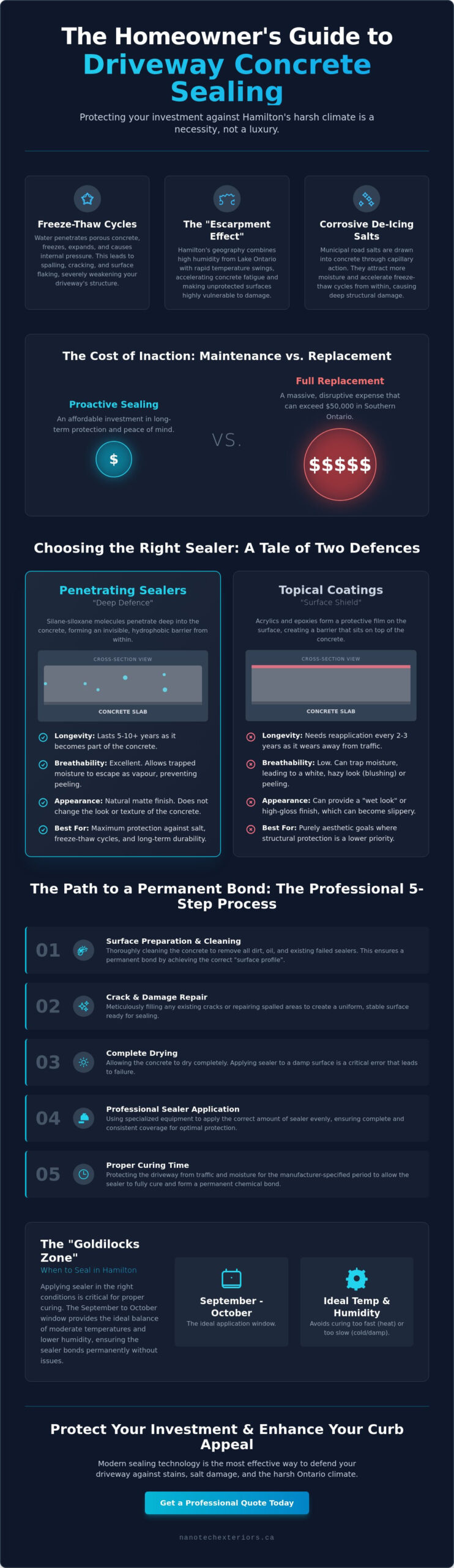
The economic logic for driveway concrete sealing Hamilton is straightforward. A full driveway replacement in Southern Ontario can easily exceed $50,000 when you factor in demolition, disposal, and current material costs. Professional sealing is a sensible investment that avoids these massive, unnecessary expenses. It’s a choice between affordable maintenance now or a jackhammer later. Our goal is to ensure you choose the former.
The Threat of Hamilton’s Freeze-Thaw Cycles
Hamilton’s unique geography creates a specific set of challenges for hardscaping. The “Escarpment Effect” involves high humidity from Lake Ontario combined with rapid temperature swings near the Mountain. These conditions accelerate concrete fatigue. When water enters the pores of the concrete, it expands as it freezes. This internal pressure leads to spalling, which is the unsightly flaking and pitting of the surface.
Municipal de-icing salts make this problem worse. Capillary action draws salt-laden water deep into the driveway’s core. Once inside, the salt attracts even more moisture and lowers the freezing point, which increases the frequency of freeze-thaw cycles within the material itself. A professional seal breaks this cycle by closing off those microscopic entry points.
Protecting Your Property Value and Curb Appeal
Beyond structural concerns, your driveway is a major component of your home’s curb appeal. Hamilton’s industrial history means our air often carries more dust and particulates than other regions. Unsealed concrete absorbs these pollutants along with oil, grease, and tire marks, leading to permanent staining that power washing can’t always fix. Sealing creates a non-porous finish that allows these contaminants to be rinsed away easily.
For older driveways, certain sealers provide a colour enhancement that restores the rich, original look of the stone. It’s an efficient way to modernize the exterior of your property without a full renovation. Professional sealing maintains structural integrity by creating a chemical bond that reinforces the concrete’s internal matrix against environmental stressors.
Choosing the Right Sealer: Penetrating vs. Topical
Selecting the correct chemical composition for your driveway is the difference between a long-term solution and a temporary fix. In Southern Ontario, we essentially debate between a “Surface Shield” and “Deep Defence.” While both options offer protection, their interaction with the concrete matrix varies significantly. For most homeowners, the decision hinges on whether they prioritize a specific aesthetic or maximum structural longevity against the elements. If you are investing in driveway concrete sealing Hamilton, understanding these chemical differences is the first step toward a successful outcome.
High-traffic areas require a realistic look at longevity. Penetrating sealers can last five to ten years because they don’t wear off with tire friction. Topical acrylics, however, usually need a refresh every two to three years as the film physically thins out under regular vehicle use. If you’re unsure which chemistry fits your specific needs, consulting with a professional about concrete sealing can save you from the stress of a costly misapplication.
Penetrating Sealers: The Invisible Barrier
Hamilton’s heavy snowfalls and the subsequent use of corrosive road salts make penetrating silane-siloxane sealers a top-tier choice. These microscopic molecules dive deep into the pores of the concrete, creating a hydrophobic barrier below the surface. Instead of sitting on top, they become part of the material itself. They are ideal for preventing salt-induced pits and cracks because they stop water from ever entering the capillary structure.
One of the most significant benefits of this technology is “breathability.” This allows moisture trapped beneath the slab to escape as vapour. If you use a non-breathable sealer on a damp driveway, you will likely see peeling or white blushing as the trapped water tries to force its way out. Penetrating sealers avoid this failure entirely while maintaining the natural, matte look of the concrete.
Topical Acrylic Sealers: Protection with Style
Topical sealers are film-forming agents that sit on the surface like a protective coat. These are the preferred choice for homeowners who want a high-gloss “wet look” or those looking to enhance the colour of stamped and decorative concrete. They excel at blocking UV rays and preventing oil, grease, or vehicle fluids from soaking into the stone.
Safety is a critical factor when choosing a topical finish. Because the film sits on top, it can become slippery when wet. On sloped Hamilton driveways, we always include anti-skid additives to ensure proper slip-resistance. We generally recommend solvent-based acrylics for their superior durability and colour depth, though water-based versions remain a viable, low-odour alternative for specific environments.
The Professional 5-Step Sealing Process
Achieving a durable finish requires more than a casual afternoon project. The professional 5-step sealing process is a disciplined sequence designed to maximize the lifespan of your hardscaping. For homeowners considering driveway concrete sealing Hamilton, understanding this technical progression ensures you recognize why commercial results outperform DIY efforts. It’s not just about the product; it’s about the physics of the bond. If the preparation is flawed, even the most expensive sealer will fail prematurely.
We focus on the science of “surface profile.” This refers to the microscopic texture of the concrete. A surface that is too smooth or clogged with old residue won’t allow the sealer to anchor itself. By following a structured methodology, we ensure the chemical agent penetrates deep into the matrix rather than simply resting on top. This leads to a fortification that resists the weight of heavy vehicles and the corrosive nature of winter salts.
Step 1 & 2: Deep Cleaning and Surface Preparation
A garden hose is never enough for professional-grade results. We use high-pressure washing to strip away deep-seated Hamilton grime, industrial particulates, and organic growth that a standard nozzle simply can’t reach. This step is critical for opening the concrete pores. Once the surface is cleaned, a 24-48 hour drying period is non-negotiable. If the concrete isn’t completely dry, the sealer won’t absorb properly, which often causes a cloudy or peeling finish.
During this preparation phase, we also address structural vulnerabilities. We identify and repair minor cracks before the sealing agent is applied. This prevents water from bypassing the new barrier. Proper preparation ensures that the final application is uniform and the chemical bond is as strong as possible.
Step 3, 4 & 5: Application, Edging, and Curing
Precision application is where technique meets technology. While rolling is common in the DIY world, we often prefer high-volume, low-pressure spraying for even distribution. This method prevents “tiger stripping,” which are those unsightly dark and light bands caused by uneven overlapping passes. We perform precision edging around landscaping, walkways, and garage doors to protect your home’s exterior from overspray. This level of detail keeps the focus on the driveway while maintaining the integrity of your surrounding property.
Managing expectations for traffic is the final part of the process. While the surface may feel dry to the touch within a few hours, structural curing takes longer. We enforce a strict 24-hour “no-drive” rule to allow the molecules to fully bond. Following this timeline ensures the seal remains intact even under the high friction of turning tires. A final inspection confirms that every square inch has been fortified against the coming seasons.
When is the Best Time for Concrete Sealing in Hamilton?
Timing isn’t just a matter of convenience; it’s a critical factor in the chemical success of the bond. For driveway concrete sealing Hamilton, we look for what we call the “Goldilocks Zone.” This is a specific window where temperature and humidity align to allow the sealer to cure without interference. If you apply the product when it’s too hot, too cold, or too damp, you risk a failed application that will peel or cloud within months. Our approach is based on local meteorological data rather than guesswork.
The autumn window, specifically September and October, is traditionally the busiest season for our team. Homeowners are focused on defensive maintenance before the first frost hits. Sealing during this time ensures the concrete is fortified against the upcoming barrage of municipal salts and freeze-thaw cycles. Spring sealing is equally valuable, as it allows us to repair any hairline fractures or surface wear caused by the previous winter before the intense summer heat sets in.
A professional’s first task is always checking the forecast. We follow a strict “Rain Rule” that requires a clear 24-hour window both before and after the application. If the concrete is damp from a recent storm, the sealer won’t absorb. If it rains too soon after application, the finish can become pitted or washed away. We prioritize these atmospheric variables to ensure every project meets our standards for longevity.
Ideal Temperature and Humidity Conditions
Direct summer heat in Hamilton often exceeds 30°C, which is far from ideal for sealing. High temperatures cause “flash drying,” where the sealer evaporates before it can penetrate the concrete. This leads to unsightly bubbles and a weak surface bond. Ideally, we look for ambient temperatures between 10°C and 25°C. Overnight temperatures are just as important; the sealer needs at least 10°C to set correctly during its first 12 hours.
Humidity from Lake Ontario also plays a role. Heavy morning dew can saturate the concrete pores, preventing the chemical agent from entering the matrix. We generally wait until the sun has fully dried the surface before starting any application. This methodical patience is what separates a professional finish from a rushed DIY job.
Long-Term Maintenance Scheduling
A high-quality seal isn’t a one-and-done event. The general rule of thumb is to re-seal every two to five years. High-traffic driveways or those on steep inclines may need attention sooner. You can perform a simple water test to check your sealer’s integrity: if water no longer beads on the surface and instead creates a dark, damp patch, your protection has worn off.
Maintaining your driveway should be part of a broader strategy for your home. We recommend coordinating this work with other essential services, such as residential roofing Hamilton Ontario, to ensure your entire exterior remains structurally sound. If you’re ready to secure your property against the elements, you can request a professional assessment to determine the best timing for your project.
NanoTech Exteriors: Hamilton’s Concrete Protection Experts
NanoTech Exteriors provides more than just surface-level fixes; we offer a comprehensive approach to whole-home exterior fortification. While we are widely recognized for our roofing expertise, our commitment to asset protection extends to your home’s foundation and hardscaping. Driveway concrete sealing Hamilton is a natural extension of our mission to defend local properties against the Niagara region’s harsh climate. We believe that a home’s value is preserved through the proactive maintenance of all its exterior surfaces, from the peak of the roof to the edge of the driveway.
Our authorized dealer status gives us exclusive access to high-performance sealing technology that simply isn’t available to the general public. These professional-grade formulations are designed for industrial longevity, offering a level of chemical stability that consumer products cannot match. We combine this advanced technology with deep local expertise to provide a service that is both scientifically sound and practically efficient. This integrated approach allows us to manage complex maintenance schedules, often pairing concrete care with roof repair Hamilton Ontario to ensure your entire building envelope remains secure.
Expertise Rooted in Material Science
Our background in shingle rejuvenation has given our team a unique perspective on material science. We understand how environmental stressors interact with porous surfaces at a microscopic level. Whether we are treating a roof or a driveway, the goal remains the same: restoration and long-term protection. We prioritize the peace of mind that comes from knowing your property is prepared for whatever the next Ontario winter brings. NanoTech’s methodical application process and use of industrial-grade silane-siloxane compounds provide a deeper, more resilient chemical bond than any standard hardware store sealer can achieve. Homeowners who want to explore a similar restoration-first philosophy for their roofing system can learn more about roof rejuvenation Hamilton Ontario as a cost-effective alternative to full replacement.
Get Your Free Hamilton Driveway Assessment
Every project begins with a professional concrete health check. We don’t believe in one-size-fits-all solutions, so we take the time to inspect your driveway for existing spalling, hairline fractures, and the integrity of previous coatings. This assessment allows us to provide a transparent, accurate quote based on the actual condition of your concrete. We avoid high-pressure sales tactics, opting instead to educate you on the best path forward for your home’s specific needs. If you’re ready to invest in the longevity of your property, book your Hamilton concrete sealing consultation today!
Secure Your Driveway’s Future Today
Maintaining your concrete isn’t just about preserving its appearance; it’s about protecting the structural integrity of your property’s entrance. We’ve explored how the right chemistry and precise timing can defend your investment against Ontario’s aggressive freeze-thaw cycles and corrosive salts. By understanding the technical requirements of driveway concrete sealing Hamilton, you’re now equipped to make a choice that avoids the stress of premature cracks and costly replacements. A proactive approach today is the most efficient way to ensure long-term stability.
NanoTech Exteriors brings over 15 years of exterior restoration experience to every project. As an Authorized GoNano Service Provider, we utilize advanced technology to fortify surfaces across Hamilton, Burlington, and the Niagara Region. Our team focuses on results that last, moving beyond temporary fixes to provide real fortification. Don’t wait for spalling and discolouration to set in. Protect your driveway with Hamilton’s sealing experts—get a free quote now! Taking this simple step now ensures your home remains durable, clean, and structurally sound for years to come.
Frequently Asked Questions
Is it worth sealing a concrete driveway?
Sealing your concrete is a sensible investment that prevents moisture and salt from causing structural failure. It acts as a defensive barrier against the freeze-thaw cycles that lead to spalling and cracking. By preserving the material early, you avoid the massive expense of a full driveway replacement later. It’s a proactive choice that maintains both the integrity and the value of your property.
How much does it cost to seal a driveway in Hamilton?
Professional driveway concrete sealing Hamilton costs vary based on the square footage and the current condition of the surface. Most projects are priced per square foot, with additional fees for deep cleaning or crack repairs. Investing in professional application ensures you receive commercial-grade products that offer a higher return on investment than standard retail options found at local hardware stores.
Can I seal my driveway myself or should I hire a pro?
You can attempt a DIY application, but hiring a specialist ensures access to industrial-grade penetrating sealers and high-pressure cleaning equipment. Professionals achieve a uniform surface profile that allows for a deeper chemical bond. This precision prevents common DIY failures like “tiger stripping” or peeling caused by improper drying times and inadequate surface preparation.
How long does concrete sealer take to dry before I can drive on it?
You should wait at least 24 hours before driving a vehicle onto a newly sealed surface. While the sealer might feel dry to the touch within four to six hours, it requires a full day to cure structurally. Heavy traffic too early can compromise the bond and lead to permanent tire marks or premature wear in high-friction areas.
Will sealing my driveway make it slippery when it snows?
Penetrating sealers do not change the texture or slip-resistance of the concrete because they bond beneath the surface. If you choose a high-gloss topical sealer, it’s best to include an anti-skid grit in the final coat. This ensures the surface remains safe for foot traffic and vehicles during Hamilton’s icy winter months without sacrificing the aesthetic benefit of the seal.
What is the best month to seal a driveway in Ontario?
September and October are the ideal months for sealing in Ontario because the temperatures are consistently moderate. This window offers the stable heat and lower humidity required for a perfect chemical cure. Sealing in the autumn ensures your driveway is fully fortified before the first application of municipal road salt and the start of the freeze-thaw cycle.
Does concrete sealer fix cracks?
Sealer is a preventative measure, not a structural repair tool for existing damage. You must fill and repair cracks before applying the sealing agent to ensure moisture cannot bypass the new barrier. Once the repairs are complete, the sealer will help prevent those cracks from widening or new ones from forming by keeping water out of the concrete matrix.
How often should I re-seal my Hamilton driveway?
We recommend re-sealing every two to five years depending on the volume of traffic and the type of sealer used. Penetrating sealers typically last longer than topical acrylics because they don’t wear off with tire friction. If you notice that water no longer beads on the surface, it’s a clear sign that your protective barrier needs a professional refresh to maintain its effectiveness.