Pressure-treated wood resists decay, but it is not weatherproof. Sealing a pressure-treated wood deck helps limit weathering and cracking, provided the lumber is dry enough first. A new deck may need a few weeks to a few months to dry. If water beads on the surface, give the wood more time.
That waiting period can make it hard to know when to proceed. A practical check is whether the wood absorbs water or lets it bead up. A professional can assess this along with the deck’s condition and preparation needs.
Learn why sealing matters, what professional preparation and application involve, and how to check whether the wood is dry enough for a finish. These steps explain what affects timing and how to avoid sealing too soon, helping you make an informed decision about protecting your deck.
Key Takeaways
- Pressure-treated lumber still weathers outdoors; choose a finish suited to the deck’s appearance and exposure, including protection against UV and moisture.
- Before sealing, a professional prepares the surface and considers its condition, existing finish and cleanliness.
- New wood may need a few weeks to a few months to dry. If water beads during a dryness check, it needs more time.
- Good timing matters: the wood must be ready to absorb the finish for the application to adhere as intended.
Does Pressure-Treated Wood Need to Be Sealed?
Yes. Sealing helps protect pressure-treated wood from weathering and cracking. If the wood is wet or the finish is unsuitable, the coating may adhere unevenly and produce a poor result.
-
How Professionals Choose a Sealant for Pressure-Treated Wood
A professional assesses the lumber, its exposure and the finish you want. A sun-exposed deck has different needs from a shaded one, so the recommendation should suit conditions across the surface. The choice also depends on whether you want to keep the wood’s natural appearance or change its colour. A clear or semi-transparent oil-based sealant can show the wood’s natural colour.
If you want to change the colour, a combination stain and sealant is an option. However, pressure-treated wood that has already been stained should not be sealed. The existing finish matters: applying a new product without accounting for it can leave the surface looking inconsistent. A professional matches the product to the deck’s condition and the appearance you want.
-
Choosing a Sealant with UV Stabilizers
Ask the professional to consider UV stabilizers and water repellents when recommending a sealant. UV stabilizers help address sunlight exposure, while water repellents help protect against moisture. Both matter on an outdoor deck exposed to changing weather. The recommendation should reflect how much sun and rain the boards receive.
A professional also matches the finish to the deck’s exposure. For example, a deck in strong sunlight needs a product chosen with UV protection in mind. Selecting a product only for its colour or sheen may leave those conditions unaddressed. Matching the sealant’s protective properties to the wood helps make the finish practical as well as attractive.
-
Avoid Sealing Wet Wood or Using the Wrong Product
Have a professional assess dryness before sealing, especially on a newly built deck. Pressure-treated lumber can take a few weeks to a few months to dry. If water beads during a sprinkle test, wait several days before testing again. Sealing before the wood is ready can interfere with absorption and leave an uneven finish.
Product choice matters, too. A sealant that does not suit the wood or its existing finish can result in inconsistent coverage and less effective protection. Before proceeding, a professional considers both whether the deck is ready and whether the product is intended for that surface. This helps avoid applying a coating the wood cannot accept properly.
Professional Preparation and Application of Deck Sealant
Professionals prepare the surface, confirm that conditions suit the product and apply the finish evenly. The product label provides the application and drying requirements.
-
How Professionals Prepare the Deck Surface
Have a professional assess the boards and clear away dirt before applying sealant. An older deck may need pressure washing to remove built-up grime, followed by enough time to dry. The surface should be clean and ready for the finish, not damp or covered in loose debris.
Before treating every board, a professional can test a small, inconspicuous area. This shows how the product looks and adheres to the deck’s surface. If the test reveals an unwanted appearance or poor adhesion, the full application can wait while the surface or product choice is reassessed.
-
Professional Application of Clear Water Repellent
Choose a clear water repellent if you want to protect the wood while keeping its natural appearance visible. For pressure-treated wood, wait until it is ready before applying clear water repellent. A professional considers the project’s timing and the wood’s readiness before starting.
A paint pad applicator can spread sealant across boards, and usually only one coat is needed. Careful, even coverage helps prevent missed patches and excess product from collecting on the surface. The finish must then dry according to its directions. Most deck sealers for pressure-treated lumber require 24 to 48 hours of drying time.
-
Choosing Suitable Temperature and Weather Conditions
Ask a professional to schedule the work in conditions that suit the product label and allow the coating to dry. There is no single temperature range for every sealant, so the product’s stated application limits should guide the decision.
Rain or damp conditions can disrupt application and drying. A professional considers the forecast and the deck’s exposure, avoiding application when the weather could interfere with coverage or curing. In Hamilton, changing conditions make timing part of the preparation, not an afterthought.
- Allow the completed finish to dry before the deck returns to use. Most sealers need 24 to 48 hours, so the professional plans the work around that drying period and the product directions.
How Professionals Check Wood Dryness Before Sealing
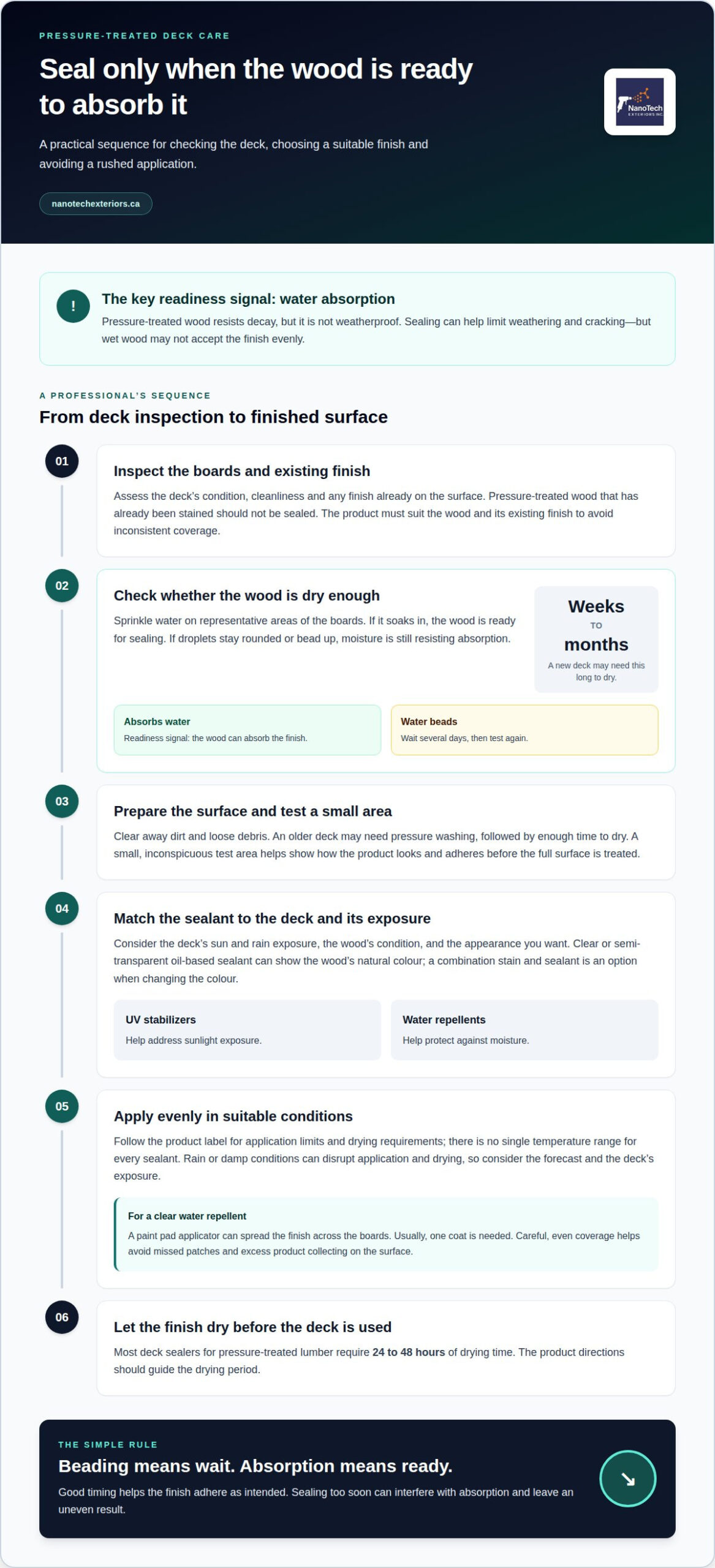
Before sealing a pressure-treated wood deck, a professional checks whether the boards absorb water. Newly built pressure-treated wood may take a few weeks to a few months to dry.
-
How Professionals Check for Water Beads
A professional sprinkles water on the deck and watches what happens. If the wood absorbs it, the surface is ready for sealing. If droplets stay rounded or bead up, moisture is still resisting absorption. This visible response offers a practical readiness check before applying a finish.
The wood’s condition matters more than the deck’s age alone. Boards can dry at different rates across one surface, so a professional checks representative areas instead of relying only on the installation date. A board that looks dry is not enough; the water’s behaviour provides a practical clue.
-
Using the Sprinkle Test to Assess Wood Dryness
A professional sprinkles water across the boards and checks whether it soaks in or beads. Absorption indicates that the pressure-treated wood is ready for sealant; beading means it needs more drying time. The test is simple, but the response should be checked across the deck rather than judged by one spot.
If water beads, wait several days before testing again. This gives the surface more time to dry, and a repeat test shows whether absorption has improved. Applying sealant while water still beads can prevent the finish from being accepted evenly by the wood.
-
Allowing the Wood to Dry Before Professional Sealing
A professional considers the water test alongside the deck’s drying history. A newly completed pressure-treated wood project may need a few weeks to a few months before it is ready. Weather and exposure affect how quickly moisture leaves the boards, so elapsed time alone does not determine readiness.
A key step in sealing a pressure-treated wood deck is confirming that the wood absorbs water instead of letting it bead. If droplets remain on the surface, wait several days and repeat the sprinkle test. This staged check helps prevent premature application and gives the finish a suitable surface for adhesion.
Why pressure-treated wood needs sealing
Pressure treatment helps protect lumber, but outdoor boards still face sunlight and moisture. A suitable sealant adds surface protection against weathering and cracking.
- Consider what pressure treatment does and does not do. Although the wood is treated, it remains exposed to changing outdoor conditions. Sunlight can affect its appearance, while moisture and weathering can contribute to cracking. Because deck boards face these conditions repeatedly, sealing is a maintenance step, not a substitute for pressure treatment.
Choose a finish with the deck’s exposure in mind. A product with UV stabilizers and water repellents addresses two common outdoor stressors: sunlight and water. For an exposed deck, that combination is a more practical consideration than choosing a finish only for its colour.
- Match the finish to the appearance you want. A clear or semi-transparent oil-based sealant can show the wood’s natural colour. If you want to change the colour, a combination stain and sealant can add colour and protection in one product.
Check the deck’s existing finish before selecting a product. Pressure-treated wood that has already been stained should not be sealed. Applying another coating without accounting for the stain can leave an unsuitable finish. A professional considers the wood and its current surface before recommending a treatment.
- Plan maintenance around the deck’s exposure and finish. Applying a fresh coat of sealant once every year is recommended to help prevent weathering and cracking. Sunlight, moisture and regular exposure all affect the wood, so the finish needs ongoing attention rather than a one-time application.
Annual maintenance does not mean applying a new coat without first assessing the boards. A professional considers the existing finish and surface condition, so the next application responds to the deck’s needs instead of adding product automatically.
- For Canadian projects, follow the chosen sealant’s label for application and safety directions. This guidance doesn’t assert a Canadian legal requirement to seal decks. If you want a professional to assess your deck’s wood-sealing needs, arrange professional wood sealing.
NanoTech Exteriors: Wood Sealing
NanoTech Exteriors provides Wood Sealing for homeowners seeking professional protection for an outdoor deck. If your pressure-treated boards need a suitable finish, a professional assessment helps determine whether the wood is ready and what preparation the surface requires.
The process brings together the key decisions covered here: checking dryness, assessing the deck’s condition, and choosing a sealant suited to its exposure and the appearance you want. This helps avoid applying a finish before the wood can absorb it properly. It also gives you a clear next step if you would rather leave preparation and application to a professional.
For professional wood sealing for your deck, contact NanoTech Exteriors.
Plan Your Deck’s Next Season Outdoors
A deck’s finish shapes how its boards look and feel through the seasons. Before arranging professional work, consider the appearance you want and how you use the space. A natural wood look, for example, calls for a different finish than a colour change. Clear priorities make it easier to choose a treatment that suits your outdoor space.
For sealing a pressure-treated wood deck, have a professional assess the surface and discuss the result you want. This can establish whether the deck is ready for work and which approach suits its condition. You do not have to decide on every finish detail alone.
When you’re ready to discuss your deck, contact NanoTech Exteriors for deck sealing advice. A clear plan is a practical start toward enjoying your outdoor space with confidence.
Frequently Asked Questions
How does a professional tell when pressure-treated decking is ready to seal?
A professional checks whether water absorbs into the wood or beads on the surface. They can assess several boards, including areas with different sun exposure, because drying may vary across a deck. Newly built pressure-treated wood may take a few weeks to a few months to dry. If water beads, wait several days before testing again.
What type of deck sealer or stain might a professional recommend for pressure-treated wood in Canadian weather?
A professional may recommend a sealant with UV stabilizers and water repellents to address sun and moisture exposure. If you want the wood’s natural colour to show, a clear or semi-transparent oil-based sealant is an option. The recommendation also depends on the deck’s current finish and the appearance you want, not just its exposure to weather.
How does a professional help choose between a clear sealer, semi-transparent stain or solid stain for a pressure-treated deck?
Your preferred appearance guides the choice. Clear finishes keep the wood’s natural colour visible, while semi-transparent finishes let some grain show. A combination stain and sealant can change the deck’s colour. If the pressure-treated wood has already been stained, it should not be sealed, so the existing finish affects the decision.
How do professionals clean and prepare a pressure-treated wood deck before sealing?
For an older deck, a professional may pressure wash away built-up dirt, then allow the surface to dry. They can first test a small, inconspicuous area to assess the sealant’s adhesion and appearance. This is useful if the deck has an existing finish or the chosen product may alter its look. Apply the finish to the full deck once the surface is prepared.
How do professionals apply deck sealer to pressure-treated wood, including coats and drying time?
A professional can use a paint pad applicator to distribute sealant across the boards; usually, one coat is needed. Coverage should be consistent, with attention to areas that could be missed or receive excess product. Drying varies by product, but most deck sealers for pressure-treated lumber require 24 to 48 hours. The product directions guide the final application and drying process.
How often should a professional inspect and reseal a pressure-treated wood deck?
Applying a fresh coat of sealant once every year is recommended to help prevent weathering and cracking. A professional can assess the existing finish and the deck’s condition before recommending another application. For example, visible weathering may call for attention, but the right next step still depends on the current coating and whether the wood is ready to accept more sealant.