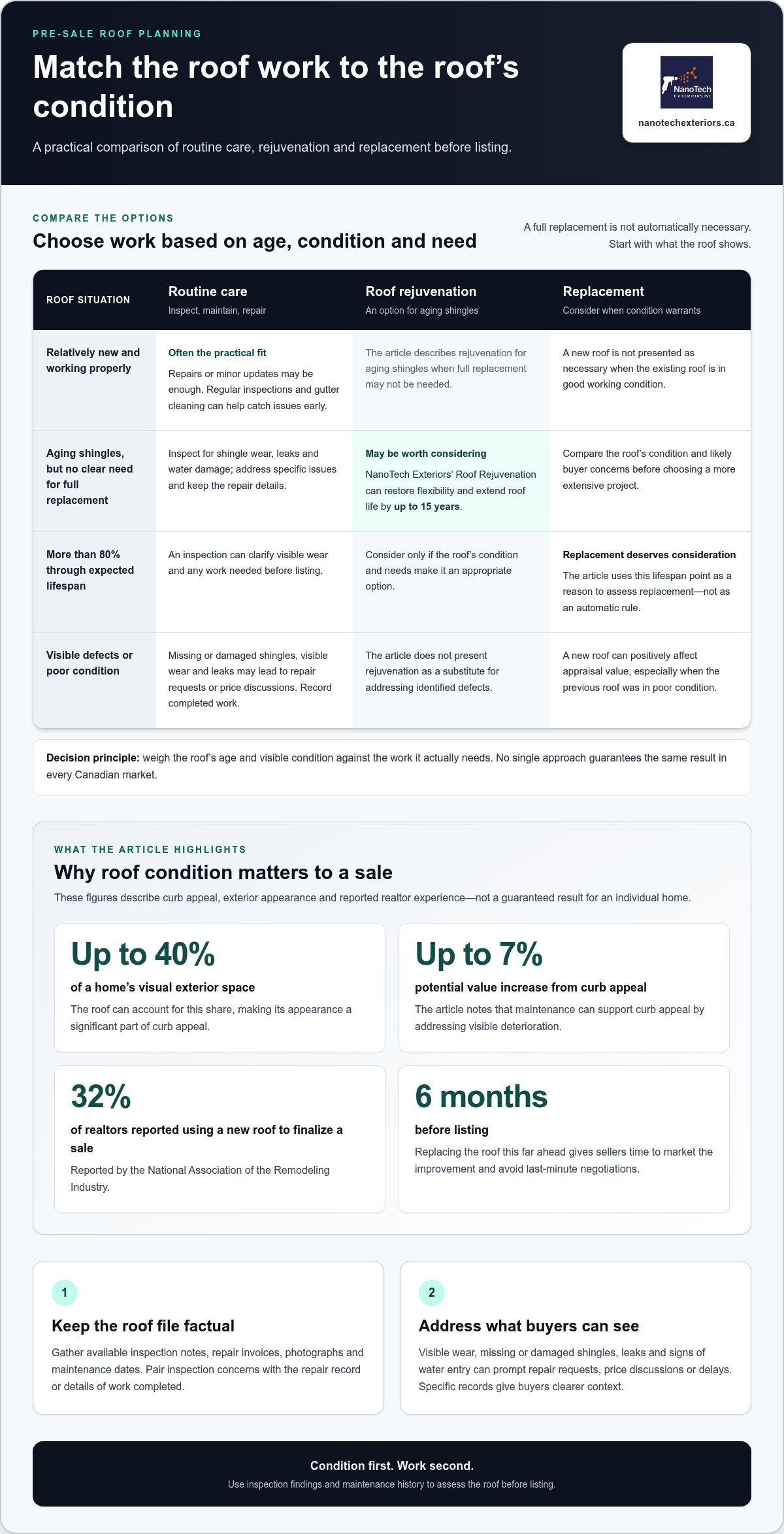
To increase home value with roof maintenance, match the work to the roof’s condition instead of assuming a full replacement is necessary. If the roof is relatively new and working properly, repairs or minor updates may be enough; once it has passed 80% of its expected lifespan, replacement deserves consideration. Addressing visible wear before listing can support curb appeal and help prevent roof concerns from becoming a focus during a buyer’s inspection.
It’s understandable to want a roof that reassures buyers without investing in work the home doesn’t need. This article explains how maintenance can influence sale price, buyer confidence and curb appeal, and when roof rejuvenation or replacement may make sense before selling. You’ll also learn how to weigh routine care against larger work and what to look for as Canadian weather puts your roof through the seasons.
Key Takeaways
- Compare the roof’s age and condition with the work it needs before deciding whether maintenance or replacement better supports your sale plans.
- Address visible wear before listing to improve curb appeal and reduce the chance that roof concerns become a focus during buyer inspections or negotiations.
- Use regular inspections and gutter cleaning to catch issues early, including signs of shingle wear, leaks and water damage.
- When shingles are aging but the roof may not need full replacement, NanoTech Exteriors’ Roof Rejuvenation can restore flexibility and extend roof life by up to 15 years.
- Learn which roof conditions make repair, rejuvenation or replacement the more practical choice before preparing your home for sale.
How roofing affects sale price, sale speed, and curb appeal
Roofing affects a home’s first impression, inspection findings and buyer negotiations. Before listing, consider both the roof’s visible condition and any work it may need.
Roofing and Sale Price
Roofing can influence sale price when buyers or appraisers weigh visible condition against expected repairs. In Canada, maintaining the existing roof often offers a stronger practical return than choosing a more expensive material without a clear need. Architectural asphalt shingles are popular for balancing affordability and appearance, while a new roof can positively affect appraisal value, especially when the previous roof was in poor condition. Curb appeal alone can increase a home’s value by up to 7%; maintenance supports that appeal by addressing visible deterioration.
No roofing material guarantees the best return in every Canadian market. Start with the roof’s condition and whether the proposed work addresses a buyer’s likely concerns.
Roof Condition and Resale Assessments
A roof’s condition can shape inspection findings, appraisals and resale negotiations. Missing or damaged shingles, visible wear and signs of leaks may prompt repair requests or price discussions. A new roof can support an appraisal, particularly if the old one is in poor condition. For sellers, the distinction between a sound roof and one with unresolved defects can have financial consequences.
Roof maintenance can protect value by limiting visible deterioration and supporting curb appeal. There is no fixed increase in home value that applies across Canada. The impact depends on what the work addresses and how the roof presents to buyers.
Roof Appearance and Curb Appeal
Roof appearance is a major part of curb appeal because a roof can make up to 40% of a home’s visual exterior space. Shingle colour should complement the siding, brick and trim rather than compete with them. For example, compare a sample against the home’s exterior in daylight before selecting a replacement colour. Roof replacement also creates a chance to choose a design that suits the property’s existing lines and materials.
That visual fit matters: a coordinated exterior can help the roof complement the home rather than make a replacement feel out of place. Cleaning visible dirt from siding and entry areas can reinforce the same well-maintained impression.
Roofing and Sale Speed
Roofing can affect sale speed when buyers view a roof concern as a negotiation or repair issue. The National Association of the Remodeling Industry reported that 32% of realtors had recently used a new roof to finalize a sale. Replacing the roof six months before listing gives sellers time to market the improvement and avoid last-minute negotiations. A local realtor can also explain whether nearby homes with new roofs sell well.
A documented replacement can answer buyers’ questions early, while visible wear left unresolved may lead to repair requests or price negotiations. Planning roof work before listing can help prevent it from becoming a late-stage obstacle.
How does roof condition affect buyer confidence in BC markets?
For sellers in Burlington, Hamilton, Oakville, Niagara, Kitchener, Guelph and Cambridge, roof condition can influence how buyers assess upkeep, repair needs and future costs. Inspection findings and organised maintenance records help explain the roof during a sale.
Roof Condition in Buyer Negotiations
Roof condition becomes a negotiation factor when buyers anticipate repairs or replacement after an inspection. These figures illustrate how perceived risk can shape an offer, not a fixed formula for local homes. If an inspection identifies missing asphalt shingles or damaged flashing, buyers may request repairs or adjust their offer to account for the work.
Respond with specifics. Match each inspection finding to its repair record, or address the repair before negotiations progress. Clear documentation gives both sides a concrete basis for discussing the roof’s condition.
Maintenance Records for Buyers
Maintenance records give buyers a timeline of roof care, rather than asking them to judge condition from appearance alone. Keep inspection notes, invoices, photographs and repair descriptions together. For example, a dated record of when damaged asphalt shingles were replaced can clarify what changed and what remains original.
Include related details, such as attic moisture observations or insulation work, if they are documented. A complete file lets buyers compare the roof’s visible condition with its history and gives their inspector useful context.
Inspection findings matter because roof concerns can lead to repair requests or price negotiations. A buyer may reduce an offer to account for expected replacement costs, while a problem discovered during the sale can cause delays. If an inspection identifies a leak or recurring moisture, provide the relevant repair record or a clear account of work completed. Specific information is more useful than a general assurance about the roof.
Buyer confidence also depends on whether the roof appears consistent with the home’s overall upkeep. Fresh interior paint, for example, won’t answer questions about a stained ceiling or visible shingle damage. Buyers weigh those clues together. An inspection can reveal issues not apparent from the driveway, including damaged flashing or signs of water entry.
Prepare a simple roof file before showings. Include available inspection notes, repair invoices, photographs and maintenance dates. Keep the documents factual. If a report identifies a concern, pair it with the repair record or inspection detail that addresses it. This gives buyers clearer information to consider during their review.
If an inspection identifies a specific defect, roof repair options can address that concern before it becomes a wider negotiation issue. Connect the work to the inspection finding and retain a record of what was repaired. That gives buyers clearer information than a general claim that the roof is in good shape.
When should I replace my roof before selling?
Replace the roof when its condition and remaining service life make ongoing repairs less practical. Before resale, an inspection can help distinguish replacement needs from maintenance tasks or roof rejuvenation.
Inspecting Shingles and Flashings
A roof inspection checks for missing, broken or curled shingles, rusted flashing and signs of leaks. A small visible defect can indicate water entry or a repair buyers may notice later. For example, a lifted shingle near a roof edge calls for closer attention to nearby materials and the area beneath it.
Inspect the roof annually for missing shingles or leaks, and record what you see. Look for damaged flashing around roof penetrations, where water can pass a weakened seal. A professional inspection before listing can identify problems that might otherwise surface during a buyer’s home inspection.
Routine Roof and Gutter Care
Routine care helps prevent debris and developing damage from going unnoticed. Clean gutters twice a year so water can drain rather than collect at the roof edge. During those checks, look for loose shingle pieces, standing debris and visible moss. Choose moss treatment suited to the roof’s material and condition, and avoid aggressive removal that could damage shingles.
Check flashing for rust, gaps or looseness, and address damage before water reaches the roof structure. Moisture in an attic can contribute to mold growth and structural damage. Note attic changes, such as dampness or a ceiling stain, alongside exterior observations. These signs don’t establish energy efficiency, but they can identify areas that need attention.
Rules for Roof Repairs and Replacements
Building-code and permit requirements depend on the municipality and the scope of roof work, while insurance coverage depends on the policy. Before scheduling work, distinguish routine repairs from larger replacement projects. For example, replacing a few damaged shingles may be treated differently from altering the roof structure.
Before work begins, review local municipal requirements and your home insurance policy. Keep permits, inspection documents and repair records with the home’s other resale paperwork. This gives buyers a clear account of completed work without suggesting that every roofing project follows the same approval process across Canada.
Roof Inspection and Maintenance Frequency
Inspect the roof annually for missing shingles and leaks, and clean gutters twice a year. After a major storm, look from the ground for changes such as displaced shingles or debris. If you see damage or a leak, arrange an inspection rather than waiting for the next annual check.
Replacement may deserve consideration once a roof has exceeded 80% of its expected lifespan, especially when inspections also identify recurring damage. A relatively new roof that functions properly may need only repairs or minor updates. Comparing roof age with inspection findings helps owners decide whether replacement will address a resale concern or simply add work the home doesn’t need.
Preventing costly repairs through routine maintenance
Routine roof care helps protect a home from weather, water intrusion and declining structural integrity. For homeowners planning to sell, finding a small problem early can prevent it from becoming a more visible resale concern.
Roof Repairs and Weather Protection
Timely repairs help maintain the roof’s barrier against rain, wind and melting snow. A damaged shingle, loose flashing or blocked drainage point can let water reach the roof structure, attic or walls. Fixing the specific defect limits exposure and gives homeowners a clearer record of the roof’s condition.
For example, water staining near a ceiling calls for tracing the source, not simply repainting the mark. Addressing the point of entry protects the home more effectively than covering the visible symptom.
Canadian Weather and Roof Maintenance
Canadian weather puts roofs through snow, ice, hail and freeze-thaw cycles, each bringing different maintenance concerns. Snow and ice can contribute to ice dams, so check for them in winter. Hail can leave visible damage, while repeated freezing and thawing can stress vulnerable roof areas.
After severe weather, look from the ground for displaced shingles or debris, and arrange an inspection if you see damage. Don’t climb onto an icy or snow-covered roof. Moisture in an attic can contribute to mold growth and structural damage, so investigate dampness or new ceiling stains promptly.
Gutters are part of the roof’s drainage system. Clean them twice a year to prevent leaves and debris from obstructing water flow. If water spills over the edge during rainfall, check for blockages and pooling around the home. In winter, pay attention to ice dams, as backed-up water can enter beneath roofing materials.
Maintenance also protects the value of the original installation. Regularly checking shingles, flashing and drainage points helps distinguish a local repair from broader deterioration. One damaged shingle, for instance, is different from repeated leaks in several areas. Dated notes and photographs make changes easier to track, especially before selling.
Older homes may need more maintenance as wear accumulates. Review the roof, attic and visible interior ceilings, noting loose or curled shingles, damaged flashing, damp insulation and water stains. These observations can help identify problems before they affect more of the home. If attic moisture appears, address its source rather than treating only the interior symptoms.
Flat roofs need a maintenance plan too. Preventative maintenance can extend a flat roof’s life by 3 to 5 years. For homeowners considering resale, routine care is an investment in weather protection and documented upkeep, not a substitute for replacement when the roof has reached the end of its useful life.
Preventative maintenance versus roof replacement
Maintenance preserves a roof that still performs; replacement renews one that has deteriorated beyond practical repair. Before selling, compare the roof’s age, condition, repair history and remaining service life instead of choosing the largest project by default. Roof rejuvenation may also suit eligible aging shingles.
Preventative care is the stronger fit when the roof remains sound and its issues are localized. For example, targeted repairs can extend roof life by 2 to 4 years, while preventative maintenance can extend a flat roof’s life by 3 to 5 years. These measures address specific wear, not widespread failure. If inspections show recurring leaks or damage across multiple areas, repeatedly repairing isolated spots may not resolve the underlying problem.
Replacement deserves consideration when deterioration is widespread, repairs keep recurring, or the roof has exceeded 80% of its expected lifespan. Most asphalt shingle roofs last between 20 and 30 years, depending on materials, climate and maintenance. A metal roof has a listed lifespan of 40 to 70 years. Compare the roof’s actual condition with these material lifespans, because age alone doesn’t show whether the property needs a full replacement.
Winter weather can make timing important. A roof that lets water in or has compromised materials needs attention before snow and freeze-thaw conditions add stress. Maintenance before winter can also make sense when an inspection identifies manageable defects, such as damaged shingles or loose flashing. The key distinction is scope: a local repair addresses a specific weakness, while replacement addresses a roof system that no longer performs reliably.
If your home is going on the market, consider how each option will read to buyers. A documented repair can show how a contained issue was handled. A full replacement may be easier to present when the existing roof is visibly worn or broadly damaged. Base the decision on evidence, such as inspection findings, repeated leaks or remaining service life, rather than assuming newer materials will automatically produce the best resale result.
Metal roofing illustrates why materials should be judged by fit, not lifespan alone. Its listed service life is longer than that of asphalt shingles, but replacing a functioning roof solely to change materials may not address a current maintenance issue. If a sound asphalt roof needs a localized repair, for example, compare that repair with the condition of the whole system before deciding on replacement.
Choose the least extensive work that resolves the roof’s real condition. If inspection findings point to isolated defects, arrange targeted repairs; if deterioration is widespread, plan replacement before listing. Explore residential roofing options when a replacement assessment is the next step.
NanoTech Exteriors: Roof Rejuvenation
NanoTech Exteriors’ Roof Rejuvenation is designed to restore flexibility to aging shingles and extend roof life by up to 15 years. It can suit homeowners whose shingles are aging but whose roof does not require full replacement. The spray-applied treatment offers an alternative to replacing the entire roof, potentially costing up to 85% less than a new roof.
If an inspection finds widespread deterioration or damage beyond the shingles, Residential Roofing or Roof Repair may better address the problem. Roof rejuvenation may suit eligible aging shingles, while targeted repairs or replacement are appropriate for other conditions. Match the work to the inspection findings to prepare the roof for sale without taking on unnecessary work.
Contact NanoTech Exteriors to discuss the roof’s condition and the appropriate next step.
Make Your Roof Plan Part of Your Selling Strategy
Before setting a listing date, decide what role the roof should play in your sale plan. The goal isn’t to make every exterior feature new; it’s to make a deliberate choice that supports the home’s condition and presentation. A focused plan to increase home value with roof maintenance starts by matching the work to the roof’s needs, then clearly explaining that decision to prospective buyers.
Turn inspection observations into a practical scope of work. Consider how each task fits with other pre-sale preparations, and base the roof decision on its condition, not appearance alone. A clear priority list can help you avoid rushed choices as listing preparations progress. NanoTech Exteriors can help you consider roof rejuvenation, repairs or replacement based on the roof’s needs.
Contact NanoTech Exteriors to discuss your roof and plan a sensible next step. A thoughtful approach can make selling feel more manageable, one decision at a time.
Frequently Asked Questions
How Much Should You Budget?
A general home-maintenance guideline is to reserve 1% to 3% of your property’s value annually for upkeep across the home, not roofing alone. Roof work takes priority when inspections identify leaks, damaged materials or blocked drainage. For example, a home with several maintenance needs should allocate its reserve according to condition, age and local weather exposure rather than treating the entire amount as a roof budget.
How do roofing investments speed up property sales?
Roof work can reduce delays by resolving buyer concerns before they become inspection requests or negotiation conditions. A completed repair, paired with a clear invoice and description of the work, gives prospective buyers useful information during their review. For example, addressing a documented leak before photography and showings can prevent questions about a visible ceiling stain from interrupting discussions later in the sale process.
What role does roofing play in property value?
Roofing contributes to property value through both visible presentation and the condition buyers expect to inherit. A roof in good repair supports the home’s overall upkeep, while visible deterioration can raise questions about future work. The roof represents an estimated 2% to 5% of a home’s total value. That estimate is context, not a guaranteed increase from maintenance or replacement.
Why does regular maintenance delay costly replacements?
Regular maintenance can catch localized defects before water reaches more of the roof system or the home’s interior. Clearing drainage paths and addressing loose flashing, for example, helps keep a small weak point from becoming a broader moisture problem. Homeowners can increase home value with roof maintenance by preserving sound materials and documenting care, while recognizing that maintenance cannot restore a roof with widespread deterioration.
Which roof repairs and maintenance tasks add the most value before selling a home?
Prioritize work that resolves visible defects or improves roof function: repair active leaks, replace damaged shingles, secure loose flashing and clear blocked gutters. Keep the repair record with your listing documents. An invoice identifying a repaired leak and its location is more useful to buyers than a general note that the roof was serviced. Address essential repairs before cosmetic work.
What does roof inspection and maintenance cost in Canada?
Roofing costs depend on location, roof complexity, including pitch, gables and accessibility, and the roof’s condition. NanoTech Exteriors provides a tailored quote after a free roof assessment; the assessment helps determine the work needed. Homeowners in Burlington, Hamilton, Oakville, Niagara, Kitchener, Guelph and Cambridge can use it to plan roof work before preparing a home for sale.
What are the signs a roof needs repair or replacement?
Missing, broken or curled shingles, rusted flashing, leaks and new interior water stains are signs that a roof needs attention. One damaged area may call for a targeted repair, while recurring leaks or deterioration across several sections can indicate a broader problem. A ceiling stain beneath a roof penetration, for example, should prompt investigation of both the interior mark and the flashing above it.
Does replacing a roof increase home value more than repairing it in Canada?
Replacement may add more value when widespread deterioration cannot be addressed with localized repairs. Repair is the more direct investment when inspection findings show isolated damage and the rest of the roof remains sound. Replacing a few damaged shingles can resolve a specific defect; repeated leaks across multiple areas call for a broader assessment, which may include replacement or roof rejuvenation if the shingles are suitable. Match the scope to the roof’s condition.