A sealed concrete driveway doesn’t need aggressive cleaning to stay protected. Harsh methods can damage some sealers, while Southern Ontario’s road salt, moisture and freeze-thaw cycles put the surface under seasonal stress. Maintaining a sealed concrete driveway is less about constant scrubbing and more about gentle, consistent care.
If you’re unsure which cleaner is suitable, how to handle stains or when the sealer needs attention, a simple routine can help. It can prevent small concerns from being overlooked without relying on guesswork or unnecessary products.
This guide explains how to clean your driveway, protect it through winter and check for early signs of sealer wear or concrete damage. You’ll also learn how to decide whether routine care is enough or professional concrete sealing could help. Follow the sealer manufacturer’s instructions for product-specific cleaning and maintenance, and adjust your routine to your driveway’s condition and exposure.
Key Takeaways
- Understand what a sealer can protect against, and why it doesn’t make concrete damage-proof.
- Use a gentle cleaning sequence and test unfamiliar cleaners in an inconspicuous spot before treating the whole driveway.
- Reduce winter wear by managing drainage and removing snow without scraping or abrading the sealed surface.
- Learn to distinguish everyday dirt from possible sealer wear or concrete damage, while treating these signs as indicators rather than a diagnosis.
- Make maintaining a sealed concrete driveway manageable with regular debris removal and seasonal inspections tailored to your driveway’s conditions.
Maintaining a Sealed Concrete Driveway Starts with Knowing What the Sealer Does
A sealed concrete driveway is a concrete driving surface treated with a protective sealer that helps limit moisture entry or staining, depending on the sealer type. The treatment adds protection, but it doesn’t make concrete impervious to wear, weather or damage. Knowing the sealer’s limits helps you choose sensible care and recognize when a surface concern needs more than cleaning.
Think of the sealer as one part of a maintenance plan, not a substitute for it. A practical routine includes clearing debris, cleaning gently when needed, reducing seasonal stress and checking for changes. This keeps everyday care straightforward and helps you notice developing concerns.
Concrete is a common driveway material because it provides a firm surface for vehicles and everyday access. The general overview in Understanding Driveways describes how driveways serve homes and other properties. For homeowners, the key detail is that concrete is porous: water and staining substances can affect its surface, while a suitable sealer can help limit exposure.
- Remove leaves, grit and other loose debris before they sit on the surface.
- Clean with a method suited to the sealer, then follow its care instructions.
- Check for standing water, new surface changes or signs of wear as seasons change.
What a concrete sealer can, and cannot, do
Some sealers form a protective surface layer, while others penetrate the concrete. Depending on the formulation, a sealer may help reduce moisture absorption or make stains easier to manage. It won’t repair cracks, restore concrete that is flaking or spalling, or correct a structural problem. Follow the manufacturer’s instructions for the specific sealer’s performance, cleaning method and maintenance.
Why Southern Ontario weather matters
In Southern Ontario, wet periods and repeated freeze-thaw cycles can put exposed concrete under stress. Moisture that enters the surface may freeze and expand, contributing to deterioration over time. De-icing products can also affect concrete or a sealer, but the impact depends on the material, product and conditions. Check product guidance before use rather than assuming every product has the same effect.
Your driveway’s care needs depend on more than the calendar. Areas that hold water, see frequent vehicle traffic or are exposed to falling leaves may need attention sooner than sheltered, well-drained sections. Sealer type matters too. If the surface looks different after winter or begins to show wear, record what you see and compare it over time instead of assuming the sealer has failed.
Routine cleaning can address ordinary dirt, but it can’t reverse concrete damage or renew worn protection. If cleaning doesn’t resolve a concern or the surface shows persistent deterioration, professional concrete sealing may help restore protection when the concrete is suitable for sealing. First distinguish a soiled surface from worn sealer or concrete that needs repair. That keeps maintenance focused and avoids treating every problem the same way.
How to Clean a Sealed Concrete Driveway Without Wearing Down Its Protection
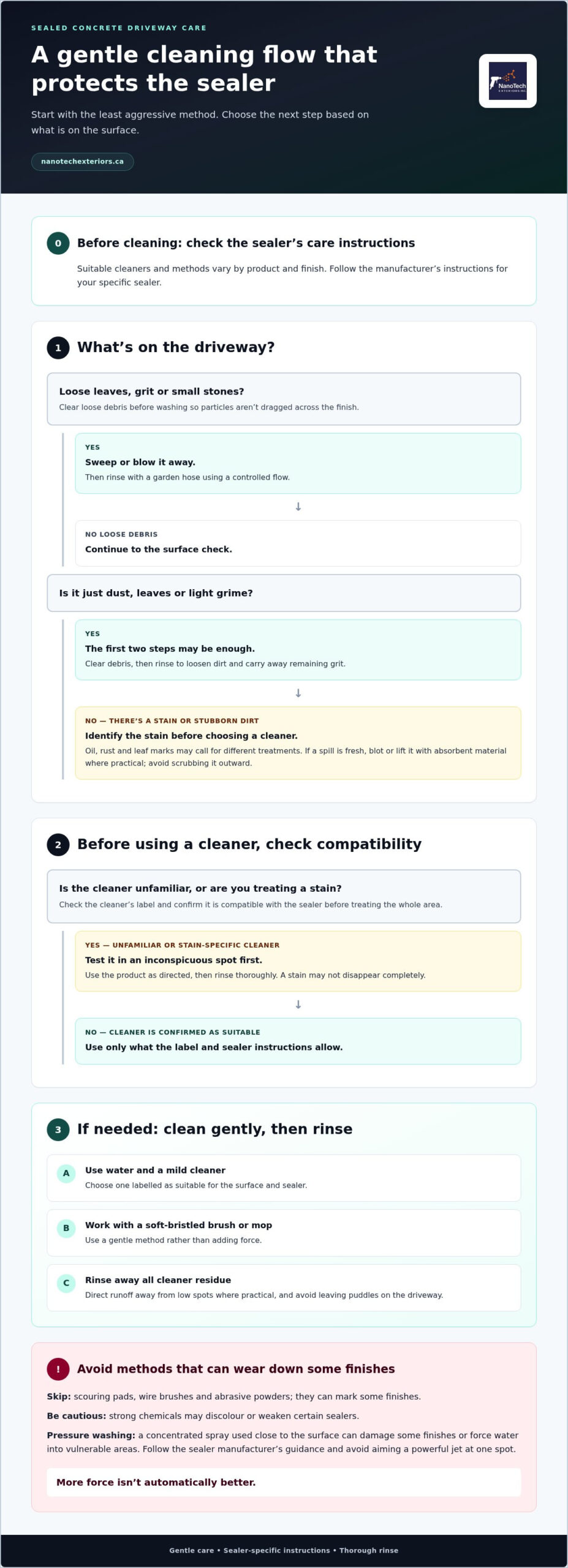
Cleaning doesn’t need to be complicated. A gentle, repeatable method removes ordinary dirt while reducing the risk of scratching or dulling the sealer. Before you start, check the sealer manufacturer’s care instructions because suitable cleaners and methods vary by product and finish.
- Clear loose debris. Sweep or blow away leaves, grit and small stones. Washing debris across the surface can drag particles over the finish and cause avoidable abrasion.
- Rinse the driveway. Use a garden hose to loosen surface dirt and carry away remaining grit. Start with a controlled flow rather than a concentrated spray.
- Clean gently. Use water and a mild cleaner labelled as suitable for the surface and sealer. Work with a soft-bristled brush or mop, and test an unfamiliar cleaner on an inconspicuous spot first.
- Rinse away residue. Wash off all cleaner so it doesn’t remain on the finish. Direct runoff away from low spots where practical, and avoid leaving puddles on the driveway.
Routine cleaning for everyday marks
For dust, leaves and light grime, the first two steps may be enough. If you need a cleaner, use only what its label and the sealer instructions allow. Avoid scouring pads, wire brushes and abrasive powders, which can mark some finishes. Strong chemicals may also discolour or weaken certain sealers. More force isn’t automatically better.
A pressure washer can be too aggressive if the spray is concentrated or used close to the surface. It may damage some finishes or force water into vulnerable areas. If you use one, follow the sealer manufacturer’s guidance and use a controlled approach rather than aiming a powerful jet at one spot. The Concrete Industry Standards resource offers broader technical information about concrete, but the product instructions are the guide for your specific sealer.
Handling oil, rust and stubborn stains
Identify the stain before choosing a cleaner. Oil, rust and leaf marks may call for different treatments, and a product that works on one stain could be unsuitable for another sealer. If a spill is fresh, blot or lift it with an absorbent material where practical. Avoid scrubbing it outward, which can spread the mark.
Read the cleaner’s label and confirm it’s compatible with the sealer before treating the whole area. Test it in an inconspicuous spot, use it as directed, then rinse thoroughly. A stain may not disappear completely, and repeated scrubbing or stronger chemicals can cause more harm than the mark itself. If gentle cleaning doesn’t help, pause rather than escalating to abrasive tools.
Careful cleaning is one practical part of maintaining a sealed concrete driveway. If the surface remains marked or the sealer appears worn despite routine care, professional concrete sealing may help restore protection.
How to Protect a Sealed Driveway from Winter Wear and Surface Damage
Winter care means managing moisture and removing snow without adding avoidable wear. A sealer can help protect concrete, but it can’t prevent every effect of standing water, ice or repeated freezing. In Southern Ontario, watch how water moves across the driveway, especially after a thaw or rain followed by colder weather.
Freeze-thaw exposure makes moisture management and routine inspection important parts of driveway care. If you notice a spot that repeatedly holds water or an area that looks different after winter, take note rather than relying on another surface treatment to solve it.
Snow, ice, and de-icing products
Clear snow before it compacts into a hard layer. Choose a shovel or snow-clearing tool that won’t gouge the surface. Where practical, use a smooth, non-metal edge and push or lift snow instead of forcefully chipping at ice. Avoid dragging sharp metal edges across the concrete. Careful removal helps reduce wear on the finish and sealer.
De-icing products aren’t interchangeable. Their suitability depends on the concrete, the sealer and the product’s directions. Before applying one, read its label and check the sealer manufacturer’s guidance. Don’t assume a product is suitable for every sealed driveway, and don’t use more than the instructions call for. If the guidance is unclear, choose mechanical snow removal that won’t abrade the surface rather than guessing.
Drainage and freeze-thaw prevention
After snow melts or rain falls, look for water that repeatedly pools near joints, edges or low spots. If runoff has nowhere to go, standing moisture can remain in contact with the concrete through repeated freezing and thawing. Clear leaves, slush and other debris from drainage paths so water can move away from the driveway instead of collecting there.
Recurring pooling deserves attention. Reapplying sealer won’t correct a drainage issue, and treating the surface repeatedly may leave the underlying cause untouched. Note where water gathers and whether the same area stays wet after surrounding sections have dried. If the pattern persists, consider whether the slope, a blocked drainage path or a low spot may contribute. Appearance alone may not confirm the cause, but tracking the location helps identify a recurring concern.
Winter protection is part of maintaining a sealed concrete driveway, not a one-time task. Check the surface during seasonal changes, including after snowmelt, and look for pooling, new flaking or other changes. These observations don’t diagnose the problem, but they can help distinguish routine winter mess from a concern that needs closer assessment. If the concrete or its protection appears deteriorated, professional concrete sealing may help when the surface is suitable for it.
How to Tell Whether Your Concrete Driveway Needs Cleaning, Repair, or Resealing
A mark on the driveway doesn’t automatically mean the sealer has failed. Dirt may come off with gentle cleaning, while uneven protection or concrete deterioration calls for a different response. These signs can help you decide what to do next, but they’re indicators, not a definitive diagnosis. Sealer type, age and surface condition all affect what you’re seeing.
Signs that routine cleaning may be enough
Loose grit, leaves, dust or removable surface marks often point to ordinary cleaning needs. Clean the area using a method and product suited to your sealer, then let it dry before reassessing. If the mark lifts and the surface looks consistent, note the result. Dated photographs taken from the same angle can help you track changes between seasonal inspections without relying on memory.
Signs that protection or concrete may need attention
Uneven-looking wear or areas where water appears to absorb repeatedly may suggest that protection has changed, but appearance alone can’t confirm sealer failure. Flaking or a worn-looking film may also relate to the sealer or its application. Cracks, pitting and spalling are changes in the concrete itself, not simply dirt to clean away. If deterioration persists, professional concrete sealing may help with worn protection; concrete damage may need assessment or repair before sealing is considered.
There’s no single resealing schedule that fits every driveway. Timing depends on the sealer product, manufacturer guidance, vehicle use and exposure to weather, water and other wear. Follow the product instructions and consider the surface’s condition. Don’t reseal just because a set amount of time has passed, especially if the concrete needs attention first.
Use this comparison as a starting point, not a diagnosis:
What you see: Loose dirt, leaves or a removable mark.
Possible meaning: Routine surface soil, not necessarily sealer failure.
Sensible next step: Clean gently, allow the area to dry and reassess.
What you see: Uneven-looking wear or recurring water absorption in one area.
Possible meaning: Protection may be wearing differently, though the cause isn’t certain from appearance alone.
Sensible next step: Record the location, compare it over time and review the sealer’s care guidance.
What you see: Cracks, flaking concrete, pitting or spalling.
Possible meaning: The concrete itself may be deteriorating, rather than simply needing cleaning.
Sensible next step: Seek an assessment before treating the surface as a resealing-only issue.
Keeping simple notes makes maintaining a sealed concrete driveway more deliberate: record what changed, where it appeared and whether cleaning helped. If protection looks worn and routine care hasn’t resolved the concern, arrange professional concrete sealing as a practical maintenance option.
Build a Simple Sealed Concrete Driveway Maintenance Plan
A reliable plan doesn’t need a rigid calendar. Clear debris regularly, clean when the surface needs it, and inspect at seasonal change points. Adjust the routine to your driveway’s conditions: frequent vehicle traffic, overhanging trees, poor drainage and strong weather exposure can all mean more frequent attention.
Keep brief notes or dated photographs of changes, especially in areas that collect water or show wear. This gives you a useful comparison after winter and helps distinguish a one-off mark from a recurring issue. For cleaning, resealing and care between applications, follow the instructions for your specific sealer. There’s no universal resealing interval that suits every product and driveway.
A practical seasonal inspection checklist
- After winter: Look for new cracks, flaking, standing water and visible changes in the surface. Note where each appears and compare it with earlier photographs.
- During warmer months: Remove leaves and other debris before they build up. Address fresh spills promptly using a cleaner compatible with the sealer, and avoid aggressive scrubbing.
- Before winter: Clear drainage paths so runoff can move away from the driveway. Review the sealer manufacturer’s guidance before using any de-icing product, and plan to remove snow without scraping the finish.
Use the checklist as a prompt, not a diagnosis. If the same area keeps pooling or a surface change grows over time, record it and consider whether it needs closer assessment. Cleaning can remove dirt, but it won’t correct drainage problems, repair cracks or restore concrete that is deteriorating.
When professional concrete sealing can help
If the concrete is in suitable condition but its protective finish appears worn, or routine upkeep no longer seems sufficient, professional concrete sealing may be worth considering. The right next step depends on the surface and existing sealer, so visible wear should be assessed in context rather than treated as automatic proof that resealing is due. If the concrete itself is cracked or spalling, repair needs may have to be addressed before a new sealer is applied.
NanoTech Exteriors provides concrete sealing for homeowners in Burlington, Hamilton, Oakville, Niagara, Kitchener, Guelph and Cambridge. Sealing can be a practical option when regular care can’t restore worn or deteriorated protection. NanoTech Exteriors also provides wood sealing, a separate surface-care service with different preparation needs from concrete.
With a simple routine, maintaining a sealed concrete driveway becomes easier to manage: remove debris, clean as needed, inspect seasonally and follow product-specific guidance. If your observations point to worn protection rather than everyday dirt, NanoTech Exteriors can help with professional concrete sealing.
Make Your Next Driveway Check Count
Choose one small step to keep your driveway’s condition visible: take a clear photo of any area you’re watching and note the date. Compare it at your next inspection. A simple record can help you spot gradual change and decide whether the surface needs routine care or a closer look.
There’s no need to guess at resealing based on appearance alone. If you’re maintaining a sealed concrete driveway and suspect the protection has worn, professional concrete sealing can help you plan the next step. NanoTech Exteriors serves homeowners in Burlington, Hamilton, Oakville, Niagara, Kitchener, Guelph and Cambridge.
Explore NanoTech Exteriors’ concrete sealing services to see how professional sealing may fit into your exterior maintenance plan. A little attention now can help you care for your driveway with more confidence through the seasons ahead.
Frequently Asked Questions
How often should I clean a sealed concrete driveway?
Clean it when dirt, leaf residue or tracked-in grit starts to build up, rather than following a rigid weekly schedule. A shaded driveway beneath trees may collect debris faster than an exposed one, while a busy entrance may need more frequent attention. After cleaning, check whether the surface looks clear once dry. This practical approach to maintaining a sealed concrete driveway matches care to actual conditions.
Can I use a pressure washer on sealed concrete?
Check the sealer manufacturer’s instructions first because a forceful or concentrated spray may damage some finishes. If the product guidance allows pressure washing, use a controlled approach and avoid holding the spray close to one spot. For light grime, a hose and soft brush may be enough. Stop if the finish changes, becomes patchy or starts to lift, and reassess before continuing.
Is road salt safe for a sealed concrete driveway?
There isn’t one answer for every driveway. The effect of a de-icing product can depend on the concrete, sealer and product formulation. Read both the product label and the sealer care instructions before applying it, and don’t assume a product marketed for pavement suits every sealed surface. If the guidance is unclear, clear snow with a non-abrasive tool and avoid experimenting with chemicals on the driveway.
How can I tell if my concrete driveway needs resealing?
Look for changes such as visibly uneven protection or areas that seem to absorb water repeatedly, but treat these as clues, not proof. Sealer type affects how the surface looks and responds, so water beading alone may not tell the whole story. Compare dated photos and check the product’s maintenance guidance. If deterioration persists, professional assessment can help distinguish worn sealer from a concrete issue.
What should I do if water pools on my sealed driveway?
First, note where the water collects and whether the same spot remains wet after nearby areas dry. Clear leaves or debris that may be blocking runoff, but don’t rely on adding sealer to correct recurring pooling. If water continues to gather, the cause may involve the driveway’s slope or drainage. Track the pattern and have the surface assessed if the pooling persists or accompanies visible deterioration.
Can a concrete sealer prevent cracks or surface flaking?
No. A suitable sealer can help limit moisture exposure, but it can’t make concrete immune to damage or repair cracks, flaking or spalling that already exist. If you notice a new crack or pieces of the surface lifting, document the location and monitor whether it changes. The concrete may need attention before any resealing is considered, so don’t treat a new coat as a repair.
When is the best time of year to reseal a concrete driveway in Ontario?
Late spring through early fall is generally suitable when temperatures are moderate and rain isn’t forecast, giving the sealer conditions to cure according to its instructions. This can matter for homeowners in Burlington, Hamilton, Oakville, Niagara, Kitchener, Guelph and Cambridge, where outdoor work must be planned around changing weather. Follow the specific product’s temperature, drying and curing directions rather than relying on the season alone.