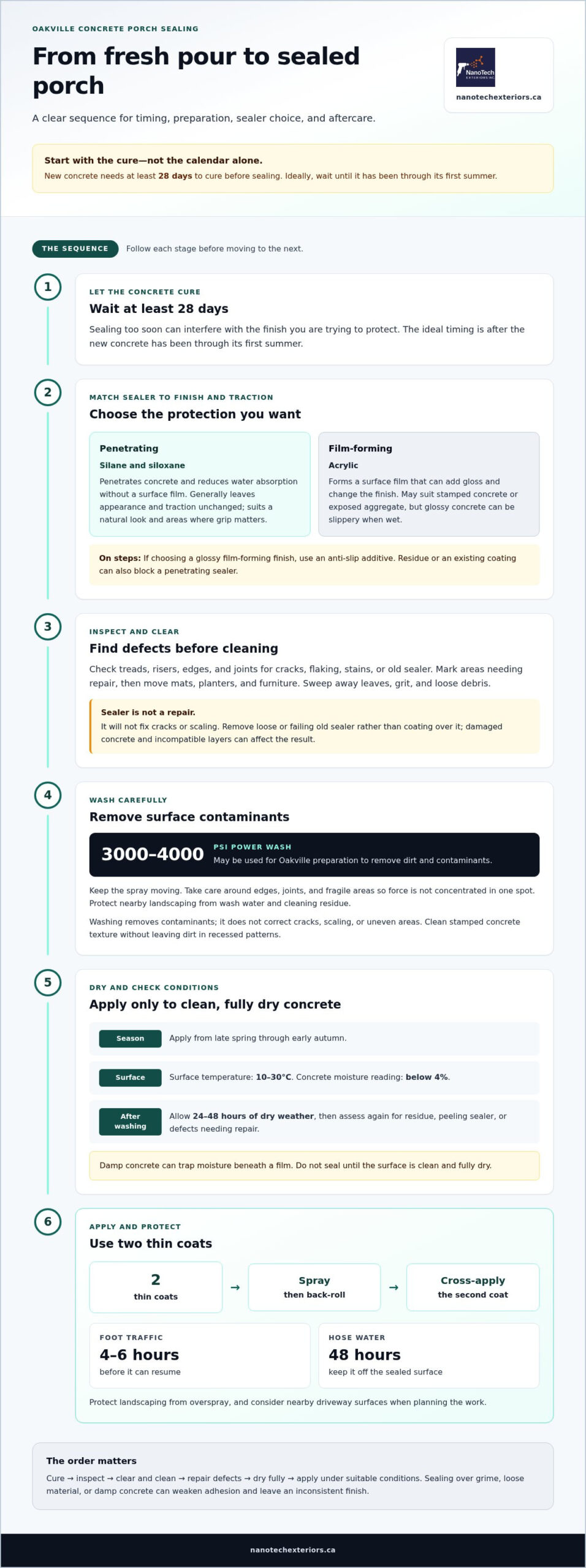
Don’t seal a new concrete porch right after it’s poured. For Oakville concrete porch sealing, wait at least 28 days for the concrete to cure, and ideally until it has been through its first summer. Sealing too soon can interfere with the finish you’re trying to protect.
It makes sense to protect a new porch from moisture, salt, and freeze-thaw wear. The key is getting the timing and preparation right, then choosing a sealer suited to the concrete’s finish and the traction you want underfoot.
This guide explains when new concrete is ready, how penetrating and film-forming sealers differ, and what preparation and resealing involve. You’ll also learn what affects an estimate, so you can understand the work behind the price rather than rely on a number without context.
Key Takeaways
- Choose a penetrating sealer to reduce water absorption without a surface film; glossy acrylic sealers can affect traction when wet, especially on steps.
- Plan sealing around clean, fully dry concrete and suitable weather. Preparation and application conditions can influence how well the sealer performs.
- Set a resealing reminder based on the porch’s finish and exposure, since different concrete surfaces have different maintenance intervals.
- Compare estimates by looking at the porch’s size and condition, existing sealer, and preparation required, not just the final quoted amount.
Penetrating sealer or acrylic, which is better?
For Oakville concrete porch sealing, match the sealer to the finish and how you use the porch. Damp concrete can trap moisture beneath a film; cracks and scaling remain unrepaired. New concrete needs at least 28 days to cure before sealing.
Penetrating Silane and Siloxane Sealers
Silane and siloxane sealers penetrate concrete and reduce water absorption without forming a surface film. They generally leave the concrete’s appearance and traction unchanged, making them a practical choice for porches where grip matters. Check the existing finish first: residue or a coating can block penetration. Clean the surface and let it dry fully before application. These sealers suit homeowners who prefer a natural look over added gloss.
Penetrating Versus Film-Forming Sealers
A penetrating sealer works within the concrete, while an acrylic sealer forms a film on top. Film-forming products can add gloss and change the finish, which may suit stamped concrete or exposed aggregate. However, glossy concrete can become slippery when wet. On steps, use an anti-slip additive if you choose this finish. Before applying a new product, remove loose or failing old sealer and prepare the surface so the coating bonds evenly.
Choosing a Penetrating or Acrylic Sealer
Choose penetrating protection if you want to limit moisture absorption without changing colour or traction. Choose acrylic when a surface film and enhanced finish matter more, while accounting for wet-weather grip. Apply sealer from late spring through early autumn, when the surface temperature is 10-30 degrees Celsius and concrete moisture reads below 4 percent. After washing, allow 24-48 hours of dry weather. Apply two thin coats by spraying and back-rolling, cross-applying the second. Foot traffic can resume after 4-6 hours; keep hose water off for 48 hours. Protect landscaping from overspray, and consider nearby driveway surfaces when planning the work.
Concrete surface preparation and pressure washing
Prepare porch steps by inspecting, cleaning, repairing, and drying each surface before applying sealer. Follow that order: sealing over grime, loose material, or damp concrete can weaken adhesion, and a coating won’t repair cracks or scaling.
- Inspect the concrete. Check treads, risers, edges, and joints for cracks, flaking, stains, or old sealer. Mark areas needing repair; sealing damaged concrete can leave defects exposed and moisture may penetrate beneath a film.
- Clear the work area. Move mats, planters, and furniture, then protect surrounding landscaping from wash water and cleaning residue. Sweep away leaves, grit, and loose debris so pressure washing can reach the concrete.
- Wash carefully. Oakville preparation may use a 3000-4000 PSI power wash to remove dirt and contaminants. Keep the spray moving across the surface and take care around edges, joints, and fragile areas to avoid concentrating force in one spot.
- Let the concrete dry, then assess it again. Look for remaining residue, peeling sealer, or defects that need repair. Apply sealer only after the surface is clean and fully dry.
Cleaning and surface restoration are different tasks. Washing removes surface contaminants, but it doesn’t correct cracks, scaling, or uneven areas. Address defects before sealing, since a clear or coloured coating can make existing marks more noticeable. On stamped concrete, clean the texture without leaving dirt in its recessed pattern.
Old sealer can also affect the result. If it’s peeling or incompatible with the new coating, remove it rather than cover it. A patchy layer can prevent even bonding and leave an inconsistent finish across porch steps, walkways, or a concrete driveway.
Prepare connected surfaces consistently. For example, cleaning a porch but leaving residue along adjoining walkways can create visible colour differences after sealing. Careful inspection, washing, repair, and drying give the sealer a clean surface to adhere to.
Resealing intervals by concrete finish
Resealing frequency depends on the finish, foot traffic, weather exposure, and sealer type. Oakville driveway recommendations can offer a reference point, but a porch’s exposure and use matter, too. A sheltered patio may wear differently from exposed steps beside a busy walkway.
- Plain or broom-finish concrete: Oakville recommendations suggest resealing driveways every 4-5 years. Use this as a reference for similar porch finishes, then account for traffic and exposure.
- Exposed aggregate: Driveways are recommended for resealing every 3 years. The textured surface and its use affect how quickly the protective layer needs renewing.
- Stamped or coloured concrete: Oakville driveways are recommended for resealing every 2-3 years. A patio or porch with a decorative finish needs attention to preserve its surface appearance.
Penetrating sealers follow a different pattern: renew them every few years, depending on exposure and traffic. A porch exposed to frequent rain or heavy foot traffic may need attention sooner than a sheltered entry. These intervals are planning guides, not a substitute for inspecting the surface.
Check the concrete each spring and after harsh winter weather. Look for colour changes, increased water absorption, worn areas near steps, or an inconsistent finish. These signs can help indicate when maintenance is due. Temperature and damp conditions also affect application, so choose a suitable dry-weather window rather than sealing just because a calendar interval has passed.
Resealing protects the surface; it doesn’t repair cracks, stop frost heave, or correct severe scaling. If a porch has cracks or loose, deteriorating concrete, address the underlying damage before applying another coat. Concrete repair is the better first step for damaged areas, including garage slabs or patios with visible deterioration.
When assessing a porch, consider its finish, existing sealer, traffic, and exposure before recommending a resealing interval. Record the application season and product type after each job. This simple detail helps you compare the next inspection with the previous treatment and plan maintenance for Oakville’s changing weather.
Concrete sealing estimates and pricing
An Oakville porch estimate depends on the area’s size, concrete condition, existing sealer, and preparation required. A small, clean porch with sound concrete involves different work from stamped steps with peeling coating or surface damage. The finish matters because preparation and application must suit the concrete.
The cost of concrete sealing varies with the work involved. Key factors include porch dimensions, cleaning needs, removal of failing sealer, and any repairs required before sealing. A clear estimate connects each cost to a task rather than treating every porch as identical.
Review the scope for these project details:
- Area and finish: Confirm which porch surfaces, steps, and landings are included, especially where stamped concrete needs careful treatment.
- Preparation: Check whether washing, existing-sealer removal, and drying time are part of the work.
- Condition: Note visible cracks, scaling, or other damage that may need repair before a sealer can protect the surface.
- Application: Identify the sealer type and the number of coats included, so you understand what finish the estimate covers.
Oakville’s winter freeze-thaw conditions make moisture protection important, but sealing is maintenance, not structural repair. It can help limit water absorption and keep salt, oil, and stains from soaking in. Sealing is a maintenance measure, not a substitute for repairing damaged concrete. If the surface is damaged, distinguish necessary repairs from sealing in the estimate. That helps homeowners compare the work and plan for a lasting result.
Before accepting a scope, match the listed preparation to the porch’s condition and expected foot traffic. Ask for the work areas, surface preparation, sealer application, and any repair tasks to be described clearly. This makes it easier to see what the estimate covers and what could affect the final cost. To arrange a project-specific concrete sealing estimate, submit a quote request with the porch’s condition and surfaces in mind.
NanoTech Exteriors: Roof Rejuvenation
NanoTech Exteriors offers Roof Rejuvenation for homeowners with aging shingles, a separate exterior project from porch sealing. Its spray-applied treatment is designed to restore shingle flexibility and extend a roof’s lifespan by up to 15 years. The approach can cost up to 85% less than a new roof, offering an alternative when replacement may not be the first step.
If your porch needs sealing, use the preparation and estimate factors above to plan the work. If your roof also shows signs of ageing, Roof Rejuvenation may be relevant; Residential Roofing and Roof Repair address other roofing needs. Each service solves a different problem, so choose based on the surface that needs attention.
Contact NanoTech Exteriors to discuss Roof Rejuvenation or your roofing needs.
Make your porch the next step in your home maintenance plan
Oakville concrete porch sealing is one part of caring for an exterior that sees daily use. Consider how the porch fits your household’s priorities: note which entrance gets the most foot traffic, whether the steps are essential for access, and how the work could affect everyday routines. This gives you a practical basis for planning the project.
Think beyond the immediate task, too. If you’re organizing exterior maintenance across several surfaces, keep porch work distinct from roofing or wood care so each project gets the right treatment. NanoTech Exteriors offers Concrete Sealing, along with Roof Rejuvenation, Residential Roofing, and Roof Repair. The right next step depends on which part of your home needs attention.
When you’re ready to discuss porch sealing, contact NanoTech Exteriors about your porch project. A clear plan helps you move forward with confidence and keep your home’s exterior care manageable.
Frequently Asked Questions
Can I seal new concrete right after it is poured?
No. Wait at least 28 days for new concrete to cure before sealing, and ideally let it pass through its first summer. That timing gives the concrete time to dry and settle before a protective product is applied. For a newly poured porch, plan the sealing date around the concrete’s age and condition, not simply the first stretch of sunny weather.
How often should stamped concrete be resealed?
Stamped concrete driveways in Oakville are recommended for resealing every 2-3 years. A porch’s exposure, foot traffic, and existing sealer also influence its maintenance timing. For instance, a stamped entry used daily may show wear sooner than a sheltered area. Keep a note of the last application and inspect the surface regularly for worn patches or a change in appearance.
What types of services are offered by local concrete specialists in Oakville, Ontario?
Concrete sealing is one way to protect exterior surfaces from weather-related wear. NanoTech Exteriors provides Concrete Sealing in Oakville, Burlington, Hamilton, Niagara, Kitchener, Guelph, and Cambridge. Sealing is different from structural repair: it won’t correct uneven slabs or repair severe scaling. If a porch has cracks or loose concrete, address those issues before applying sealer.
Will sealing make my patio slippery?
The answer depends on the sealer’s finish. A penetrating product reduces water absorption without forming a film or changing concrete traction. A glossy, film-forming sealer can become slippery when wet, especially on stairs or sloped areas. If you prefer that appearance, use an anti-slip additive on steps. Consider how the patio is used, including entrances where wet footwear is common.
How much does concrete porch sealing cost in Oakville, Ontario?
The cost of concrete sealing varies with the work involved. Key factors include porch area, concrete condition, existing sealer, and preparation needs. For example, removing a failing coating involves different work from sealing clean, sound concrete. A useful estimate outlines the included work, such as preparation and sealer application, so the scope is clear.
What types of concrete sealers are best for an outdoor porch in Oakville’s climate?
Penetrating silane or siloxane sealers suit porches where preserving natural appearance and traction matters, while acrylic sealers create a surface film and can add gloss. Oakville’s freeze-thaw conditions make limiting water absorption useful, but the porch’s finish and your preferred appearance guide the choice. On steps, consider wet-weather grip before choosing a glossy coating.