What if the lowest roofing bid leaves out work your home needs? Red flags for a bad roofing company include pressure to sign quickly, unclear contract terms, requests for full payment upfront, and estimates that don’t explain the work. Review the paperwork, insurance, and past projects carefully before work begins, whether you’re hiring in Burlington, Hamilton, Oakville, Niagara, Kitchener, Guelph, or Cambridge.
It’s reasonable to want a clear price and a roof that protects your home. When comparing bids, look beyond the total: the scope, materials, payment schedule, and warranty all matter. Review the contract, verify insurance, compare written estimates, and assess references and completed work. This gives you a practical way to distinguish a thorough proposal from one that leaves important details unanswered and make a more confident decision.
Key Takeaways
- Read the full contract before signing, paying close attention to the work scope, materials, timeline, payment schedule and warranty terms.
- Confirm that liability insurance and workers’ compensation coverage are in place before roofing work begins.
- Compare written estimates by what each includes, not just by the total; a much lower bid may leave important work or costs unaccounted for.
- Use project photos, customer feedback and references to assess a roofer’s past work and follow-through.
1. Reviewing written contracts and payment schedules
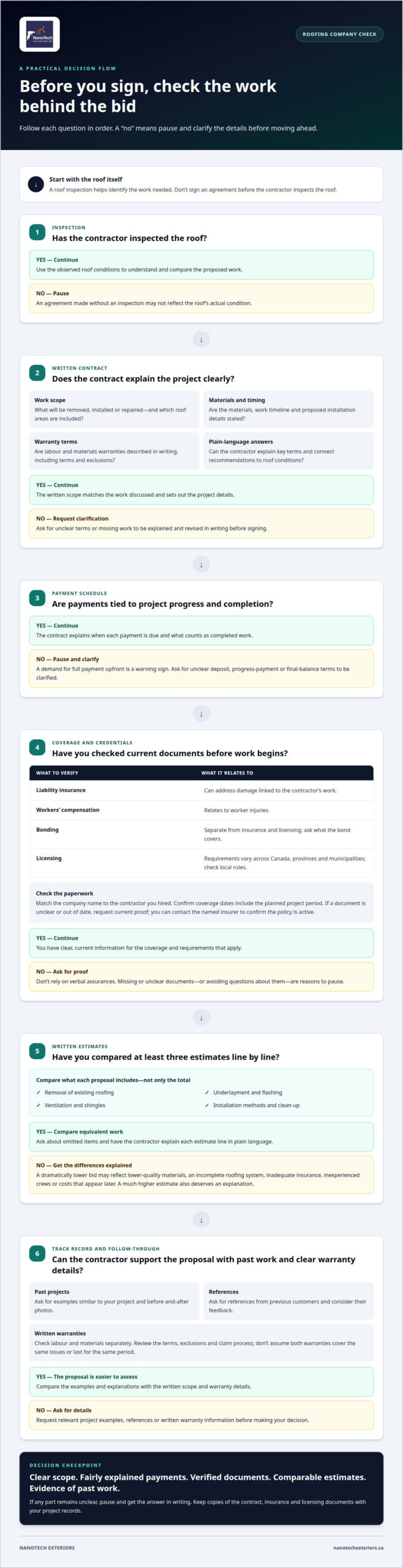
A written roofing contract should describe the work, materials, timeline, payment schedule, and warranties before the crew arrives. Check that the scope explains what the company will remove, install, or repair, rather than relying on a broad phrase such as “roof work.” If the proposal promises new shingles, for example, the contract should identify the materials and clarify which parts of the roof are included. Clear terms help you understand the project and its final cost.
Read the payment schedule alongside the work timeline. Payments should relate to project progress and completion, not require most or all of the amount before work begins. A demand for full payment upfront is a warning sign. The contract should explain when each payment is due and what counts as completed work. If a deposit, progress payment, or final balance is unclear, ask for the contract wording to be clarified before signing.
Don’t sign before the roofing contractor inspects the roof. An inspection helps identify the work needed, so an agreement made without one may not reflect the roof’s actual condition. Be cautious if a contractor pressures you to decide immediately or sign on the spot. A reputable contractor should give you time to read the terms and consider the scope, schedule, and warranty. Pressure to skip that review is one of the red flags for a bad roofing company.
Experience and references matter, too. Ask for examples of similar roofing projects and references from previous customers, then consider whether the contractor can clearly explain the proposed work. Reputable contractors such as Atlas Roofing Solutions Ltd, for example, demonstrate how experienced specialists transparently outline their installation and repair procedures. A company with relevant experience should connect its recommendations to visible roof conditions, such as damaged shingles or flashing. Compare those explanations with the written scope. If the contract promises work that wasn’t discussed, or the contractor can’t explain a key term, pause and request a clear revision.
2. Checking liability and workers’ compensation insurance
Before roofing work begins, confirm the contractor carries liability insurance and workers’ compensation coverage. These protect against different risks: liability insurance can address damage linked to the contractor’s work, while workers’ compensation relates to worker injuries. Without appropriate coverage, a homeowner may face costs related to mistakes or injuries. Ask for current proof of both types of coverage rather than relying on a verbal assurance.
Check the paperwork before the crew arrives. Confirm that the company name matches the contractor you hired and that the coverage dates include the planned project period. If a document is unclear or appears out of date, ask the contractor for current proof. You can also contact the insurer named on the document to confirm the policy is active. Reviewing paperwork is a practical step, but it does not replace confirming that coverage is in place.
Licensing requirements vary across Canada, including between provinces and municipalities. Check the rules that apply where your home is located. A contractor who avoids questions about licensing, insurance, or workers’ compensation raises a red flag. Missing or unclear documents can make it harder to understand the company’s responsibilities, so ask for clear, current information.
Bonding is separate from insurance and licensing. A bond can help protect a homeowner if a roofing company fails to finish the work. Ask whether the contractor is bonded and what the bond covers, then review the answer alongside the written agreement. Don’t assume one document covers every risk. Liability insurance, workers’ compensation, bonding, and licensing address different concerns, so check each one that applies.
Keep copies of the insurance and licensing documents with your contract and project records. That way, you can refer to the details if a dispute or property issue arises. For exterior work, use the same careful document review when considering roofing and property protection.
3. Comparing estimates and identifying suspiciously low bids
Get written estimates from at least three roofing contractors, then compare the work line by line. A useful estimate identifies the project scope, materials, and installation methods, not just a total. It should state whether the crew will remove existing roofing, install underlayment and flashing, address ventilation, fit shingles, and clean up. If one proposal omits an item included in another, ask what explains the difference before comparing totals.
A dramatically lower bid may reflect lower-quality materials, an incomplete roofing system, inadequate insurance, inexperienced crews, or costs that appear later. Compare the proposed materials and work rather than assuming the lowest figure means reliable roofing. Industry guides from roofing suppliers like Pauresta emphasize that reviewing material quality and profile specifications is essential to knowing what a fair quote should include. A much higher estimate also deserves an explanation: check whether it includes additional work or materials that other bids leave out. Treat a deposit as one part of the payment terms, not proof that the scope is complete.
Accurate pricing starts with an inspection of the roof and attic. These areas can reveal conditions that affect the scope, such as damaged components or ventilation needs. Ask the contractor to explain each estimate item in plain language, including why a material or installation method suits the project. If a line item says “repair as needed,” request examples of the work it covers. Clear answers help you compare equivalent proposals rather than different assumptions.
Ask what warranties apply to labour and materials, and make sure both are described in writing. The terms, exclusions, and claim process should be clear. Don’t assume the two warranties cover the same issues or last for the same period. Compare the written details alongside each estimate so the scope, materials, and warranty give you a complete picture of the proposed roofing work.
4. Checking a roofer’s references and past work
Before hiring roofers, look for examples of completed projects similar to yours. Ask for before-and-after photos, then compare the visible roof details with the work described in your estimate. Photos can show the finished surface, but may not reveal how the crew handled flashing, ventilation, or cleanup. Ask the contractor to explain what each example involved and whether it used materials and methods like those proposed for your home.
Request references from previous customers, especially people whose roofing work resembles your project. Ask about communication, schedule changes, cleanup and whether the finished work matched the written scope. A specific account is more useful than a general endorsement. If the roofer refuses to share local examples or customer feedback, treat that as a warning sign and consider what the refusal means for assessing their track record.
Look for patterns in reviews on Google, HomeStars, and the Better Business Bureau (BBB). One negative comment may not tell the full story, but repeated complaints about missed deadlines, unexpected costs, or leaks after installation deserve closer attention. Read the company’s responses, too. A practical response explaining how an issue was addressed offers more context than a pattern of unresolved complaints.
Use the same questions for each reference so you can compare answers consistently. Ask whether the project finished as planned, whether the crew kept the property tidy and whether any concerns were handled clearly. Check that the reference describes work completed by the same company, not just an individual who has since moved on. If feedback, photos and the contractor’s explanation don’t align, pause before hiring. Clear records support a more informed choice. To discuss roofing work and next steps, contact NanoTech Exteriors.
NanoTech Exteriors
NanoTech Exteriors helps homeowners understand what their roof may need, from repair and residential roofing to roof rejuvenation. The right approach depends on the roof’s condition and the work required. For aging shingles, Roof Rejuvenation may be an alternative to roof replacement when the roof is suitable for treatment. NanoTech Exteriors serves homeowners in Burlington, Hamilton, Oakville, Niagara, Kitchener, Guelph, and Cambridge. A clear assessment helps you compare the recommended work with estimates and contract terms.
If you’re weighing roofing concerns or deciding what to do next, contact NanoTech Exteriors to discuss your roof and arrange a free roof assessment.
Choose your next step with clarity
A roofing decision doesn’t have to be rushed. Take time to understand the proposed work and decide whether it fits your home’s needs. If something in a bid or contract is unclear, pause and ask for an explanation before committing. Recognizing the red flags for a bad roofing company is useful, but the goal is a sound decision based on the roof’s condition and a clear plan to address it.
NanoTech Exteriors can help you consider the next step for your roof, whether you’re weighing repair, rejuvenation, or residential roofing work. Contact the team to discuss your concerns and arrange a free roof assessment.
Contact NanoTech Exteriors today. A clear conversation can help you move forward with greater confidence.
Frequently Asked Questions
What are the most common red flags when hiring a roofing company in Canada?
Some of the clearest red flags for a bad roofing company are pressure to sign immediately, a demand for full payment before work starts, and reluctance to provide written details. Be cautious if someone claims storm damage without a proper inspection or offers a quote without explaining the work. For example, a vague “roof repair” proposal leaves you unable to tell which areas or materials it covers.
How can I verify a Canadian roofer’s licence, insurance, and workers’ compensation coverage?
Ask for current documents under the roofing business’s legal name, then confirm them with the insurer or provincial workers’ compensation authority that issued them. Check that the policy dates cover your project and that the documents identify the relevant coverage. Licensing rules vary by location, so check the requirements for your province or municipality. Keep copies with your contract, especially if the crew or business name differs from the estimate.
What certifications or credentials should a reputable Canadian roofing contractor have?
There isn’t one credential that answers every question about a roofer’s suitability across Canada. Check whether local rules require a licence, and confirm any claimed certification with its issuing organization. Ask what the credential covers and whether it applies to the proposed work, such as shingle installation or flat roofing. Also consider relevant project experience, insurance documents, and references rather than treating a logo or certificate as proof on its own.
What are warning signs of roofing scams, high-pressure sales, and unsolicited inspections?
Be wary of a salesperson who appears uninvited after a storm, insists damage must be repaired immediately, or requests a signature before you can review the proposal. Don’t rely on a verbal storm-damage claim as an assessment. Ask for the findings and proposed work in writing, then take time to consider them. A contractor should explain the recommendation without making your decision feel urgent or tying it to immediate payment.
How can I check a roofing company’s reviews, references, and complaint history in Canada?
Look for repeated patterns across Google, HomeStars, and BBB feedback rather than judging a company by one comment. Search for reports about leaks, missed schedules, or unexpected charges, and note whether the company responds constructively. Ask references about a project similar to yours, such as a repair or full installation. Compare their account with dated project photos and the contractor’s description of the work.
What payment schedule and deposit are normal for a roofing project in Canada?
A reasonable deposit before work begins, followed by the remaining balance after completion, is a common payment arrangement. Terms should be written down and tied to project progress, with the final payment due after the agreed work is complete. A request for full payment upfront is a warning sign. Before paying a deposit, make sure the contract identifies what it covers and when later payments are due.