What if the best time to deal with a flat-roof problem is before it shows up indoors? In Ontario, freeze-thaw cycles, snow, and heavy rain can put roof drains, seams, and other vulnerable areas under stress. A ceiling stain or water left on the roof deserves attention, but neither confirms the cause on its own. A practical routine for residential flat roof maintenance Ontario homeowners can follow helps catch warning signs earlier.
You can handle some observations safely, such as looking for blocked drains from the ground or another safe vantage point. Walking on the roof, clearing heavy snow, or attempting a repair can create new risks or damage the roofing system. When a concern needs closer examination, leave roof access and technical assessment to a professional.
This guide explains how Ontario weather affects a residential flat roof and what to look for in spring, summer, fall, and winter. You’ll learn how to spot concerns without mistaking them for a diagnosis, which checks are sensible to handle yourself, and when a professional assessment or repair is the safer next step. NanoTech Exteriors provides residential flat-roofing and repair services in Burlington, Hamilton, Oakville, Niagara, Kitchener, Guelph, and Cambridge.
Key Takeaways
- Build a seasonal routine for residential flat roof maintenance Ontario homeowners can use to notice changes before they become urgent concerns.
- Check the roof surface, drainage points, edges, and nearby interior areas from a safe vantage point, without walking on the roof.
- Remember that ponding water, a ceiling stain, or dampness can signal a concern, but each needs assessment before its cause is clear.
- Use spring, summer, autumn, and winter observations to keep track of changing conditions and spot recurring warning signs.
- Know when visible damage, repeated ponding, an active leak, or interior moisture is a reason to seek professional assessment and determine the right next step.
Why residential flat roof maintenance matters through Ontario’s seasons
A flat roof isn’t necessarily level. It’s typically built with a low slope that directs water towards drains or other drainage points. Snow, rain, and debris can affect how water moves across the surface, so drainage deserves attention during routine checks. Flat roofs use different materials and designs. Maintenance should reflect the particular roof rather than rely on one universal checklist.
In Burlington, Hamilton, and Oakville, a roof may face snowfall, melting and refreezing, heavy rain, wind, and changing temperatures over the year. Repeated freeze-thaw cycles can put stress on roof surfaces and details such as seams and flashing. The effects depend on the roof’s condition, drainage, materials, and installation. A seasonal routine helps you notice changes instead of waiting for water to show up indoors.
Scheduled observation can reveal changes in drainage, roof details, or indoor conditions before they become visible as interior damage. It can’t guarantee a leak-free roof or prevent every failure, but it gives you useful information to share if professional assessment is needed.
How Ontario weather can affect a low-slope roof
Each season brings different conditions to monitor. Snow can accumulate, then melt as temperatures rise; rain and wind can expose areas that deserve a closer look. Shifting temperatures may stress vulnerable roof details. These conditions don’t affect every roof in the same way. Drainage, installation, material, and existing wear all matter, so recurring checks are more useful than assuming the roof has a problem based on weather alone.
What residential flat-roof maintenance means
Residential flat roof maintenance Ontario homeowners can manage begins with visual monitoring and basic upkeep, such as noticing debris or changes in drainage from a safe vantage point. This differs from a technical assessment of roof condition and from repair or replacement work. Homeowners can record what they observe; a trained professional can assess the roof and recommend an appropriate next step.
Maintenance is a process, not a promise that damage won’t occur. Don’t walk on the roof or attempt work that requires access, specialized knowledge, or repair. Treat recurring standing water, visible changes, or signs of moisture indoors as reasons to seek an assessment, not as a confirmed diagnosis. This keeps routine care practical while leaving technical decisions to professionals.
What a residential flat-roof maintenance check should cover
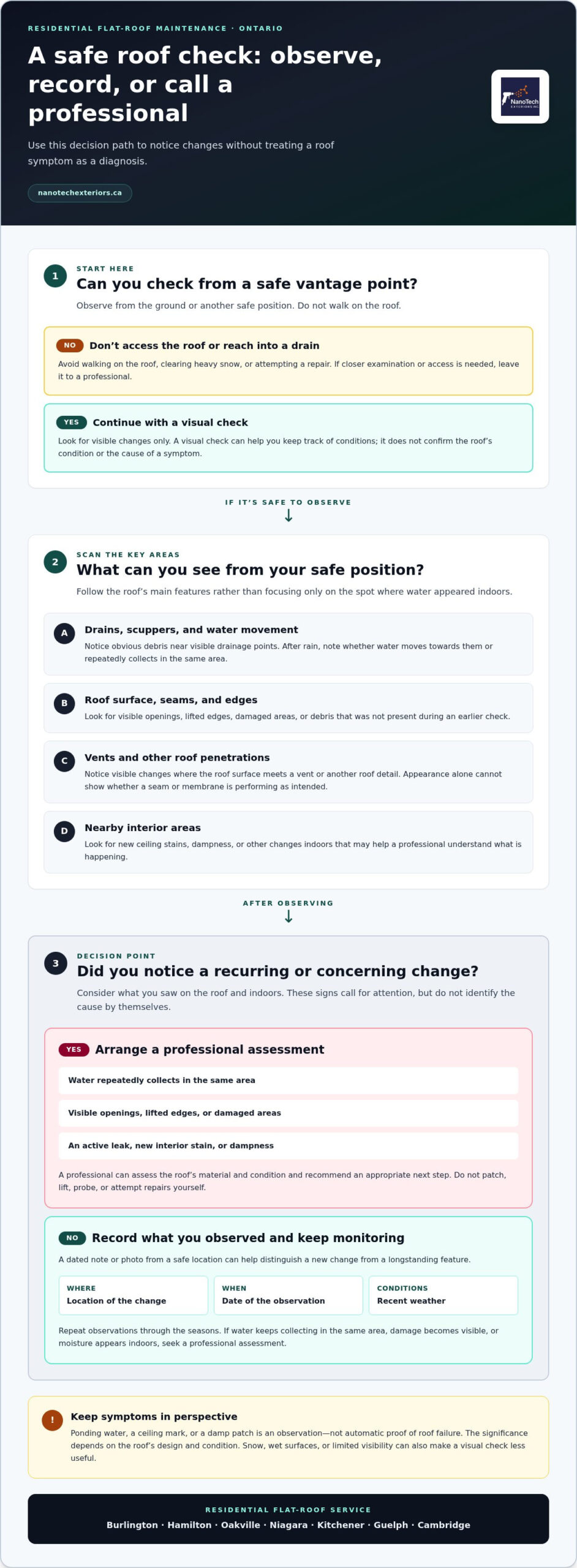
A useful check follows the roof’s main features rather than focusing only on a spot where water may have appeared indoors. From a safe vantage point, observe the surface, drainage points, edges, and areas around vents or other roof penetrations. Inside, look for new stains, dampness, or other changes that may help a professional understand what’s happening.
Monitor the roof surface, drainage routes, edges, penetrations, and interior for visible changes, without walking on the roof. A structured approach is easier to repeat and document. The National Research Council of Canada’s guidance on an inspection and maintenance program provides further context on checking roofing systems.
Drains, scuppers, and water movement
From a safe viewing position, look for obvious debris near visible drains or scuppers. After rain, note whether water appears to move towards drainage points or repeatedly collect in the same area. Record the date, recent weather, and where water remains. Ponding is an observation, not automatic proof of roof failure; its significance depends on the roof’s design and condition. Don’t climb onto the roof or reach into a drain from an unsafe position. Leave clearing or closer examination to a professional when access is uncertain.
Roof surfaces, seams, edges, and penetrations
Look for visible openings, lifted edges, damaged areas, or debris that wasn’t present during an earlier check. Pay particular attention to the areas around vents and other penetrations, where the roof surface meets an object or detail. EPDM, TPO, and modified bitumen are examples of flat-roof materials, but appearance alone won’t show whether a seam or membrane is performing as intended. Avoid patching, lifting, or probing the surface. A trained professional can assess the material and condition before recommending work.
Inspection methods depend on access, roofing material, weather, and what you’ve observed. Snow, wet surfaces, or limited visibility can make a visual check less useful. Document what you can see, and avoid risky access. A dated note or photo taken from a safe location can help distinguish a new change from a longstanding feature. If water keeps collecting in the same area, damage is visible, or you notice moisture indoors, arrange a professional assessment. NanoTech Exteriors provides residential flat-roof service in Burlington, Hamilton, Oakville, Niagara, Kitchener, Guelph, and Cambridge.
Ponding, leaks, or condensation: maintenance observation versus repair
A roof symptom is a reason to pay attention, not a diagnosis. A small area of standing water, a ceiling mark, or a damp patch can help identify a change, but it doesn’t confirm the cause or the work needed. Residential flat roof maintenance Ontario homeowners can manage includes recording what they notice and seeking professional assessment when a concern persists or worsens.
Keep routine observation separate from repair. Noting where water collects is maintenance; determining whether drainage, roof materials, or another issue needs attention requires closer assessment. A photo or checklist can help communicate what you’ve seen, but neither can reliably establish the cause on its own.
When standing water or drainage changes deserve attention
After rain, note where water appears to collect and whether it returns in the same spot. Record how long it remains. Water still present more than 48 hours after rainfall is generally considered ponding, but that observation alone doesn’t prove roof failure. Roof slope, drainage design, weather, and overall condition all matter. If water repeatedly remains in place, drainage patterns change, or you notice visible surface damage, arrange a professional assessment instead of investigating from the roof.
How to respond to interior moisture or a suspected leak
Record when a stain, damp area, or drip appears, which room it affects, and whether it follows rain, a thaw, or a change in indoor conditions. Note whether the mark grows or returns. These details can help with an assessment, but they don’t identify the source by themselves.
Condensation, plumbing issues, and water entering through the roof can create similar signs indoors. Water can also travel before it appears on a ceiling, so the visible mark may not be directly below the source. Don’t assume a stain confirms a roof leak, or that the absence of a drip means the roof is sound.
If water is actively entering the home or interior damage is getting worse, seek prompt professional assessment. Keep clear of wet electrical fixtures and avoid climbing onto the roof to look for the source. A professional can evaluate the roof and determine whether maintenance, repair, or another response is appropriate. Your observations help guide that decision, but don’t replace an assessment.
A seasonal residential flat-roof maintenance checklist for Ontario
A repeatable seasonal routine turns roof care into useful observations, not risky DIY work. For residential flat roof maintenance Ontario homeowners can do safely, check from the ground or another accessible location. Don’t walk on the roof. Weather, visibility, roof design, and safe access affect when a check makes sense, so adjust the timing after severe weather or when conditions make viewing unsafe.
Keep a simple record each time: note the date, recent weather, where you saw a change, what it looked like, and any related indoor symptoms. Comparing notes over time can help distinguish a recurring concern from a one-time observation.
Spring and summer checks after rain or thaw
After snowmelt or rainfall, look for visible debris near drainage routes, changes in where water appears to collect, and new surface concerns visible from a safe vantage point. Check indoors for fresh staining, dampness, or ceiling changes, and note whether they appeared after rain. If you can’t safely see a concerning area, or you notice damage or recurring moisture, arrange a professional assessment rather than trying to reach it yourself.
- Spring: Record changes noticed after thaw, including visible drainage concerns and indoor moisture.
- Summer: After heavy rain or wind, look for new visible changes and note whether water movement appears different.
Autumn and winter observations
Before winter, look from a safe location for visible debris around drainage points and changes near accessible roof edges. Don’t climb up to clear a drain or inspect a surface. During winter, observe from the ground after snow or ice events. Unusual sagging or new interior moisture warrants prompt professional assessment. Don’t climb onto the roof or remove snow or ice without appropriate expertise and safety measures.
- Autumn: Document visible obstructions or changes before snow and ice arrive.
- Winter: Watch for unusual changes from the ground and indoors, especially after severe weather.
There’s no single calendar date that suits every roof. A low-slope roof’s design and access conditions affect what you can see, while severe weather may call for an additional ground-level observation when it’s safe. These checks help you track conditions; they don’t replace professional assessment when a concern needs closer attention. If your notes show recurring changes, explore professional flat-roof service from NanoTech Exteriors.
When to call a flat-roof professional in Ontario
Some roof changes are worth monitoring. Others call for a closer assessment. Arrange professional help if water repeatedly remains in the same area, you see visible surface damage, a leak is active, or moisture indoors is new or getting worse. These signs don’t confirm a particular cause, but they do mean it’s sensible to find out what’s happening before deciding on work.
Maintenance, repair, and replacement are different outcomes. A professional assessment can help determine whether the roof needs routine attention, a targeted repair, or more extensive work. The right next step depends on the roof’s condition, not one symptom alone. That distinction is central to residential flat roof maintenance Ontario homeowners can use to make informed decisions without jumping straight to replacement.
What information helps a roof assessment
Share what you’ve observed, not a guessed diagnosis. Note where the concern appears, when you first noticed it, and whether it changes after rain or a thaw. Include any related indoor moisture, such as a stain or damp area. Photos taken safely from the ground can help show visible changes over time. Don’t climb onto the roof or attempt repairs before the condition has been assessed.
For a professional assessment of a residential flat roof in Southern Ontario, explore residential flat-roofing services from NanoTech Exteriors, a Burlington-based company serving Burlington, Hamilton, Oakville, Niagara, Kitchener, Guelph, and Cambridge.
Choose the next step based on roof condition
An assessment helps connect what you’ve noticed to an appropriate response. If the roof needs upkeep, that doesn’t automatically mean it needs repair. If a specific area is damaged, repair may be the practical next step. Replacement is a separate decision based on the roof’s broader condition. Understand the situation first, then choose work that addresses it.
If you’re weighing broader roofing needs, read the residential roofing guide for Burlington. If you suspect damage that may need attention, the roof repair guide for Hamilton offers related information. Either way, your observations help start the conversation; a professional assessment helps clarify the next step.
Make seasonal roof care part of your routine
Ontario weather changes through the year, so a consistent routine of safe visual checks can help you notice shifts in drainage, roof details, or indoor conditions. Record when and where you see a change, especially after rain, snowmelt, or severe weather. These observations provide useful context, but they don’t confirm the cause of a leak or stain.
Good residential flat roof maintenance Ontario homeowners can manage means knowing where observation ends and professional assessment begins. Recurring ponding, visible damage, active water entry, or worsening interior moisture deserve attention. Assessment can help determine whether maintenance, repair, or replacement is the appropriate next step, rather than assuming every symptom calls for the same solution.
NanoTech Exteriors is a Burlington-based roofing company serving residential customers in Burlington, Hamilton, Oakville, Niagara, Kitchener, Guelph, and Cambridge, with flat-roofing and roof-repair services. If you’ve noticed a change and want to understand what it may mean for your roof, contact NanoTech Exteriors about residential flat-roof service. A clear record and the right assessment can help you move forward with confidence.
Frequently Asked Questions
How often should a residential flat roof be maintained in Ontario?
Check your roof visually through the seasons, especially in spring and autumn, and after severe weather when conditions are safe. Residential flat roof maintenance Ontario homeowners can manage means watching for visible drainage changes, debris, surface concerns, and indoor moisture, not climbing onto the roof. Record what you notice over time. The roof’s material, condition, and drainage affect whether a professional assessment is also appropriate.
What should I check on a flat roof after winter?
After winter, look from the ground or another safe vantage point for visible changes around roof edges and drainage routes. Check indoors for new ceiling stains, dampness, or other moisture, and note whether it appeared during a thaw or after rain. Don’t walk on the roof or attempt to clear a drain from an unsafe position. If you see damage or recurring moisture, arrange a professional assessment.
Is standing water on a flat roof always a problem?
No. A single observation of standing water doesn’t confirm roof failure. Note where water collects and whether it returns after rainfall. Water remaining more than 48 hours is generally considered ponding, but its significance depends on the roof’s design, drainage, and condition. If ponding recurs, drainage patterns change, or you see surface damage, seek professional assessment rather than trying to diagnose the roof from one observation.
Can I inspect or clean my residential flat roof myself?
You can make visual observations from the ground or another safe, accessible location, but don’t walk on the roof. Note visible debris, drainage changes, roof-edge concerns, and any indoor moisture. Avoid climbing ladders in unsafe conditions, reaching into drains, or attempting repairs. If an area can’t be seen safely, or a concern needs closer examination, leave roof access and technical assessment to a professional.
What causes leaks in a residential flat roof?
Leaks can result from damage or deterioration in the roof surface, seams, edges, flashing, drainage details, or areas around vents and other penetrations. However, an indoor stain or drip doesn’t prove that water entered directly above it. Water can travel before appearing indoors, and condensation or plumbing issues may create similar symptoms. Record when and where moisture appears, then have persistent or active water entry assessed.
When should I call a professional about a flat roof?
Arrange a professional assessment for recurring ponding, visible roof damage, active leaks, or new or worsening interior moisture. These signs warrant attention, but they don’t determine whether the right response is maintenance, repair, or replacement. A roof’s overall condition should guide that decision. NanoTech Exteriors provides flat-roofing and roof-repair services to residential customers in Burlington, Hamilton, Oakville, Niagara, Kitchener, Guelph, and Cambridge.
Does Ontario winter weather mean a flat roof needs snow removal?
Not automatically. Snow on a roof doesn’t by itself show that removal is needed, and homeowners shouldn’t climb onto a roof or remove snow and ice without appropriate expertise and safety measures. Observe from the ground for unusual sagging or new interior moisture, particularly after snow or ice events. If you’re concerned about the roof’s condition, seek professional assessment rather than attempting removal yourself.