An active roof leak calls for immediate containment, followed by a repair that addresses the entry point. For residential roof leak repair in Burlington, an inspection can trace the source and determine whether a localized repair, broader work or roof replacement is the right next step.
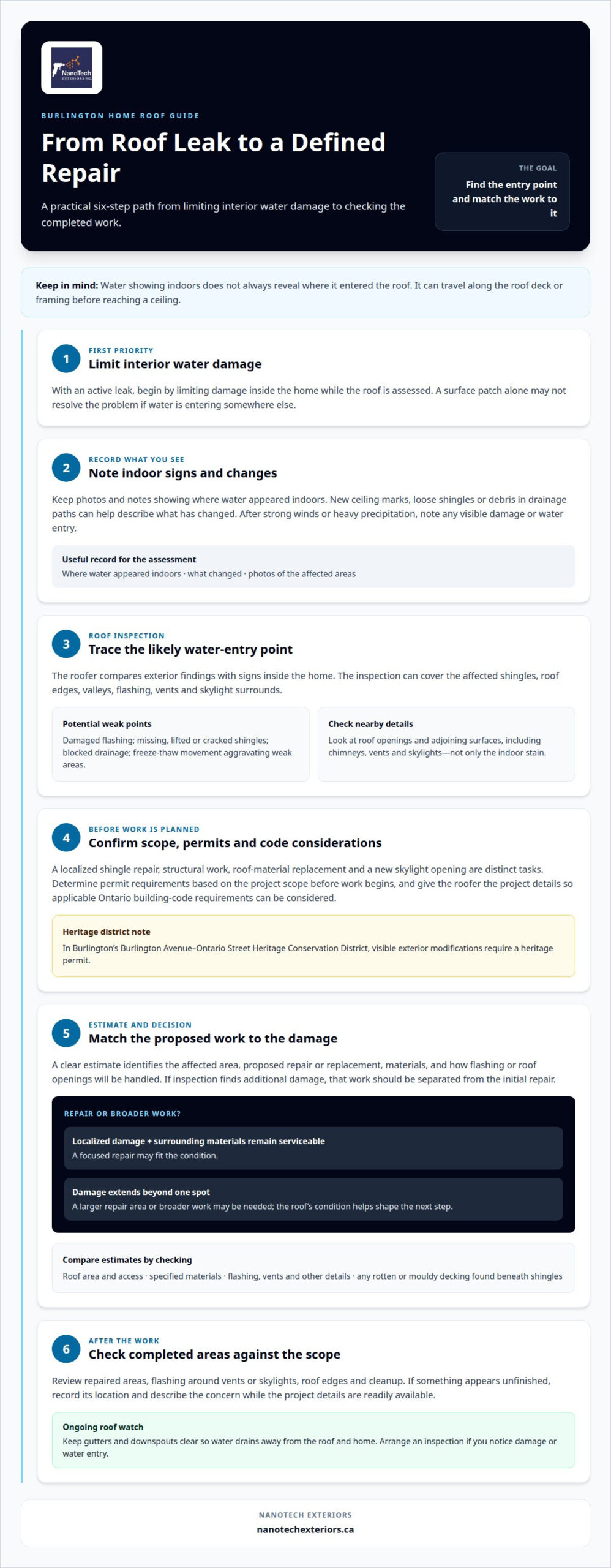
A leak can be stressful, especially when water reaches ceilings, walls or belongings. First, limit interior damage while the roof is assessed. A surface patch alone may not solve the problem if water is entering elsewhere.
This guide explains what to expect from roof inspections, repair and replacement estimates, installation, and emergency leak repairs for Burlington homes. The roof’s condition and the location of the damage shape the work, so understanding both helps you make a practical decision about protecting your home.
Key Takeaways
- Limit interior water damage and note where leaks appear to help guide the roof assessment.
- Learn how an inspection traces water entry and identifies whether the issue calls for a focused repair or broader work.
- Compare repair and replacement estimates by looking at the damage, roof condition and proposed scope.
- Find out when roof rejuvenation may be worth considering for aging shingles instead of moving straight to replacement.
Residential roof repairs and installation
Roof work begins by identifying the affected area and defining the repair scope. A few damaged shingles call for a different plan than structural damage, a full roof installation or a new skylight opening.
Permits and Building Code Requirements
In Burlington’s Burlington Avenue-Ontario Street Heritage Conservation District, visible exterior modifications require a heritage permit. For other residential repairs or roof replacement, determine permit requirements based on the project scope before work begins. A repair to existing shingles, structural work and a new skylight opening are distinct tasks, so don’t assume they follow the same approval process.
Ontario building-code considerations depend on the work involved. Identify whether the project includes a localized repair, changes to the roof structure, replacement of roofing materials or a new opening. Give those details to the roofer so applicable code requirements can be included in the work plan.
Common Causes of Residential Roof Leaks
Leaks often start where roofing materials meet an opening or adjoining surface. Damaged flashing around a chimney, vent or skylight can let water beneath the roof covering. Missing, lifted or cracked shingles may expose the layers below. Burlington’s freeze-thaw movement can aggravate weak points, and blocked drainage can cause water to collect instead of flowing away.
Water appearing indoors doesn’t always mark the roof’s entry point. It may travel along the roof deck or framing before reaching a ceiling, so trace its path rather than repairing only the visible stain.
For a repair, roofers inspect the affected covering, flashing and nearby openings, then match the fix to the source. If damage extends beyond one spot, a larger area may need repair. For installation, confirm the planned materials, edge details, and treatment of vents, chimneys and valleys. Gaps or poorly integrated flashing at these junctions can become leak paths.
Skylight repair focuses on whether water is entering around the frame, flashing or surrounding roofing. A new skylight requires a planned roof opening and properly integrated flashing. Ask for an installation scope that explains how the opening and surrounding shingles will be finished.
Roof inspections and estimates
A useful roof inspection connects visible damage to its likely source and defines the work required. The roofer examines shingles, roof edges, valleys, flashing, vents and skylight surrounds, then compares exterior findings with signs inside the home. A ceiling stain below a roof valley gives the inspection a place to start, but water can travel before appearing indoors.
Clarify the scope before an estimate is prepared. It should identify the affected roof area, proposed repair or replacement, materials, and how flashing or roof openings will be handled. If the inspection finds damage beyond the original leak, the estimate should separate that work from the initial repair. This makes it easier to see what each step addresses.
- Ask which roof areas and components were inspected.
- Compare the stated repair scope with the damage described.
- Keep photos and notes showing where water appeared indoors.
For a replacement estimate, look for details about the roof covering and how edges, valleys and openings will be finished. For a repair estimate, check that it addresses the entry point and nearby components, not just the interior stain. A clear scope lets you compare options on the same basis.
Preventive maintenance starts with watching for changes from the ground, such as loose shingles, debris in drainage paths and new ceiling marks. After strong winds or heavy precipitation, note any changes and arrange an inspection if you see damage or water entry. Keep gutters and downspouts clear so water drains away from the roof and home.
Check completed work against the agreed scope. Review repaired areas, flashing around vents or skylights, roof edges and cleanup. If an item appears unfinished, record its location and describe the concern while the project details are readily available.
For Burlington homeowners planning repair work, an inspection and roof repair assessment can connect the observed damage to a defined scope.
Roof replacement and repair project estimates
For a Burlington estimate, the main cost drivers are the repair scope, roof access, materials and extent of damage. The price depends on the case and is provided after a quote request. A small shingle repair differs from work involving several roof areas or damaged decking.
Delaying a leak repair can allow moisture to reach roof decking and interior finishes. Burlington’s seasonal freeze-thaw conditions can worsen vulnerable areas, and ongoing water entry may lead to rotten or mouldy decking. Addressing the source early helps define the work before damage spreads.
An estimate should identify the affected area, proposed work, materials and any additional repairs. For example, a quote for damaged shingles should distinguish that repair from replacing a roof section or addressing underlying deck damage. Review the scope, not just the headline total.
- Roof size and the area requiring repair or replacement.
- Roof pitch, access and the materials specified for installation.
- Whether flashing, vents or other roof details need work.
- Whether inspection reveals rotten or mouldy decking beneath shingles.
For a full replacement, compare the stated removal and installation work, roofing materials and finishing details. The estimate should explain how roof edges, valleys and openings will be treated. In Ontario, a clear written scope shows which tasks are included and how newly discovered damage affects the project plan.
Rotten or mouldy decking needs attention before new roofing covers it. Expose and assess the affected area; compromised sections may need replacement to create a sound surface for the new roof covering. Ask the estimate to explain how this work will be handled if damage appears during removal.
Repair and replacement are different decisions. If damage is localized and surrounding materials remain serviceable, a focused repair may resolve the problem. If deterioration extends across the roof or several components need work, compare a broader scope. A professional assessment connects the visible leak with the underlying condition and the proposed work.
Emergency roof leak repairs
Active water entry calls for a clear sequence: protect people, limit interior damage, then arrange roof repair. For residential roof leak repair in Burlington, keep people away from hazards and note where water is entering. If water is near a light fixture or electrical equipment, keep clear and contact a qualified electrician about the electrical concern. Don’t climb onto a wet or damaged roof; record the leak from a safe indoor position.
While waiting for a roofing professional, move furniture and belongings away from the drip. Place a container under steady leaks and use towels to catch splashes. If a ceiling begins to bulge, keep people away from the area and don’t puncture it. Note when the leak started, whether it changes during rainfall, and which rooms show moisture.
Burlington roofers diagnose leaks by comparing indoor signs with exterior conditions. They inspect likely entry points, including damaged shingles, flashing, vents, skylights and roof valleys. Water may travel along roof components before appearing indoors, so the visible stain may not be directly beneath the opening. For residential roof leak repair in Burlington, the repair should target the entry point, not just the interior mark.
Emergency work may start with temporary measures to limit further water entry. The permanent repair depends on the inspection findings. A loose shingle, failed flashing detail and damaged roof decking each require different work. On a flat roof, the roofer examines the affected membrane and nearby seams. The goal is to identify the source and define the repair needed to restore the roof covering.
Give the roofer useful details: the affected room, visible water paths, recent changes and any ceiling damage. Photos taken safely indoors can help document the leak. If wind or rain is ongoing, don’t attempt an exterior patch; wet surfaces and unstable materials are hazardous. A professional assessment is the practical next step for residential roofing damage in Burlington.
If water is entering now, arrange a professional roof leak repair assessment to identify the source and required work.
NanoTech Exteriors: Roof Rejuvenation
NanoTech Exteriors offers Roof Rejuvenation for aging shingles that may benefit from restoration rather than immediate replacement. Its spray-applied treatment is designed to restore shingle flexibility and extend a roof’s lifespan by up to 15 years. It can provide an alternative to full replacement, potentially saving homeowners up to 85% compared with a new roof.
Roof rejuvenation is not a substitute for repairing an active leak or addressing compromised decking. If shingles are worn but the roof remains suitable for treatment, rejuvenation may be worth considering alongside the inspection findings. If damage requires repair, NanoTech Exteriors provides Roof Repair and Residential Roofing services.
Contact NanoTech Exteriors for a free roof assessment and a clear recommendation for your roof.
Choose a practical next step for your roof
A roof concern is easier to manage when the next decision is specific. Use the inspection findings to make a plan: identify what needs attention first, what work can be scheduled, and which areas to monitor. This keeps the focus on protecting your home and making informed choices rather than reacting to every new sign of moisture.
If you’re considering residential roof leak repair in Burlington, use your observations and estimate to guide the decision. Discuss the work required and how it relates to the roof’s overall condition. This can help distinguish an immediate repair from a longer-term roofing plan and identify questions to resolve before work begins. Keep the estimate and project notes together so the proposed scope stays clear.
NanoTech Exteriors can help you consider the next step for your roof. Contact NanoTech Exteriors for roof help and start a conversation about your project. A clear plan puts you in a stronger position to protect your home and move ahead with confidence.
Frequently Asked Questions
How can homeowners find an emergency roof leak repair service in Burlington?
Choose a Burlington roofing service that handles active leaks and can explain how it assesses damage. Describe where water is entering, which rooms are affected and whether conditions are worsening. Ask what the next step is and how the repair scope will be documented. If water is near electrical equipment, keep clear and address that immediate safety concern first.
What steps should you take immediately when you discover a roof leak?
Move people and belongings away from the affected area, then place a container beneath dripping water. If water is near a light fixture or electrical equipment, keep clear. Take photos from a safe indoor location and note when the leak started. Don’t climb onto the roof or patch a wet surface; give the roofer clear details about the leak’s location and changes.
How can you compare roof repair contractors in Burlington, including licences, insurance, and warranties?
Compare written estimates by repair scope, materials, exclusions and how additional damage is handled. Ask each contractor for applicable licence and insurance details, then compare the documents and their dates. Read warranty terms carefully, including what work and materials they cover, how long coverage lasts and what conditions apply. A detailed, itemized proposal makes Burlington roofing estimates easier to assess.
Does homeowners insurance cover roof leaks and water damage in Ontario?
Coverage depends on your policy wording, the cause of the leak and the damage claimed. Review the sections addressing roof damage, water entry, exclusions, deductibles and responsibilities after damage occurs. Keep photos, dates and repair records together, and document steps taken to limit further damage. Contact your insurer about the claim process and provide the information requested under your policy.