A roof inspection for insurance purposes Burlington homeowners arrange can document visible roof conditions, but it can’t decide whether an insurance claim is covered. If you’re concerned that storm damage could be missed or confused with ordinary wear, a clear assessment can help you understand what’s visible before speaking with your insurer.
Burlington’s wind, rain, snow and freeze-thaw cycles can put stress on shingles, flashing and drainage areas. A roof assessment reviews visible components, records signs of damage or deterioration, and identifies areas that may need closer attention. NanoTech Exteriors offers a free roof assessment to help you understand your roof’s condition and discuss suitable next steps. Your insurer makes the coverage decision.
In this guide, you’ll learn what an assessment may document, how to prepare useful records and questions, and when to arrange a local roof review. You’ll also learn how to separate the roofer’s observations from the insurer’s decision, so you can approach the conversation with a clearer picture of your roof.
Key Takeaways
- A roof inspection for insurance purposes Burlington homeowners arrange can document visible conditions, but the insurer determines coverage under the policy.
- After a storm, visible areas for review may include shingles, roof edges, penetrations and interior signs of water entry.
- Record when damage appeared, where you noticed it and any related interior symptoms. Gather existing roof records for the assessment.
- Compare observations with possible signs of storm damage, ageing or maintenance needs without assuming the cause or claim outcome.
- A free roof assessment from NanoTech Exteriors can help clarify roof condition and suitable roofing next steps.
Roof Inspection for Insurance Purposes in Burlington: What It Can Establish
A roof inspection for insurance purposes Burlington homeowners arrange is a condition review, not a coverage decision. It can provide a record of visible roof conditions at the time of the assessment, including areas that may need repair or further investigation. That information can help you prepare for a conversation with your insurer, but it doesn’t establish why damage occurred or whether your policy covers it.
Local conditions are useful context. Winds off Lake Ontario, heavy rain and freeze-thaw cycles can put stress on shingles, flashing and other roof details. After a storm, an assessment can record visible conditions. Ageing materials and maintenance concerns may also be present. Keep observations separate from possible explanations, since determining a cause may require further investigation.
What roof condition can an inspection help document?
A roof assessment may review the visible condition of shingles, flashing, valleys, roof edges, vents and other roof penetrations, including areas around plumbing stacks. Recording the location and appearance of a concern makes the findings easier to understand. For example, an assessor might note lifted shingles near an edge or deteriorated flashing around a vent without claiming a particular storm caused the condition.
Where access allows, relevant attic or interior observations may also be noted. A water stain or damp material is an observation, but it doesn’t prove where water entered or when the issue began. A useful record distinguishes what was seen from what remains uncertain. Photos and location notes can help make that distinction clear.
The level of detail depends on what’s visible and accessible during the assessment. A photo of an interior stain can document its appearance, for instance, but may not show its source. Keep that limitation in mind so assumptions aren’t mistaken for findings.
What an inspection cannot decide about an insurance claim
Your insurer determines claim eligibility, coverage and the supporting material it requires, based on the policy and its own review. It may assess whether a reported condition relates to a covered sudden event or to gradual wear, ageing or maintenance. A roofer’s visual observations alone shouldn’t be treated as a conclusion about cause or coverage.
An inspection records roof conditions; the insurer decides whether those conditions meet the policy’s requirements for coverage.
A roof assessment can clarify visible conditions and identify practical roofing next steps, but it can’t promise claim approval or payment. If the cause is unclear, describe the condition plainly and leave the coverage decision to your insurer.
What a Burlington Roof Inspection May Examine After Storm Damage
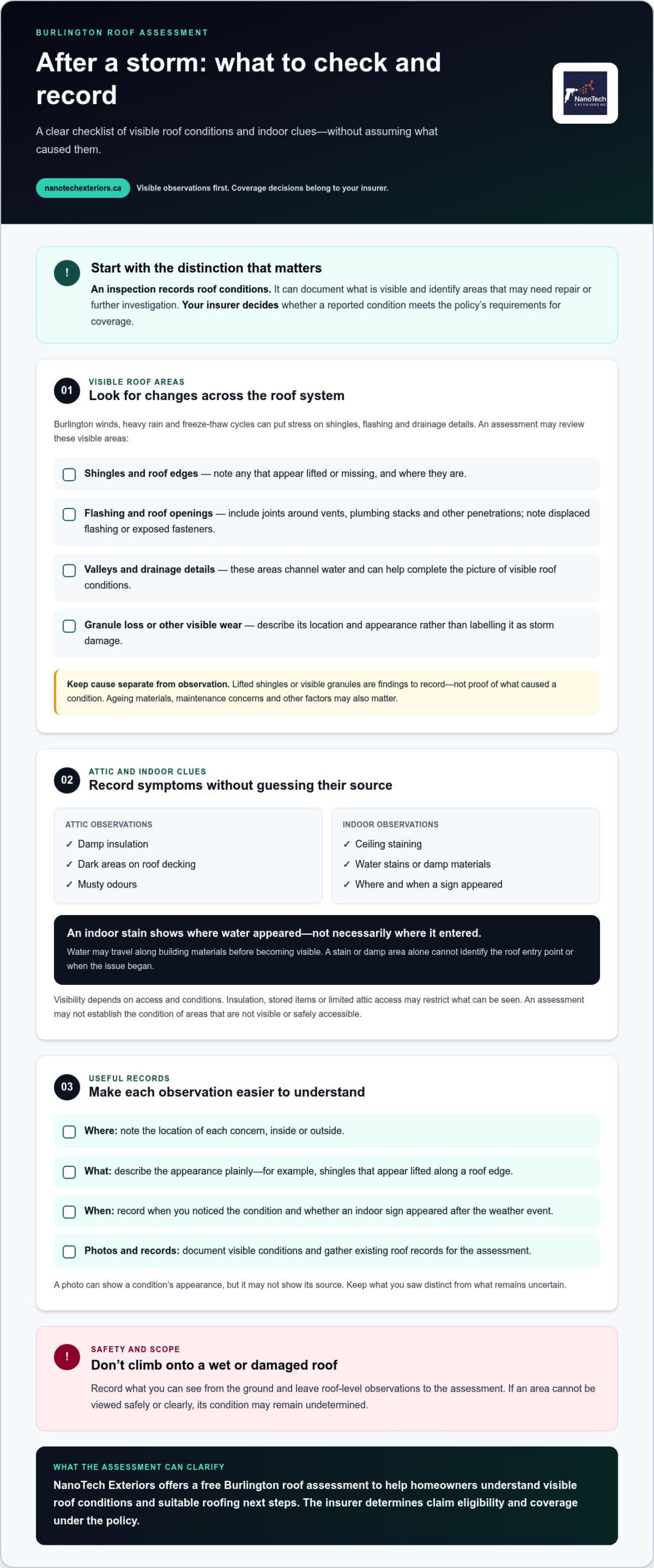
After strong winds or heavy rain, the useful questions are which areas show a change, what can be observed safely, and what details should be recorded for your insurance conversation. A roof inspection for insurance purposes Burlington homeowners arrange can focus on visible conditions without assuming that weather caused them or that the insurer will cover them.
Lake Ontario winds and heavy rainfall can put stress on roof surfaces and vulnerable details. A careful review considers the roof as a connected system. Water can move across or beneath materials, so an indoor mark may not be directly below the point where water entered.
Shingles, flashing, valleys, and roof openings
The main shingle field matters, but transitions and openings deserve attention too. Valleys channel water, roof edges meet changing wind exposure, and flashing helps protect joints around vents and other penetrations. Effective drainage away from these transition zones is critical during severe weather, and homeowners reviewing how runoff moves from the roofline can explore specialized drainage hardware through Copper Gutter Supply Company. An assessor may look for lifted or missing shingles, displaced flashing, exposed fasteners and areas of granule loss. These are observations, not proof of a particular cause.
For a clearer record, describe each concern’s location and appearance rather than labelling it “storm damage.” For example, note that shingles appear lifted along a roof edge or that granules are visible in a specific area. Existing wear, installation details and other factors may also matter. Determining a cause can require further investigation.
Access and visibility affect what can be assessed. If a roof area can’t be viewed safely or clearly, the assessment may not establish its condition. Don’t climb onto a wet or damaged roof to get a closer look. Record what you can see from the ground and leave roof-level observations to the assessment.
Attic and indoor clues that add context
Where access allows, an assessment may also consider relevant attic or indoor signs. Damp insulation, dark areas on roof decking, musty odours and ceiling staining are useful observations to note. Record where each sign appears and whether you noticed it after the weather event. Insulation, stored items or limited attic access can restrict visibility, so not every area may be observable.
An indoor stain shows where water appeared, not necessarily where it entered the roof. Water may travel along building materials before becoming visible, so an interior symptom alone can’t identify the roof entry point. Note what you can see, and avoid disturbing affected materials before documenting their condition.
If you’re unsure what a visible roof change means, a local assessment can help clarify the condition and suitable next steps. NanoTech Exteriors offers a free Burlington roof assessment to help homeowners understand their roof. It doesn’t determine claim eligibility or guarantee coverage.
Roof Damage, Aging, or Maintenance: How to Read Inspection Findings
A roof assessment can describe what’s visible without claiming to know exactly when or why a condition developed. This distinction is useful when organizing information for an insurance conversation. A lifted shingle noticed after a windy day is worth recording, but timing alone doesn’t establish that wind caused it or that the policy covers it.
Possible storm-related observations versus ongoing wear
Sudden changes, such as a shingle that appears displaced or a newly visible opening, may be relevant to note after severe weather. Gradual granule loss, curling and surface ageing can also be present, sometimes alongside more recent concerns. Neither appearance nor roof age, on its own, proves the cause or determines a claim outcome.
Use a neutral comparison to keep observations separate from assumptions:
| Observed condition | Possible context | What to document next |
|---|---|---|
| A shingle appears lifted or missing | A recent change may be worth comparing with prior roof records; other factors may also be relevant. | Record the date noticed, roof area and visible condition. Keep any earlier photos for comparison. |
| Granule loss or curling across shingles | Could reflect gradual wear or ageing; it doesn’t establish storm damage. | Note where it appears and whether the condition is isolated or spread across an area. |
| Water staining indoors | May relate to a roof concern, but the stain alone doesn’t identify the source or timing. | Record when it appeared, its location and any changes, without assuming where water entered. |
Weather timing adds context, not proof. If you first noticed a change after a storm, write down the date and what you observed, then distinguish that from what an assessor can verify. Factual notes help prevent a possible explanation from being presented as a confirmed cause.
When findings suggest repair, rejuvenation, or replacement
Suitable next steps depend on the roof’s condition and whether its materials are appropriate for the work being considered. A localized concern may call for repair; other findings may point to maintenance, rejuvenation or a broader replacement evaluation. NanoTech Exteriors provides roof repair, roof rejuvenation and residential roofing, including replacement. These are distinct options, and an assessment can help clarify which roofing approach suits the roof. It doesn’t decide insurance coverage.
Roof rejuvenation is an option for suitable roofs, not a replacement for a roof and not an insurance outcome. NanoTech Exteriors applies GoNano treatments to rejuvenate shingles and help extend roof service life by up to 15 years. Shingle Saver is suitable for roofs up to 12 years old, while Revive is suitable for roofs 8 to 25 years old. The Burlington roof rejuvenation guide explains the option in more detail. If concerns appear broader than a localized repair, use the Ontario roof replacement checklist to review signs that may warrant a wider evaluation.
How to Prepare for an Insurance-Related Roof Inspection in Burlington
A little preparation can make a roof assessment more focused and your insurance conversation easier to organize. Keep observations factual: note what changed, where you noticed it and when. If wind or heavy rain in Burlington preceded the concern, record the timing as context, not proof of what caused the condition.
Prepare in a clear sequence
- Follow your insurer’s instructions. Review the specific claim or policy guidance you’ve received. Ask your insurer what documents or next steps it requires, and don’t assume one assessment or report format will meet those requirements.
- Record what you’ve observed. Write down when a concern first appeared, which roof area or room seems affected, and any visible changes or interior symptoms. Photograph what you can see safely from the ground or indoors. Don’t climb onto the roof or disturb the area to improve a photo.
- Gather existing roof records. Collect invoices, maintenance details and earlier photographs if you have them. These can help you compare current observations with earlier records. Missing records don’t prevent you from describing what you see now.
- Arrange an assessment. Share your notes and relevant records so the assessor understands what prompted the visit. A roof inspection for insurance purposes Burlington homeowners arrange can clarify visible roof conditions, but your insurer sets its own requirements and decides coverage.
Bring useful context and questions
Keep your notes specific rather than interpretive. “Water mark appeared on the upstairs ceiling after heavy rain” is more useful than “the storm damaged the roof.” Record when you noticed the symptom, the room, any changes since then and the roof area you suspect, if you can identify it from a safe vantage point. Don’t state a suspected entry point as fact.
Before the assessment, make a short question list. Ask which areas can be accessed, what conditions are visible, and whether access limitations affect what can be observed. A roof assessment describes the roof within the scope of the visit; it doesn’t control your insurer’s documentation requirements or claim decision.
- What specific documents or next steps does the insurer require for this matter?
- Which roof areas and relevant interior spaces can be assessed?
- Are any areas inaccessible or not clearly visible during the visit?
- What observations should I keep separate from possible explanations or causes?
These steps help you prepare without altering evidence or treating a roofer’s observations as an insurer’s conclusion. If you want a clearer understanding of your roof’s condition before deciding on suitable roofing next steps, arrange a free roof assessment with NanoTech Exteriors. It can clarify roof condition, not determine claim eligibility or guarantee coverage.
Arrange a Burlington Roof Assessment for Clear Next Steps
If you’re unsure whether a roof concern needs attention, a local assessment can replace guesswork with a clearer view of its condition. NanoTech Exteriors offers Burlington homeowners a free roof assessment to discuss what’s visible and what roofing steps may make sense. A roof inspection for insurance purposes Burlington homeowners arrange can inform their understanding of the roof, but it can’t determine claim eligibility or guarantee insurance coverage.
What happens after the roof condition is assessed?
The next step is to review the observed condition and discuss options that fit the roof. Depending on what’s found and the material’s suitability, those options may include a targeted repair, rejuvenation or replacement. These approaches aren’t interchangeable; the right direction depends on the roof itself. An assessment can help you understand the choices without promising a particular outcome.
If you’re considering project work, the quote depends on the property’s location, roof complexity and condition. A free roof assessment provides the information needed for an accurate quote. There’s no fixed price that accounts for those differences before the roof has been assessed.
Keep insurance steps separate from roofing decisions. If you’re making a claim, follow your insurer’s instructions for required documents, submission methods and next steps. A roofing assessment can clarify physical condition, while your insurer decides how its requirements apply to your claim.
A local next step for Burlington homeowners
It’s reasonable to arrange an assessment even if you’re unsure what a visible change means. You don’t need to diagnose the cause yourself. A local roof review can help you understand the condition and discuss suitable next steps, whether the concern followed a weather event or you’ve noticed changes over time.
NanoTech Exteriors is based in Burlington and serves homeowners in Burlington, Hamilton, Oakville, Niagara, Kitchener, Guelph and Cambridge. Whether you’re dealing with a roof concern in Burlington or a nearby community, the assessment focuses on what’s visible and what roofing options may suit the roof. It doesn’t predict what an insurer will decide.
If a clearer picture would help you plan, request a free roof assessment. It’s a practical way to discuss the roof’s condition and possible roofing options. NanoTech Exteriors offers roof repair, residential and flat roofing, and rejuvenation for suitable roofs.
Take the Next Step with a Clearer Plan
Insurance questions can feel easier to manage when your next move is based on what’s happening with your roof. If you’re considering a roof inspection for insurance purposes Burlington, keep your observations factual, follow your insurer’s instructions, and use a roof assessment to clarify what roofing attention may be appropriate. You don’t need to decide the cause or repair plan on your own.
NanoTech Exteriors is a Burlington-based roofing company serving local homeowners. Its free roof assessment can help you understand the roof’s condition and discuss suitable next steps. Any project quote depends on the roof’s location, complexity and condition, so an assessment is needed for an accurate quote. The assessment can inform your roofing decisions, while claim eligibility remains your insurer’s decision.
Start with a practical conversation about the roof and the options that fit its condition. Request a free roof assessment from NanoTech Exteriors to discuss your roof and plan a suitable next step.
Frequently Asked Questions
Is a roof inspection required for an insurance claim in Burlington?
Not necessarily. Whether an inspection is required depends on your insurer’s process and the details of your claim. The insurer may request its own inspection or ask you to provide specific records. Review its instructions so you know what it needs, when it needs it and whether there are steps to take before repairs begin.
What does a roof inspection for insurance purposes check?
A roof inspection for insurance purposes Burlington homeowners arrange typically reviews visible roofing conditions, such as shingle displacement, flashing concerns and damage around roof openings. Depending on access, an assessor may also note relevant attic or indoor signs. The aim is to understand and record observable conditions, not to certify that every part of the roof is defect-free. Ask which areas were accessible so you understand the scope of the assessment.
Can a roof inspection prove storm damage?
No. An inspection can record conditions consistent with damage, but it may not establish when they began or what caused them. A missing shingle noticed after a windstorm is relevant to report, while earlier roof wear may also affect the assessment. Share dated photos or notes with your insurer if you have them, and don’t treat timing alone as proof of cause or coverage.
How much does a roof inspection cost in Burlington?
NanoTech Exteriors offers Burlington homeowners a free roof assessment to clarify roof condition and suitable roofing next steps. This is separate from any claim decision or insurer-requested documentation process. If the assessment leads to a project quote, the cost varies by location, roof complexity and condition. A free roof assessment is required for an accurate quote; project pricing isn’t fixed in advance.
Should I repair my roof before an insurance inspection?
Contact your insurer before starting permanent repairs, and follow its instructions about inspection and documentation. If immediate temporary action is needed to limit further water entry, prioritize safety and record the condition beforehand if you can do so safely. Keep receipts and notes about any work completed. Don’t climb onto a damaged roof; explain the situation to your insurer and follow its guidance on next steps.
What should I do if my Burlington roof leaks after a storm?
Protect people and belongings first, and keep clear of any sagging ceiling or unsafe area. Move items away from the leak and use a container to catch water if it’s safe. Record when the leak began and where water appears, then contact your insurer promptly for claim instructions. Avoid roof access, and discuss the inspection process with your insurer before making permanent repairs.