A full roof replacement isn’t always the first step for a multi-unit building with aging shingles. Roof rejuvenation for multi-unit residential buildings can restore shingle flexibility and extend a roof’s life by up to 15 years, when the roof’s condition makes treatment suitable.
It’s understandable to focus on disruption. Residents need clear communication and a practical construction plan, especially when work affects shared spaces. For buildings in Burlington, Hamilton, Oakville, Niagara, Kitchener, Guelph and Cambridge, planning should account for roof layout, access and residents’ needs.
This article explains how roof assessments, maintenance and replacement planning fit together, and how phased construction can make larger projects more manageable. It also explores what multi-unit roofing projects reveal about different buildings and roof systems, and where rejuvenation may fit alongside repair or replacement planning.
Key Takeaways
- Use a roof condition assessment to distinguish urgent repairs from maintenance and longer-term replacement planning.
- Compare multi-unit project examples to understand how building design and roofing system influence the scope of work.
- Coordinate construction phases and resident communication early to make shared-building work easier to manage.
- Assess whether aging shingles are suitable for rejuvenation, or whether repair or replacement is the more appropriate path.
Roof repairs, maintenance and replacement planning
Plan roof work using inspection findings, maintenance records and the building’s replacement outlook. For condominium properties in Burlington, Hamilton, Oakville, Niagara, Kitchener, Guelph and Cambridge, a clear record helps owners discuss priorities and schedule suitable work.
Roof Inspection and Maintenance
A professional inspection can document leaks, damaged shingles, blocked drainage and deterioration around roof penetrations. Ask for findings organized by roof area so recurring concerns aren’t hidden in a general condition summary. Canadian freeze-thaw conditions can stress roofing when water enters vulnerable areas and freezes. Recording affected locations helps guide follow-up inspections and repairs.
A preventive maintenance program should keep inspection notes, completed repairs and outstanding issues on record. For landlords and real estate investors managing residential units, consulting professional resources like tbmpropmanagement.com can provide useful frameworks for maintaining records, tracking changes and distinguishing routine upkeep from a retrofit or replacement project.
Warranty Documents
Keep product warranty documents, workmanship warranty documents, inspection reports and repair records together. Product and workmanship warranties cover different responsibilities, so review each document’s coverage, exclusions and maintenance conditions. Dated records help connect later repair decisions with the roof’s installation and care history.
Log each repair’s location and nature, then add invoices and follow-up notes to the same file. This creates a practical record for future maintenance planning.
Building Code, Permit and Condominium Requirements
Building-code and permit requirements depend on the province, municipality and project scope. Rejuvenation, repairs and replacement may be treated differently, so requirements for a property in Burlington may differ from those in Hamilton or Guelph. Condominium corporations should review their governing documents and approval process before work begins.
Keep the assessment and proposed scope with the condominium’s maintenance plans. This gives owners a clear basis for reviewing the work and its effect on shared property.
Roof Lifespan Extension
Roof rejuvenation is designed to extend a roof’s life by up to 15 years. That is not a fixed result for every building. Shingle condition, existing damage and maintenance history all affect whether treatment is appropriate. Ongoing exterior upkeep, such as gutter clearing and moss removal from professional providers like So Clean Home Service, plays an important role in protecting shingle integrity. Freeze-thaw exposure can also worsen vulnerable areas, making inspection findings important to the decision.
Compare repair, rejuvenation and replacement options against the roof’s documented condition. If deterioration is extensive or structural concerns exist, address them rather than relying on surface treatment alone. A detailed record helps building owners plan the next step.
Multi-unit residential roofing project examples
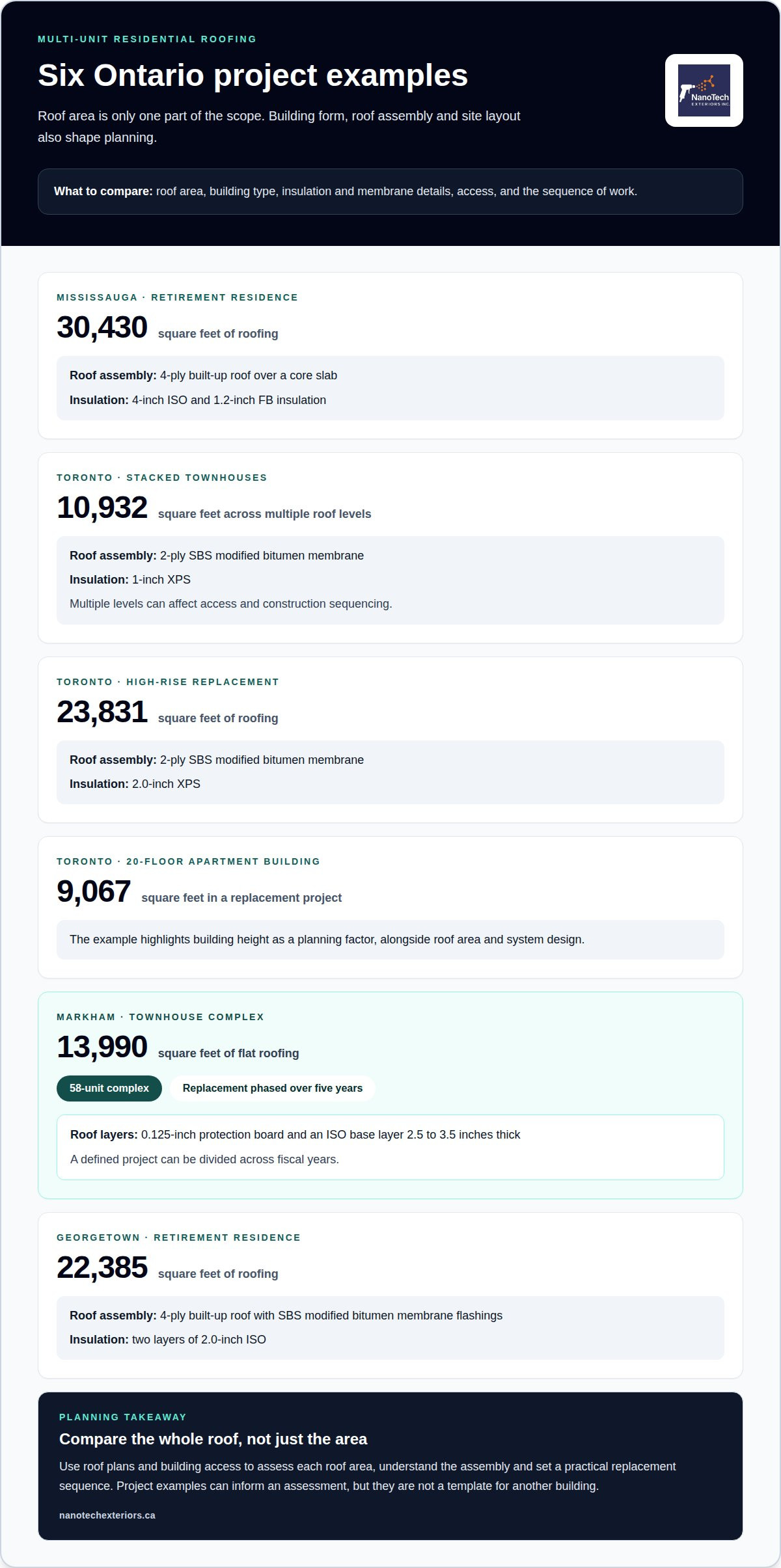
Ontario projects show how building form and roof design shape scope. A Mississauga retirement residence had 30,430 square feet of roofing. Its system used a 4-ply built-up roof over a core slab, with 4-inch ISO insulation and 1.2-inch FB insulation. This example helps managers compare roof area, substrate and insulation when reviewing project proposals.
Toronto’s stacked townhouse project covered 10,932 square feet across multiple roof levels. It used a 2-ply SBS modified bitumen membrane and 1-inch XPS insulation. Multiple levels can affect access and sequencing, so an assessment should distinguish each roof area and its assembly. Those details support clearer decisions for condos and rental housing.
A Toronto high-rise replacement covered 23,831 square feet using a 2-ply SBS modified bitumen membrane and 2.0-inch XPS insulation. Another Toronto replacement covered 9,067 square feet on a 20-floor apartment building. Together, these examples show why roof area alone doesn’t define scope. Building height, system design and site layout also shape planning.
Phasing can be part of a larger plan. In Markham, a 58-unit townhouse complex replaced 13,990 square feet of flat roofing over five years. The work included a 0.125-inch protection board and an ISO base layer 2.5 to 3.5 inches thick. For building owners, this example shows how a defined project can be divided across fiscal years.
A Georgetown retirement residence had 22,385 square feet of roofing. Its 4-ply built-up roof included SBS modified bitumen membrane flashings and two layers of 2.0-inch ISO insulation. Comparing it with Mississauga’s project highlights how similar building uses can still have different roof assemblies. Record system details, roof areas and priorities before setting a replacement sequence.
For a housing complex, use these examples to frame a project assessment, not as a template. Roof plans and building access help managers discuss scope and scheduling with residents. For help thinking through your building’s roofing needs, explore multi-unit roofing project planning.
Phased construction and resident disruption
For a BC strata complex with 30-60 units and one roof system, active replacement construction typically takes 3-6 weeks. That period helps councils and apartment managers prepare residents for noise, crew access and changing work areas. The actual sequence depends on the roof layout, access points and construction scope. A clear schedule identifies where work begins and how updates will reach tenants.
Phasing can help when the strata needs to spread costs across fiscal years. The council can organize work by roof area or building section while keeping the overall replacement plan in view. Specify which areas each phase covers, what work remains and how funding decisions connect to the schedule. This helps residents understand why construction may return in a later phase.
Before work starts, managers can share a practical notice with residents. Explain the expected work period, access changes, ground-level work zones and how to receive schedule updates. If crews need access near windows, balconies or shared entrances, identify affected areas in advance. Regular updates also help tenants plan around temporary noise and activity.
Roof assemblies can include insulation, membrane layers and protection boards, so phasing should account for how each area will be opened and completed. Separate work zones, for example, can help keep materials and debris within the active construction area. If a broader retrofit includes panels or emissions-related upgrades, coordinate those scopes with roof work rather than treating them as automatic parts of replacement. Each item needs its own place in the schedule and funding plan.
Close each phase with a documented review of completed work, remaining tasks and the next planned area. This gives the strata a record for future decisions and keeps residents informed as construction progresses. A defined sequence turns a large roof project into manageable stages while keeping the building-wide plan in view.
Is roof rejuvenation suitable for apartment and condominium buildings?
Roof rejuvenation for multi-unit residential buildings may suit apartment and condominium buildings with aging asphalt shingles that remain in suitable condition. An assessment should examine shingle condition, visible damage, leak history and areas around roof penetrations. Shared roofs need a building-wide review because sections may show different levels of wear. Base the decision on the roof’s overall condition, not one isolated area.
Rejuvenation isn’t a substitute for repairs or replacement when the roof has extensive deterioration or underlying problems. Active leaks or damaged areas may need repair first. If the roof is beyond effective restoration, replacement planning is more appropriate. This distinction helps strata decision-makers avoid treating a surface concern as the cause of every roofing issue.
When considering roof rejuvenation for multi-unit residential buildings, connect assessment findings with shared ownership and long-term plans. The review can help building owners identify areas needing attention and decide whether maintenance, repair or a larger project makes sense. Keeping findings with building records creates a useful condition history for future decisions.
A condominium council can weigh these factors:
- Shingle condition: Determine whether shingles are aging or extensively damaged.
- Repair needs: Identify leaks or localized damage requiring attention first.
- Roof consistency: Compare sections rather than assuming they have equal condition.
- Planning fit: Relate the assessment to maintenance records and replacement timing.
These considerations help a council decide whether rejuvenation fits the building. The decision about roof rejuvenation for multi-unit residential buildings should reflect the roof’s condition and any repairs required. A professional assessment can clarify the options.
NanoTech Exteriors: Roof Rejuvenation
NanoTech Exteriors provides roof rejuvenation for aging asphalt shingles that are suitable for treatment. Its spray-applied treatment is designed to restore shingle flexibility, giving building owners an option to consider before planning a full replacement. The right choice depends on the roof’s condition: extensive shingle damage or structural needs may call for repair or replacement instead.
For a multi-unit building, share the roof assessment and maintenance history when discussing next steps. This gives the project discussion a practical starting point and links the roof’s current condition with the building’s longer-term plans. Roof rejuvenation is one option, not a substitute for addressing problems that require repair.
Contact NanoTech Exteriors to discuss roof rejuvenation for your building.
Set a Clear Next Step for Your Building
A useful next step for roof rejuvenation for multi-unit residential buildings is to connect the roof’s condition with the building’s decision-making process. Bring assessment findings, maintenance records and resident concerns into one discussion. This gives owners and decision-makers a shared basis for planning the work, explaining its purpose and considering how it fits the building’s longer-term needs.
The assessment also helps clarify which service best matches the roof. NanoTech Exteriors offers Roof Rejuvenation for suitable aging shingles, along with Roof Repair and Residential Roofing for other roofing needs. When repair or replacement is more appropriate, a clear understanding of the roof’s condition can guide the next conversation.
Make the next step a practical one: discuss your building’s roof condition and priorities with a roofing professional. Contact NanoTech Exteriors about your roof to explore a suitable path forward and keep your building’s plans moving.
Frequently Asked Questions
What is roof rejuvenation and which roofing materials can it treat?
Roof rejuvenation is a spray-applied treatment designed to restore flexibility to aging asphalt shingles. GoNano Shingle Saver is intended for asphalt shingle roofs up to 12 years old, while GoNano Revive is for roofs 8 to 25 years old. These are distinct options with different age ranges. The treatment information applies to asphalt shingles, not flat-roof membranes or metal roofing systems.
What inspection is needed before rejuvenating a multi-unit building’s roof?
A professional assessment should document the shingle type, roof age, surface condition, previous repairs and leak history. It should also consider roof pitch, gables and access, which affect project complexity. For a condominium, written findings give decision-makers a record for reviewing proposed work. Keep the assessment with maintenance records so future roof decisions can build on the same history.
What are the risks, limitations, and warranties of roof rejuvenation?
Rejuvenation won’t replace repairs for leaks or structural damage, and it’s intended for suitable asphalt shingle roofs. GoNano Shingle Saver has a warranty of up to 15 years; GoNano Revive has a warranty of up to 10 years. Both are transferable. Check the treatment’s compatibility with existing shingle warranties and fire-rating requirements before proceeding.
Roof rejuvenation vs roof repair vs roof replacement: costs and benefits
Rejuvenation can extend a suitable aging shingle roof’s life by up to 15 years, while repairs address damaged or leaking areas. Replacement is more appropriate when deterioration is extensive or underlying problems exist; the choice should follow a roof condition assessment.