Roof rejuvenation usually takes hours, not days. For most roofs, the treatment takes 1-2 hours to complete, so homeowners wondering how long roof rejuvenation takes can generally plan for a short on-site application. The full effects become noticeable within a couple of hours as the oils penetrate and settle, while heavy downpours should be avoided for at least 2 hours of curing time.
It’s reasonable to want a clear timeline before arranging work, especially when Ontario weather can affect outdoor projects. The application itself is only part of the picture: roof condition, temperature, rain and cleanup all influence how the process unfolds. This guide explains what rejuvenation involves, what can affect the schedule, how curing and rain fit in, and what to consider when deciding whether it suits your roof. You’ll have a practical sense of what to expect, without confusing the time spent applying treatment with the time it takes for its effects to develop.
Key Takeaways
- Plan around suitable weather: application requires temperatures above +5 degrees, so conditions matter as much as the calendar.
- Roof age alone doesn’t determine suitability; the shingles’ wear and overall condition also help indicate whether rejuvenation may fit.
- Rain can affect the treatment after application, so understand the curing window before scheduling around changing Ontario weather.
- A clear cleanup and final walkthrough help explain what happens after application and what to expect before the work is considered complete.
Is Shingle Rejuvenation Legit in Ontario, or Just Hype?
Roof rejuvenation is a brief application, but Ontario weather determines when it can proceed. Treatment requires temperatures above +5 degrees, making a suitable forecast part of the schedule.
Treatment Duration and Retreatment
For most roofs, treatment takes 1-2 hours; replacement typically takes 1-2 days. That shorter application can make rejuvenation less disruptive, but roof size, layout, condition and weather all affect the time required. Those are the key factors behind how long roof rejuvenation takes. A product may be reapplied after 5 years, with a maximum of two applications suggested. Retreatment timing depends on the roof’s condition and the product used.
When Treatment Effects Become Noticeable
Visible changes can begin within a couple of hours as the oils penetrate and settle. This helps set expectations: the application may be finished before every effect is apparent. Colour restoration and reduced granule loss are among the described effects. They don’t mean shingles are newly installed, or that every roof responds identically. The roof’s age, existing wear and exposure to Ontario weather influence its appearance and performance.
Warranties and Treatment Limitations
A treatment’s effect on a manufacturer warranty is a separate consideration from its application time. On a roof still under material warranty, using a third-party rejuvenator could affect coverage because major shingle makers don’t list these treatments in their specifications. Field-applied coatings can also create moisture problems on asphalt shingles. A rejuvenation treatment isn’t the same as a coating, so the method and product matter. Promises of warranties longer than 7 years aren’t backed by the product described in the available market information.
Treatment Frequency and Roof Lifespan
A treatment may extend a roof’s useful life, but it doesn’t reset the shingles’ age. One treatment typically adds 5-10 years, depending on roof age, climate and maintenance; the described technology may extend lifespan by up to 15 years. Retreatment may be considered after 5 years, with no more than two applications recommended. Shingle flexibility and remaining condition affect whether treatment makes sense. If the roof needs repairs or replacement, rejuvenation won’t resolve those underlying problems.
What Is Roof Rejuvenation (& Does It Really Work)?
Roof rejuvenation treats aging asphalt shingles with an applied product intended to restore them and extend roof life. It’s suited to shingles showing early wear, not to every roof. Age offers a starting point, while granule loss, leaks and structural condition help determine whether treatment is appropriate.
Common suitability ranges overlap. Asphalt roofs showing early signs of wear at 8-15 years may be suitable. Other criteria describe roofs aged 10-20 years as potential candidates when wear is limited, the roof remains watertight, and the deck is sound. One market guideline identifies 12-18 years as an ideal range. These figures aren’t a substitute for assessing the actual shingles.
Granule coverage matters because granules protect the asphalt surface. Under one set of criteria, at least 75% of the granules must remain for a roof to qualify. Extensive bare patches, curling shingles, leaks or a weakened deck point to underlying problems that treatment won’t correct. A treated roof must still perform as a complete roofing system; rejuvenation doesn’t replace repairs or resolve structural damage.
The process starts with a free roof assessment to evaluate the roof’s condition and suitability for treatment. NanoTech Exteriors then professionally cleans and refurbishes the roof surface before applying the rejuvenation product. The treatment is applied to suitable shingles, not used to conceal damage. This sequence helps clarify whether rejuvenation is appropriate and what to expect.
Roof age and condition also shape how much benefit treatment can provide. A roof with early wear and intact shingles has a different starting point from one with widespread deterioration. Manufacturer specifications matter too, particularly if the roof remains under a material warranty. The treatment method and the roof’s existing condition should be considered together, not judged by age alone.
For an asphalt roof showing wear but still in serviceable condition, rejuvenation may be worth considering. If shingles are failing or the roof needs repairs, addressing those concerns comes first. NanoTech Exteriors provides roof repair and residential roofing as well as rejuvenation, so the next step can match the roof’s condition.
Rain and curing time after application
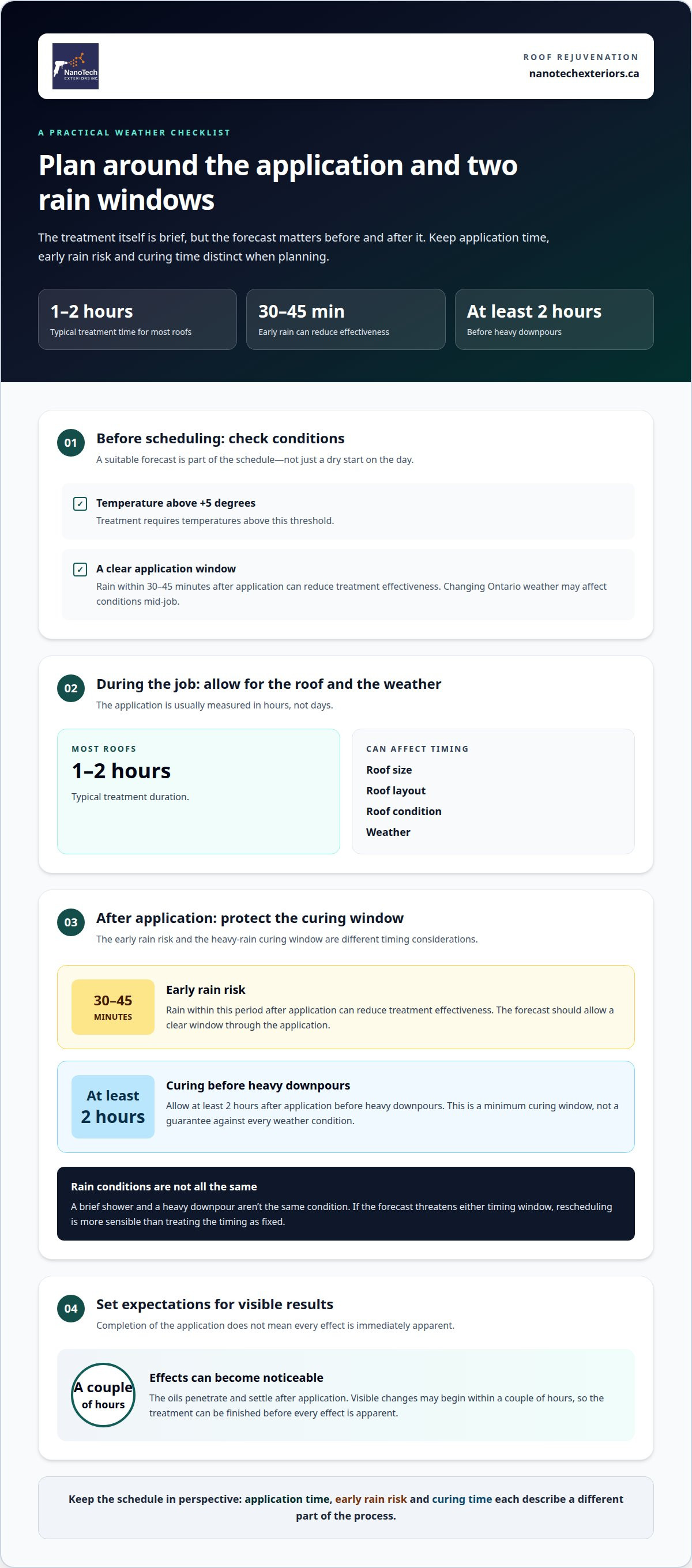
Rain is the main scheduling risk during the first minutes after application. Rain within 30-45 minutes can reduce treatment effectiveness, so a sudden Ontario shower matters. The forecast should allow a clear application window, not merely a dry start. A crew starting before clouds arrive may still face changing conditions mid-job. That’s why the timeline depends on weather as well as roof size and layout.
After application, allow at least 2 hours before heavy downpours. This is the minimum curing window, not a guarantee against every weather condition. During this period, treatment settles into the shingles rather than acting as a surface coating. Rain inside the first 30-45 minutes can reduce effectiveness; heavy rain later can also disrupt the curing period. If the forecast threatens either window, rescheduling is more sensible than treating the timing as fixed.
For an Ontario appointment, distinguish the time spent applying treatment from the time needed for curing. The application may be complete while the roof still needs protection from heavy rain. That difference matters for scheduling other roofing work, arranging access around the home, or planning a final walkthrough. A brief shower and a heavy downpour aren’t the same condition, but the available timing facts identify the first 30-45 minutes and the 2-hour curing period as key planning windows.
Rain timing can’t correct existing shingle damage. Brittle shingles or visible cracking point to condition issues that curing time won’t resolve. A 15-year-old roof’s condition matters more than the age alone when considering treatment. Warranty questions also need separate attention: a manufacturer’s material warranty and treatment coverage aren’t interchangeable. “Transferable” describes whether coverage follows a new owner; it doesn’t change the 2-hour curing window. An honest timeline separates application, weather exposure and curing, so each stage is clear.
Cleanup and final walkthrough
Cleanup is the transition from application work to a clear view of the finished roof. It should account for treatment materials, loose debris and anything displaced around the work area. A final walkthrough then distinguishes the treatment’s visible effect from existing roof damage. For example, a restored appearance doesn’t mean missing shingles have been replaced or damaged asphalt shingles repaired.
Ground-level cleanup matters too. A walkthrough can include the areas beneath the roofline, along with eaves and gutters where loose granules or debris may collect. Granules protect asphalt shingles, so scattered granules shouldn’t automatically be read as proof of treatment failure. The useful step is to note where debris appears and whether the roof also shows bare patches, lifted edges or other visible concerns.
Appearance is only one part of the closeout. Compare the treated surface with the roof’s known condition before work, noting any areas that remain worn, cracked or missing shingles. Treatment may improve the roof’s appearance, but it doesn’t restore shingles that have detached or correct underlying damage. A clear record helps separate changes in colour from repairs the roof may still need.
The final walkthrough should clarify what the treatment addressed and what remains outside its scope. If a concern is visible, note its location and describe it plainly. For instance, a bare patch near a roof edge is more useful to document than a general comment that the roof looks uneven. This keeps follow-up focused on observable conditions and the right next step.
Once cleanup and the walkthrough are complete, the roof’s condition is easier to understand. Use that review to discuss any roof concerns and distinguish improved appearance from damage that needs separate attention.
NanoTech Exteriors: Roof Rejuvenation
NanoTech Exteriors provides roof rejuvenation for aging shingles that may benefit from treatment rather than immediate replacement. Its spray-applied treatment is designed to restore aging shingles and extend a roof’s lifespan by up to 15 years. Suitability depends on the roof’s age and condition; rejuvenation isn’t a substitute for addressing serious damage or structural problems.
If your asphalt shingles show wear and remain suitable for treatment, rejuvenation can help you plan the next step. Missing or damaged shingles may call for Roof Repair or Residential Roofing instead. Contact NanoTech Exteriors for a free roof assessment to discuss your roof’s condition and whether rejuvenation fits.
Choose the Next Step for Your Roof
Knowing how long roof rejuvenation takes is useful, but the next decision is whether treatment matches your roof’s needs. Consider what you want to address: preserving serviceable shingles, resolving damage, or planning a broader roofing project. Keeping that priority clear makes it easier to identify the right approach.
A roof’s visible condition and your longer-term plans both matter. If your main concern is deterioration, discuss whether rejuvenation is appropriate. If you’re dealing with active damage, roof repair may be the more relevant starting point. For a larger project, residential roofing can address broader needs. The goal is a solution that fits the roof, not simply the fastest option.
When you’re ready to discuss your roof and possible next steps, contact NanoTech Exteriors. A clear conversation can help you move forward with greater confidence and a plan suited to your home.
Frequently Asked Questions
What are the weather requirements?
Application requires temperatures above +5 degrees, and rain timing matters during the initial curing period. In Burlington, Hamilton, Oakville, Niagara, Kitchener, Guelph, and Cambridge, changing local forecasts can affect scheduling. Treatment applied before unsuitable conditions arrive may not have the needed window to settle. A suitable temperature and rain-free application period help the crew plan the work and protect the treatment’s effectiveness.
How long does the rejuvenation process take?
For most roofs, the treatment application takes 1-2 hours. The working time can change with roof size, pitch, access, and condition. That estimate describes application, not every part of the appointment. Preparation and a final review also take time, so the total visit depends on the roof and site. A roof with a complex layout may take longer to work across than a straightforward roof.
What types of roofs qualify for rejuvenation?
Suitable roofs have asphalt shingles within the applicable age range and a condition that supports treatment. Shingle Saver is for roofs up to 12 years old; Revive is for roofs 8 to 25 years old. For example, a roof with sound shingles may be a candidate, while missing shingles or significant damage may call for repair or residential roofing instead. Roof condition remains central to the decision.
What about warranties?
GoNano treatment does not void shingle manufacturer warranties from IKO, Owens Corning, BP, or GAF. Treatment warranties are separate: Shingle Saver has coverage up to 15 years, while Revive, Concrete & Wood Saver has coverage up to 10 years. Both are transferable to a new homeowner. For a home sale, that transferability can make the treatment warranty relevant to the next owner.
What happens if it rains after treatment?
Rain has no effect after the treatment has penetrated the first layer, approximately 2 hours after application. Rain within 30-45 minutes can reduce effectiveness, so the early window matters most. If rain arrives later, the timing relative to application helps distinguish early exposure from rain after penetration. Heavy downpours should be avoided during the first 2 hours while the treatment cures.
How long does a roof rejuvenation treatment take from start to finish?
The application usually takes 1-2 hours on most roofs, but the complete visit also includes preparation, treatment, cleanup, and a final walkthrough. Those stages don’t have one fixed combined duration because access, roof layout, and condition affect the work. The treatment’s visible effects can become noticeable within a couple of hours as oils penetrate and settle, separate from the time spent on site.