The lowest monthly payment isn’t always the lowest-cost choice. To apply for contractor financing, begin with a detailed written roofing estimate, then submit the project details and documents lenders commonly request, such as proof of income, identification and credit information. When comparing roof repair financing options in Ontario, weigh the total borrowing cost, repayment terms and risks, not just the monthly payment.
It’s reasonable to want a clear way to fund urgent roof work without taking on more debt than necessary. This guide compares contractor financing with credit cards, home equity loans and HELOCs, including promotional rates, fees, repayment periods and what happens when an offer or rate changes. You’ll also learn why a lower payment can cost more over time and how to compare each option with the work your roof actually needs.
Key Takeaways
- Compare the total amount repaid, fees and promotional terms, not just the monthly payment.
- Credit cards can suit short-term costs, but a promotional rate may lead to retroactive interest if the balance isn’t cleared by the deadline.
- Home equity loans offer fixed instalments, while HELOC rates may vary; both use your home as security.
- Prepare a detailed written roofing estimate and project information before applying for contractor financing.
- If aging shingles may be suitable for restoration rather than replacement, explore Roof Rejuvenation as another way to address the work.
1. Credit cards for short-term roof repair costs
A credit card can cover a short-term cash gap for a limited roof repair, especially when the scope and estimate are clear. It’s most practical if you can repay the balance promptly. If you carry a balance, interest can make even a small repair more expensive over time. Compare the card’s purchase rate and total repayment cost before charging materials or labour.
Some cards offer a promotional 0% interest period for purchases. The offer has a deadline, so calculate whether your planned payments will clear the balance before it ends. Some promotional arrangements may charge interest retroactively if the balance isn’t paid in full by the deadline. Read the offer terms and note the end date before using the card for a roofing project.
Keep the charge tied to the written estimate. If it covers a limited repair, avoid using available credit for unrelated purchases. Track the roof expense separately from other card spending and direct payments toward it. If the repair scope expands, update your budget before adding costs to the card. This makes the outstanding balance and payoff plan easier to manage.
For repairs to a personal residence, don’t assume loan payments or interest are tax-deductible. Tax treatment depends on whether the property earns income and how you use the borrowed funds. Keep the estimate and financing records together, especially if the property is used to generate income.
A personal loan from a bank or credit union is another option. It’s generally unsecured, so your home isn’t collateral, and its interest rate is generally higher than that of a home equity loan. A fixed-rate loan gives you a set payment and a known end date, which can help with budgeting. Approval typically depends on income, credit history, existing debt and the lender’s policies.
Pre-qualification can give you an initial indication of likely loan terms, but it isn’t final approval. A lender may review your credit during the application, so ask whether that involves a hard credit check before proceeding. Prepare identification, income details, current debt information and the roofing estimate. Applying for several loans in a short period can make comparisons harder, so record each offer’s rate, fees and repayment schedule.
To compare a credit card with a personal loan, match the amount to the estimate, calculate total repayment and check when each balance must be cleared. A card may suit a small, short-term expense if you can repay it promptly. A personal loan may fit a larger planned repair when predictable instalments matter more than revolving credit. In either case, base your decision on the full cost, not the first payment.
2. Home equity loans and HELOCs
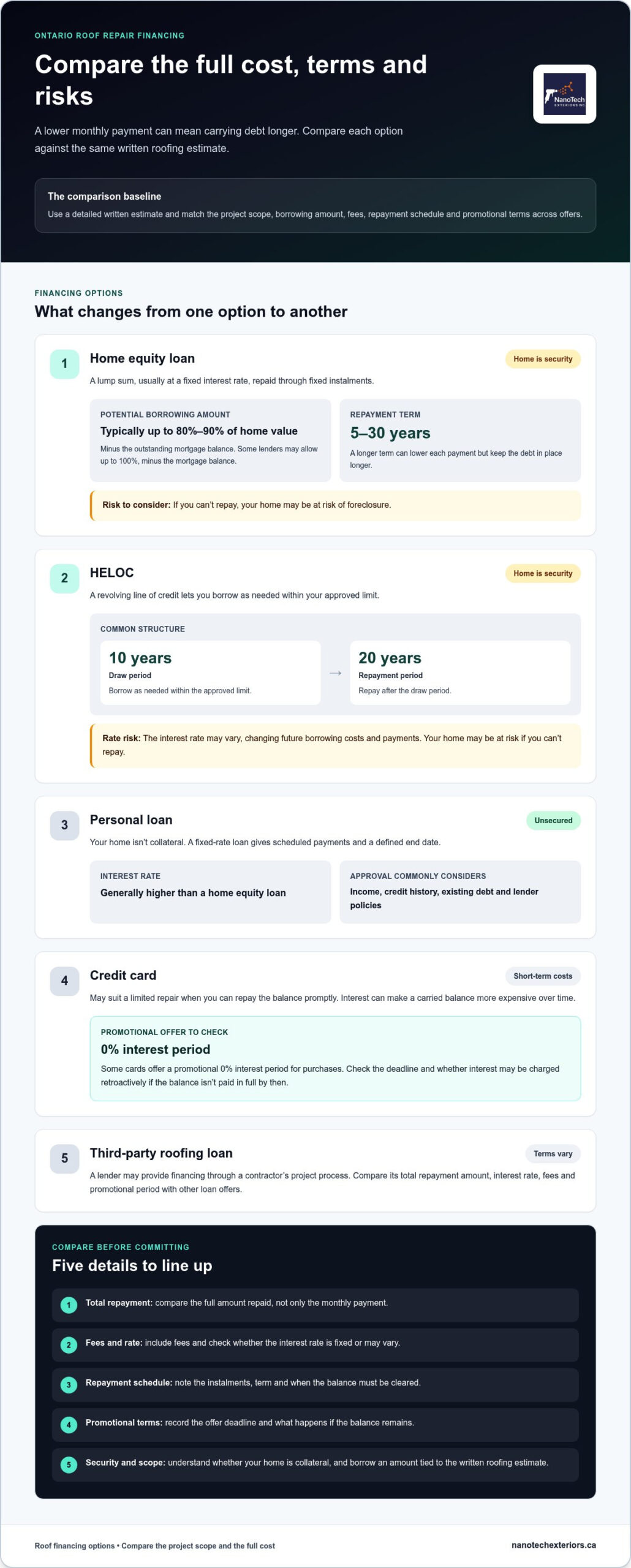
Home equity can fund a roof replacement when you have enough equity and qualify for secured borrowing. Home equity loans typically allow borrowing up to 80% to 90% of a home’s value, minus the outstanding mortgage balance. Some lenders allow borrowing up to 100% of the home’s value, minus the mortgage balance. The available amount depends on the lender’s assessment and your existing mortgage.
A home equity loan provides a lump sum, usually at a fixed interest rate, repaid through fixed instalments. Repayment terms commonly range from five to 30 years. That structure can suit a planned roofing project because the payment schedule is predictable. A longer term can reduce each payment while increasing the time you carry the debt, so compare the total repayment period alongside the rate.
A HELOC works differently. It’s a revolving line of credit, and its interest rate may vary. A common structure has a 10-year draw period, followed by a 20-year repayment period. During the draw period, you can borrow as needed within your approved limit. Variable rates can change future payments, so consider whether your budget can absorb a higher borrowing cost.
Both options use your home as security. If you can’t repay, your home may be at risk of foreclosure. A home equity loan or HELOC is therefore a consequential choice, not simply a lower-rate alternative to a credit card. Borrow only what the roofing estimate supports, and include related project costs when deciding on the amount.
Personal loans are another way to finance a roof replacement. They’re unsecured, so your home isn’t collateral, but they generally have higher interest rates than home equity loans. A fixed-rate personal loan gives you scheduled payments and a defined end date. Approval typically depends on income, credit history, existing debt and the lender’s policies.
Third-party roofing loans are financing arrangements provided through a lender, sometimes as part of a contractor’s project process. Terms vary by contractor and lender. Compare the total repayment amount, interest rate, fees and any promotional period with a bank or credit union loan. Keep the written estimate beside each offer so you’re comparing financing for the same roof replacement scope.
Choose a financing structure that suits the project and your tolerance for risk. A lump-sum loan can fit a defined replacement plan; a HELOC offers borrowing flexibility but exposes future payments to variable rates. Personal loans don’t use your home as collateral, while secured equity borrowing puts it at risk if you miss payments. Compare these trade-offs before committing.
3. How do I apply for financing through a contractor?
Start by arranging roofing estimates, then compare the written scope and total cost before applying for financing. Ask whether contractor financing is offered through a lender, and review the rate, fees, repayment schedule and promotional terms together.
A useful estimate breaks the roofing project into clear parts. It should identify the roofing system, work scope, material allowances, flashing, ventilation, disposal and possible additional work. This detail helps you compare estimates on the same basis and apply for an amount tied to the work, rather than borrowing based on an incomplete total.
Contractor financing terms vary. Some plans offer a promotional interest rate of 0% for a set period, but the rate and terms after that period matter too. Read the repayment conditions and any fees before accepting. Match the repayment period to the expected life and scope of the work, rather than choosing solely by the lowest initial payment.
For an application, prepare identification, proof of income, credit information and the project estimate. Lenders commonly request these details to assess financing. Roof loan applicants can expect to hear from the lender within a day or two after applying. Keep the lender’s decision and proposed terms alongside the estimate so you can compare the amount financed with the roofing work.
Before signing, include the contractor’s deposit and progress-payment schedule in the written contract. Tie each payment to a clear project milestone, such as a defined stage of completed work. Ask for material and workmanship warranties to be explained separately. If the roof was damaged in an event that may be covered, contact your insurer before authorizing major replacement work.
For energy-efficient improvements, the Canada Greener Homes Grant offers financial incentives that include roofing. Check whether the planned work meets the program’s energy-efficiency purpose before including a grant in your budget. Municipal assistance is set locally, not through one Ontario-wide roof-repair program; eligibility and support depend on the municipality and household circumstances.
Compare the risk of secured borrowing with contractor financing and other options before choosing a home equity loan. Contractor financing may simplify an application around a specific roofing project, while a separate loan may offer a different repayment structure. Put the estimate, contract milestones and financing terms side by side, then compare the total repayable and payment schedule with your household budget.
4. Comparing financing terms and repayment risks
Compare each offer using the same roofing estimate and borrowed amount. A lower monthly payment can conceal a longer repayment period and higher total borrowing cost. Write down the payment, interest rate, repayment length and fees for each lender. Then compare the total you’ll repay, not just the monthly amount. This makes it easier to assess a personal loan, contractor plan and revolving credit side by side.
Read the agreement for fees, early-payment penalties and promotional terms that expire. A 0% promotional rate can reduce interest during its stated period, but the later rate affects the remaining balance. Note the expiry date and determine what you’d owe if the balance isn’t cleared by then. If an offer includes a fee or penalty, include it in the comparison instead of treating it as a separate detail.
Flexible payments can help match repayments to household cash flow, but they can also extend the debt. Ask how payment changes affect the payoff date and total cost. For example, making only the minimum payment on revolving credit can leave a balance accruing interest. A fixed monthly payment may be easier to budget for, while a variable rate can change the amount due later.
Check whether the financing amount covers the full written scope, including materials and any additional work described in the estimate. If the project changes, borrowing more may require new approval or different terms. Compare the original amount with the final contract before accepting funds. Keep the lender’s agreement and contractor’s payment schedule together so project payments align with available financing.
Repayment risk depends on what secures the borrowing. A HELOC or home equity loan uses your home as security, so missed payments can put the property at risk. An unsecured personal loan doesn’t use your home as collateral, but its interest rate may be higher than a home equity loan’s. Compare the security, rate and consequences of missed payments before choosing a monthly commitment.
Use a simple comparison sheet with one row per offer: lender, interest rate, payment frequency, fees, promotional expiry, early-payment penalty and total repayment. Keep the payment schedule and roofing materials in your project file. If an offer doesn’t clearly explain one of these terms, don’t treat its advertised payment as the full cost. This side-by-side check can show whether flexible payments suit your budget.
5. Comparing financing options
Compare financing with the work required, not just the available credit. Start with the written estimate and identify whether the job is a limited repair or full replacement. Then match the amount you need to each option’s approval conditions, repayment schedule and risk. To compare roof repair financing options in Ontario, first establish how much the project actually requires.
For a credit card, focus on the balance, interest rate and promotional deadline. A temporary 0% rate can help if you clear the balance before the offer expires. If you can’t, interest or retroactive charges may increase the amount owed. This option avoids using home equity, but carrying the balance can make repayment costly.
A fixed-rate personal loan can make budgeting more predictable because the payments and end date are set from the start. Depending on the lender, personal loan terms may range from one to seven years. Approval typically depends on income, credit history, existing debt and lender policies. A stronger credit history can help you secure better terms, while existing debt can affect affordability.
Home equity borrowing may offer a different rate structure, but it puts your home behind the debt. A home equity loan provides a lump sum with fixed instalments, while a HELOC offers revolving access and may have a variable rate. Consider these options only after weighing your equity, repayment capacity and the consequences of missed payments. Lower payments can stretch repayment and keep the debt outstanding longer.
Contractor financing can connect an application to a specific roofing project. Terms vary, and some plans offer a promotional 0% interest rate for a set period. Compare the post-promotion rate, fees and total repayment with a personal loan or card. For roof repair financing options in Ontario, don’t treat a low introductory payment as the full cost of borrowing.
Use the same estimate to assess every option. Check whether it includes materials, labour, disposal and possible additional work, then compare the financing amount with that scope. If the damage followed an event that may be covered, contact your insurer before authorizing major replacement work. Insurance may contribute, but a deductible or chosen upgrades can still affect the amount you need to finance.
For a practical comparison, write down the lender, approval requirements, rate type, payment schedule, fees, promotional expiry and total repayment. Choose the option that fits both the project and your budget, rather than stretching repayment just to lower monthly payments. To clarify the work involved before comparing terms, review your roofing project scope.
NanoTech Exteriors: Roof Rejuvenation
NanoTech Exteriors offers Roof Rejuvenation for aging shingles that may be suitable for restoration instead of full replacement. Its spray-applied treatment is designed to restore shingle flexibility and extend a roof’s lifespan by up to 15 years. This can provide an alternative to taking on financing for a complete replacement, potentially costing up to 85% less than a new roof.
If your roof needs replacement or has damage requiring repair, compare financing only after assessing the work needed. Roof Rejuvenation is intended for aging shingles, not every roof condition, so the right approach depends on the roof’s state and project requirements.
For a practical next step, contact NanoTech Exteriors to discuss your roof, or visit nanotechexteriors.ca.
Make your next roofing decision with clarity
Connect your financing decision to the roof’s actual condition. A repair, rejuvenation or replacement involves a different project scope, so establish what work is appropriate before deciding how much to borrow. This keeps the financing choice grounded in the work, rather than letting an available loan dictate the solution.
For homeowners comparing roof repair financing options in Ontario, an assessment can help determine whether the project calls for Roof Repair, Roof Rejuvenation or Residential Roofing. NanoTech Exteriors offers these services for different roofing needs. Start by understanding what your roof requires, then decide how to fund the work in a way that fits your household plans.
Contact NanoTech Exteriors to discuss your roof and take a practical next step toward protecting your home.
Frequently Asked Questions
How do I apply for financing through a contractor?
Begin with the written estimate, then complete the application for the financing arrangement connected with the contractor. Have identification, proof of income, credit information and roofing project details ready. If the estimate sets out separate repair stages, make sure the application amount reflects the agreed scope. Review the lender’s decision and repayment terms before signing the roofing contract, so your financing and project commitments align.
How can I find affordable roof financing near me?
Compare total repayment, not just the monthly payment, and use the same roofing scope for each estimate. For homeowners in Burlington, Hamilton, Oakville, Niagara, Kitchener, Guelph or Cambridge, local estimates can clarify the work being financed. If aging shingles may suit Roof Rejuvenation rather than replacement, compare that project scope with replacement financing before choosing how much to borrow.
What documents are needed for financing?
Prepare government-issued identification, proof of income, credit information and details of the roofing project. The lender may use these documents to assess your application and ability to repay. Include the written estimate and scope so the amount requested corresponds to the planned work. If you’re applying with a co-borrower, have their financial and identification information ready too, as the lender may assess both applicants.
What roof repair financing options are available in Ontario?
Ontario homeowners can consider credit cards, unsecured personal loans, contractor-arranged financing, home equity loans and HELOCs. Each suits a different situation. A card may work for a small repair you can repay promptly; a fixed-rate personal loan may suit a defined project; equity borrowing uses your home as security. Compare interest structure, fees, approval terms and total repayment before choosing.
Do Ontario roofing contractors offer financing, and what are the interest rates and fees?
Some roofing contractors arrange financing through a lender, and terms differ between plans. Promotional offers may include a 0% interest rate for a set period, but the rate afterward and any fees affect the total cost. Review the agreement for application charges, early-payment penalties, promotional expiry and required payments. The advertised monthly amount alone won’t show what you’ll repay over the full term.
Can homeowners use a HELOC or home equity loan to finance roof repairs in Ontario?
Yes. A home equity loan provides a lump sum, generally repaid through fixed instalments, while a HELOC is revolving credit that may have a variable rate. Both are secured against your home, so missed payments can put the property at risk. Before using home equity, consider whether the repair scope is clear and your budget can handle changing HELOC payments.
Are there Ontario or federal grants, rebates, or loans for roof repairs or energy-efficient roofing?
The Canada Greener Homes Grant offers financial incentives for energy-efficient home improvements, including roofing. That doesn’t mean every roof repair qualifies: the planned work must fit the program’s energy-efficiency purpose and requirements. Municipal assistance is determined locally, so homeowners should review their municipality’s current housing, energy-efficiency and emergency-assistance information. For example, start with the official municipal pages for your city or town.
What credit score and income requirements apply to roof repair financing in Canada?
There isn’t one universal credit score or income threshold for every Canadian lender. For personal loans, approval commonly depends on income, credit history, existing debt and lender policies. Borrowers with credit scores of 690 or higher often receive the lowest APRs, while a lender also considers whether income supports the proposed repayment. A lower score can make approval harder, but lenders and contractors may have different options.