A coating can’t make a loose shingle secure. If you’re considering shingle sealant for wind protection Hamilton homeowners should know that wind resistance depends on sound shingles and secure attachment, not simply a surface treatment. Even one lifted or missing shingle can leave the roof vulnerable to water entry.
It’s understandable to want a straightforward way to protect your roof, especially when wind damage isn’t always easy to spot from the ground. But sealant, repair and roof rejuvenation serve different purposes. The right option depends on the shingles’ condition and what’s causing the concern.
This article explains what a shingle product can and can’t do, which signs of wind damage to watch for, and when a roof may need assessment, repair, rejuvenation or replacement. You’ll also learn how NanoTech Exteriors’ spray-applied rejuvenation treatment restores flexibility to suitable aging shingles, without presenting it as a windproof coating. With a clearer picture of the options, you can choose a practical next step for your Hamilton-area home.
Key Takeaways
- Shingle sealant serves specific sealing or bonding purposes. It isn’t a universal way to stop wind uplift.
- Learn what to look for from a safe location, including missing, lifted, creased or granule-shedding shingles.
- Understand how to distinguish a sealing need from damage that calls for roof repair, rejuvenation or replacement.
- Find out whether shingle sealant for wind protection Hamilton homeowners are considering fits the actual roof concern.
- See how NanoTech Exteriors’ spray-applied rejuvenation may suit aging shingles when their condition allows.
Shingle Sealant for Wind Protection in Hamilton
Shingle sealant is intended for a specific sealing or bonding task on a roof. It isn’t a universal windproof coating. A sealant may help with a localized need when the product is compatible with the shingles and used according to its manufacturer’s instructions. It can’t correct every issue that makes shingles vulnerable to wind.
In brief: Sealant may serve a specific sealing or bonding purpose. Wind-uplift protection depends on the condition, attachment and installation of the roof as a whole.
Water resistance and wind resistance both affect roof performance, but they aren’t the same thing. A product intended to seal against moisture doesn’t automatically stop wind from getting beneath a shingle edge and lifting it. A roof might need a leak repaired, a loose shingle addressed or broader work, and each concern calls for a different solution.
Does sealant stop shingles from lifting?
Not in every situation. If one shingle has a localized bonding issue, a compatible product may be relevant. It won’t fix a torn, creased or missing shingle, correct poor fastening or restore a larger area of failing roofing. Applying a surface product across a roof also isn’t the same as securing each shingle against wind uplift.
Suitability depends on the shingle type, the location and cause of the problem, and the product’s intended use. Follow the manufacturer’s guidance rather than assuming a sealant designed for one material or purpose is appropriate for another. Asphalt shingles also rely on their design and installation to resist wind. This asphalt shingle wind resistance overview provides general background on shingles and wind-related performance.
Why Hamilton weather makes roof condition worth checking
Wind-driven rain can expose weaknesses that may be less obvious in calm, dry conditions. Seasonal changes are another reason to pay attention to the roof’s overall condition, including shingles and details around roof edges and penetrations. No single surface treatment prepares every roof for every weather event.
A useful assessment looks at the roof itself, not just the forecast. Shingle condition, fastening, installation and roof details all contribute to how the assembly performs. For example, an edge lifted after a storm may be an isolated issue or part of a wider pattern. Closer inspection is needed to determine the cause. Adding sealant before identifying the problem risks treating a visible symptom rather than the underlying need.
For homeowners searching for shingle sealant for wind protection Hamilton, the practical first question is what the roof needs the product to do. If the concern is moisture, identify the source. If shingles appear loose or damaged, focus on their condition and attachment. A roof assessment can help distinguish a suitable, limited sealing task from repair or other roof work, so the next step addresses the cause rather than asking a coating to do more than it’s designed for.
How Wind Affects Asphalt Shingles, and What Determines Roof Resistance
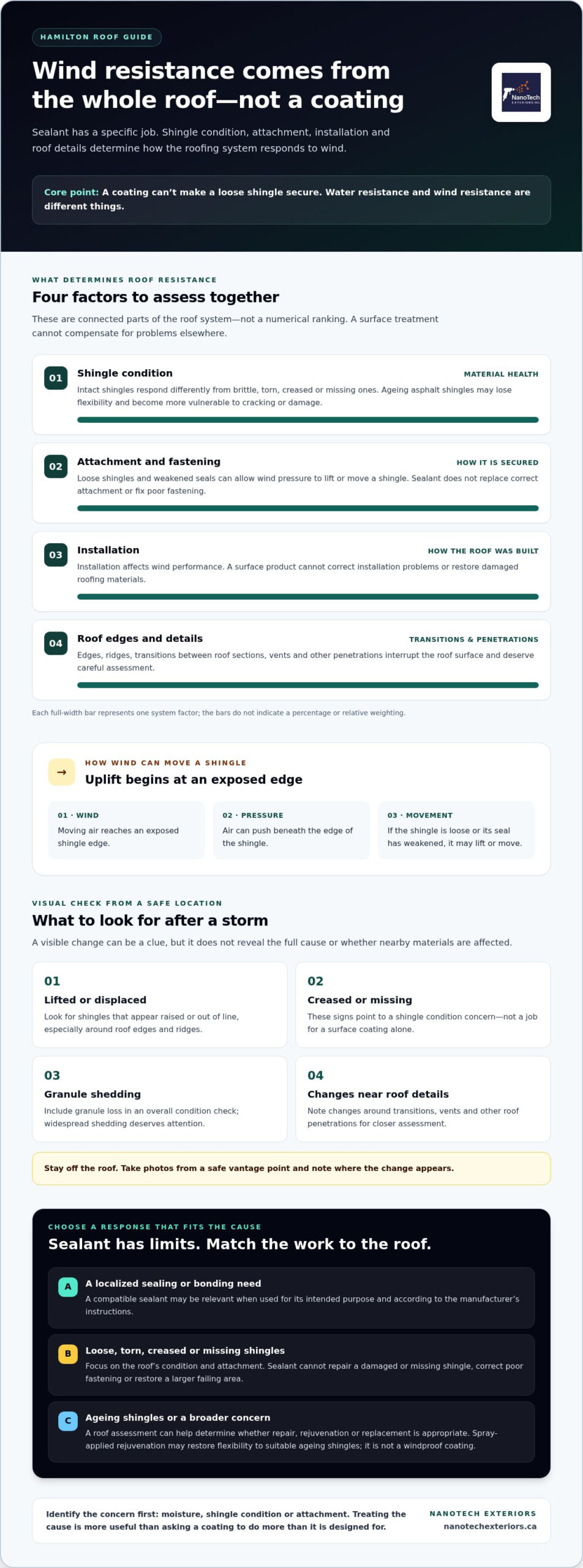
Wind uplift happens when moving air creates pressure that can push beneath exposed shingle edges. If a shingle is loose or its seal has weakened, that pressure may lift or move it. Wind alone doesn’t determine the risk. The shingle’s condition, how it was installed and fastened, and how roof features are finished all contribute.
Roof-wide wind performance depends on the complete roofing system, not on a coating applied to the shingle surface. Sealant can’t compensate for incorrect fastening or damaged materials. Research discussed by IIBEC also points to factors affecting shingle wind damage, including installation and ageing. This helps explain why a lifted shingle needs assessment, rather than assumptions about the weather alone.
Which roof areas can show wind-related vulnerability?
From the ground, pay particular attention to roof edges, ridges, transitions between roof sections, and areas around vents or other penetrations. These details interrupt the roof’s surface and deserve a careful visual assessment. Look for shingles that appear lifted, creased, missing or displaced, as well as changes that become visible after a storm. Don’t climb onto the roof to inspect it.
A single visible change doesn’t reveal the full cause. A shingle that appears out of line could have moved in the wind, but a closer assessment is needed to understand its attachment and whether nearby materials are affected. Take photos from a safe vantage point and note where the change appears. This gives a roofing professional useful context without putting you at risk.
Why shingle age and attachment matter
As asphalt shingles age, they may lose flexibility and become more vulnerable to cracking or damage during handling and exposure. An intact shingle and a brittle, damaged one may not respond alike, even on the same roof. Fastening and installation matter too. Sealant doesn’t replace correct attachment, and bonding a damaged shingle doesn’t restore the material’s condition.
Granule loss is another sign to include in an overall condition check. Granules form the shingle’s exposed surface, so widespread shedding deserves attention alongside lifted or creased areas. If you’re seeing that pattern, NanoTech Exteriors’ guide to roof shingle granule loss and restoration explains why the extent of wear matters when considering roof care.
For homeowners researching shingle sealant for wind protection Hamilton, the practical takeaway is to identify the roof’s condition and any attachment concerns before choosing a product. NanoTech Exteriors serves Hamilton with roof repair and rejuvenation. Rejuvenation is intended for suitable aging shingles, not as a wind-rating upgrade. A roof assessment from NanoTech Exteriors can help clarify which roof-care step fits what you’re seeing.
Shingle Sealant vs. Repair, Rejuvenation, and Replacement
The right roof-care option depends on the problem. Sealant may suit a specific sealing need, but loose or damaged shingles call for a different response. Comparing the purpose and limits of each option helps prevent a surface treatment from being mistaken for a roof repair.
| Option | Purpose | Suitable conditions | Limitations | Next step |
|---|---|---|---|---|
| Sealant | Address a specific sealing or bonding need. | A localized detail where the product is intended for the material and application. | Doesn’t correct widespread damage, poor fastening or shingles that need replacement. | Identify the detail and follow product and manufacturer guidance. |
| Roof repair | Fix localized damage or a specific roof problem. | A limited area with issues such as missing, displaced or damaged shingles. | May not be the right answer if damage or deterioration is extensive. | Assess the affected area and determine the repair needed. |
| Roof rejuvenation | Restore flexibility to aging shingles. | Existing shingles in suitable condition for treatment. | Doesn’t repair damaged materials or guarantee greater wind resistance. | Assess roof condition to determine suitability. |
| Replacement | Renew the roof when it’s beyond practical restoration. | A roof with extensive deterioration or damage that can’t be addressed effectively with targeted work. | More extensive than a localized repair or suitable rejuvenation. | Evaluate the overall roof and plan the appropriate replacement work. |
When a sealant may suit a specific roofing detail
Sealant is most relevant when a particular detail needs sealing, not when the roof needs broad wind protection. Product choice and application must match the roofing material and intended use. A product used to seal a detail isn’t automatically appropriate for bonding a shingle. Neither use replaces the need to repair or replace damaged material.
Compatibility and manufacturer guidance matter. Before relying on a product’s performance, check its intended application and any relevant warranty guidance. Don’t assume that adding sealant will solve a problem simply because the affected area is small.
When repair or rejuvenation is the more relevant comparison
If shingles are missing, creased, displaced or visibly damaged, roof repair is a more direct option than a surface treatment. NanoTech Exteriors provides roof repair in Hamilton for damage-specific needs. If shingles are aging but remain suitable for treatment, spray-applied rejuvenation restores flexibility. It isn’t a wind-resistance guarantee, and suitability depends on roof condition. If deterioration is too extensive for practical restoration, replacement may be the appropriate path.
For homeowners considering shingle sealant for wind protection Hamilton, start with the roof’s condition and the specific job to be done. NanoTech Exteriors serves Hamilton with repair, rejuvenation and replacement, matching the work to the roof rather than relying on one treatment for every issue. A roof assessment from NanoTech Exteriors can help clarify which option fits.
A Hamilton Homeowner’s Checklist Before Applying Shingle Sealant
Before reaching for a product, work out what changed and where. Sealant may suit a particular roofing detail, but applying it before identifying the concern can hide damage without addressing its cause. Use this sequence to gather useful information safely and decide whether the roof needs closer attention.
- Observe from a safe location. From the ground or another safe vantage point, look for missing, lifted, creased or displaced shingles. Note any visible granule shedding. Don’t climb onto the roof, especially if it’s wet or appears damaged.
- Document what you see. Record the date, the affected roof area and any changes you can observe. Take ground-level photos if it’s safe, and note any interior signs of moisture, such as a new ceiling stain.
- Identify the concern. Consider whether you’re seeing a specific detail that may need sealing, isolated shingle damage or changes in several areas. A water stain indoors, for example, may point to an underlying roof issue rather than a simple surface-sealing need.
- Choose an appropriate assessment. If shingles are missing, damage appears repeated or widespread, or you can’t tell what’s causing the problem, have the roof assessed before applying a product. That helps ensure the next step fits the actual condition.
What to record after a windy-weather event
Keep notes that show the pattern: when you noticed the change, which roof slope or edge appears affected, and whether the signs are isolated or spread across the roof. Add photos taken from a safe location and record any interior moisture signs. Don’t apply a product before understanding the type and extent of damage. A coating can’t establish whether shingles are secure or sound.
One apparent surface problem can have more than one explanation. Granule shedding, for instance, is useful to document, but it doesn’t show by itself whether a shingle is properly attached or whether there’s damage beneath it. The full picture matters.
How to decide whether the roof needs further assessment
A clearly localized concern may call for a focused evaluation. Repeated shingle movement or visible changes across several areas warrant a broader look. Missing shingles, exposed underlayment or signs of a leak call for prompt attention, not an experiment with sealant. If deterioration looks extensive, NanoTech Exteriors’ Ontario roof replacement checklist can help you consider whether repair or replacement needs closer evaluation.
If you’ve spotted damage, review Hamilton roof repair guidance for damage-specific context. For homeowners weighing shingle sealant for wind protection Hamilton, a condition-based assessment is a more reliable starting point than applying a product by assumption. Arrange a roof assessment with NanoTech Exteriors to understand which roof-care option fits what you’ve observed.
Roof Protection Options from NanoTech Exteriors in Hamilton
A practical roof-protection plan starts with the roof’s actual condition, not a one-product solution. NanoTech Exteriors is based in Burlington and serves Hamilton, Oakville, Niagara, Kitchener, Guelph and Cambridge with roof rejuvenation, repair, refurbishment and replacement. The right option depends on whether the shingles are aging but suitable for treatment, locally damaged or beyond practical restoration.
How roof rejuvenation fits into a protection plan
NanoTech Exteriors’ spray-applied rejuvenation treatment restores flexibility to aging asphalt shingles. It’s a preservation option for roofs suitable for treatment, not a sealant or windproof coating. Depending on the roof’s condition, rejuvenation can extend roof life by up to 15 years. It doesn’t repair missing or damaged shingles, and it shouldn’t be presented as increasing a roof’s rated wind resistance.
Understanding the treatment’s role helps set realistic expectations. Rejuvenation is intended to care for suitable existing shingles, while roof repair addresses damage. Read the Burlington roof rejuvenation homeowner guide for a fuller overview of how this option fits into roof care.
Choose a roof-care next step based on condition
Use what you can safely observe as a starting point, then match the next step to the issue. These distinctions can help:
- Explore repair when damage appears localized, such as a missing or displaced shingle.
- Consider rejuvenation when shingles are aging but their overall condition makes them suitable for treatment.
- Discuss refurbishment when the roof needs broader work that may be addressed without assuming every shingle requires replacement.
- Explore replacement when deterioration or damage means the roof is beyond practical restoration.
These are starting points, not a substitute for assessing the roof. A visible concern may not show the full extent of the issue, and choosing a treatment before understanding the condition can lead to the wrong kind of work.
For Hamilton homeowners searching for shingle sealant for wind protection Hamilton, don’t treat rejuvenation or sealant as a guarantee against wind damage. Roof protection means choosing work that fits the shingles and the problem: repair for damage, rejuvenation for suitable aging shingles, and replacement when the roof’s condition calls for it. NanoTech Exteriors provides repair, rejuvenation, refurbishment and replacement to address these different needs.
Explore NanoTech Exteriors’ roofing services and arrange a practical next step for your Hamilton-area roof.
Make Your Next Roof Decision With Confidence
Before choosing a product, turn what you’ve noticed into a clear starting point: where the concern appears, whether it has changed and what you want the roof to do. That gives you a more useful basis for deciding whether to investigate a specific detail or consider broader roof work. A measured next step can help prevent a quick fix from becoming a substitute for addressing the real issue.
If you’re still weighing shingle sealant for wind protection Hamilton, focus on the roof’s needs rather than expecting one coating to solve every concern. NanoTech Exteriors provides repair, rejuvenation, refurbishment and replacement, with the appropriate option depending on the roof’s condition.
Explore NanoTech Exteriors’ roofing services and arrange an assessment for your Hamilton-area home. Clear information makes a confident decision easier.
Frequently Asked Questions
Can shingle sealant stop shingles from lifting in strong wind?
No, not reliably in every situation. A sealant may help with a specific, compatible bonding task, but it can’t make every shingle secure during strong winds. If one shingle edge looks raised, check from the ground whether nearby shingles also appear uneven or displaced. “Shingle sealant for wind protection Hamilton” shouldn’t be read as a promise of windproofing. The roof’s condition and attachment need to be considered.
Is roof sealant the same as a shingle rejuvenation treatment?
No. Sealant is generally used for a particular sealing purpose, while rejuvenation is designed to restore flexibility to suitable aging shingles. For example, if an older roof looks weathered but isn’t visibly damaged, rejuvenation may be worth discussing after an assessment. Neither option should be assumed to increase a roof’s wind rating. The right choice depends on what the roof needs and the treatment’s intended use.
Can I apply shingle sealant myself after a windstorm?
Don’t apply it until you’ve identified the concern and confirmed that the product is appropriate for the material and task. Stay off a wet, steep or damaged roof. From the ground, take photos of visible changes and note where they appear. If shingles are missing, displaced or difficult to assess, arrange a roof assessment rather than trying to press them down or cover them with a product.
Will shingle sealant fix a roof leak?
Not necessarily. A leak can come from a damaged shingle, flashing or another part of the roofing system, so sealing a visible area may not address where water is entering. If you notice a ceiling stain, record when it appeared and whether it changes after rain. Missing shingles or indoor moisture warrant a prompt roof assessment so the source can be identified before choosing a repair.
Does shingle sealant affect a roof manufacturer’s warranty?
It may depend on the shingle manufacturer’s terms, the product and how it’s used. Review the warranty and product instructions before applying anything, and keep records of the product, application date and related roof work. A label saying “for roofing” doesn’t establish compatibility with every shingle or application. If the documentation is unclear, don’t assume the treatment is permitted. Have the roof concern assessed first.
When should a Hamilton homeowner consider roof rejuvenation instead of sealant?
Consider rejuvenation if the shingles are aging but remain suitable for treatment, rather than damaged or failing. NanoTech Exteriors’ spray-applied treatment restores flexibility and can extend roof life by up to 15 years, depending on roof condition. NanoTech Exteriors is based in Burlington and serves Hamilton, Oakville, Niagara, Kitchener, Guelph and Cambridge. Rejuvenation is a roof-care option, not a wind-resistance guarantee or a substitute for needed repairs.
What should I do if wind has removed or creased shingles?
Arrange a roof assessment instead of treating missing or creased shingles as a sealing job. From a safe location, note which roof area appears affected and look inside for signs of moisture, such as a new stain. Don’t climb up to inspect or apply a product over the damage. An assessment can establish whether the roof needs a localized repair or a broader solution, based on the extent of the damage.