A new coating isn’t always the right first step when a flat roof leaks. For waterproofing flat roof Niagara properties, start by identifying where water is entering and whether drainage, seams, flashing, or another roof detail needs attention.
Standing water or a damp patch indoors can be worrying, especially when it’s unclear whether a repair will do or the roof needs more extensive work. The right next step depends on the roof’s condition, not a one-size-fits-all fix.
This guide explains common water-entry risks, what an assessment should examine, and how to compare repair, refurbishment, and replacement. You’ll also find practical steps for documenting symptoms before an assessment. NanoTech Exteriors provides flat roofing and roof repair in Niagara, Burlington, Hamilton, Oakville, Kitchener, Guelph, and Cambridge. A free roof assessment helps shape a project-specific quote.
Key Takeaways
- Understand why drainage and vulnerable roof details matter when planning waterproofing flat roof Niagara properties.
- Use signs of water entry and drainage concerns to help determine whether localized repair, broader refurbishment, or replacement may be appropriate.
- Record visible staining, recurring leaks, and when symptoms appear to make an assessment more informative.
- Learn what a project-specific assessment can clarify and why costs depend on the property’s location, roof complexity, and condition.
Waterproofing a Flat Roof in Niagara: Why the Source of Water Matters
A flat roof isn’t perfectly level. It’s designed to direct rain and melting snow towards drains or roof edges. In Niagara, seasonal rain, snow, and temperature changes expose the roof assembly to shifting moisture and weather conditions. Effective waterproofing means managing water across the roof and limiting entry at vulnerable areas, not simply covering the spot where a leak appears indoors.
Waterproofing protects the roof assembly by controlling water’s path and limiting entry at vulnerable areas. Covering a visible leak treats a symptom, not necessarily its source. A patch may conceal a stain temporarily while water continues to enter elsewhere or travel through the roof structure.
For an overview of how roof construction, membranes, and drainage work together, see Flat Roof Construction and Waterproofing. The appropriate response depends on the roof as a whole, not just what’s visible from inside.
How water can enter a flat roof
Water can pass through a vulnerable seam, flashing around a wall or roof opening, a penetration such as a vent, or an edge where materials meet. Drainage details matter too. If water doesn’t move towards an outlet as intended, it may remain near transitions and repeatedly expose those areas to moisture.
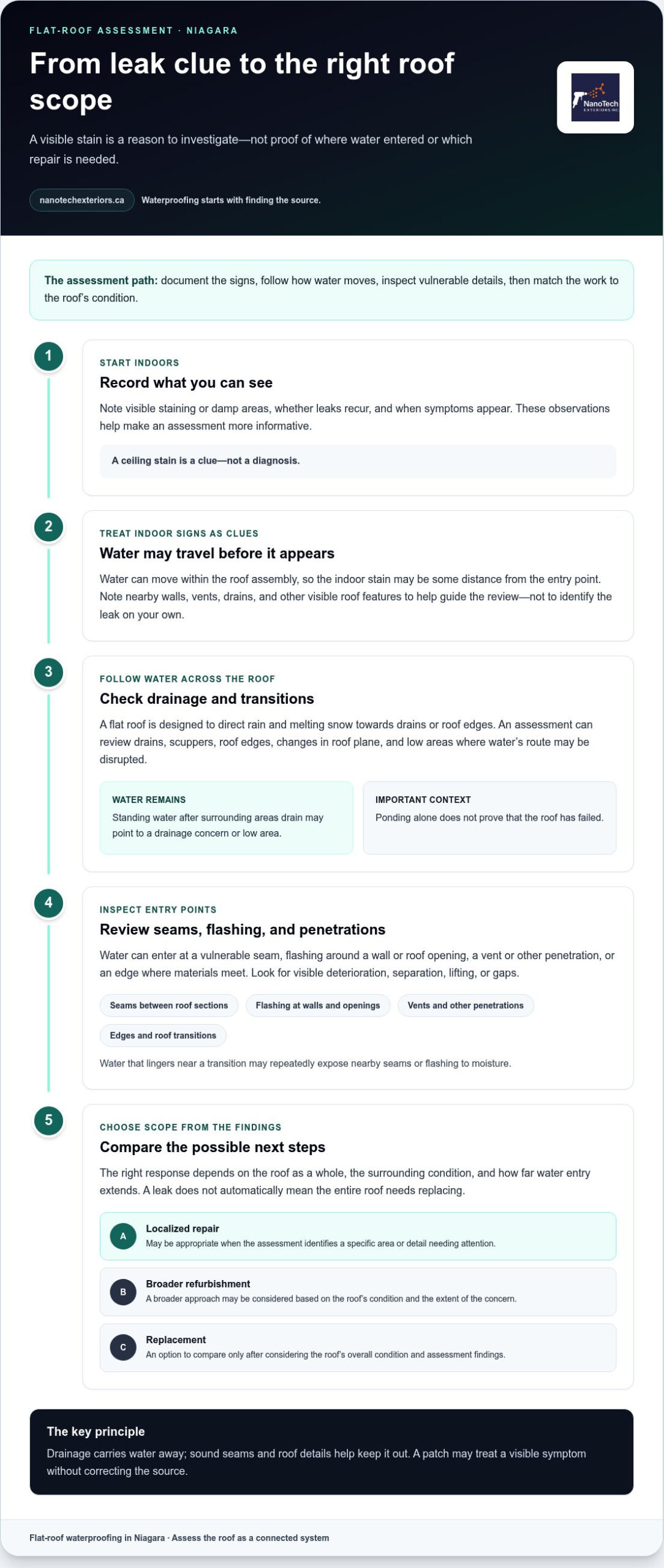
The indoor clue may be some distance from the entry point. Water can move within parts of the roof assembly before appearing as a ceiling stain, so the stain’s location doesn’t necessarily identify the opening above it. Note nearby walls, vents, drains, and other visible roof features as clues, not as a diagnosis. An assessment should consider the roof details and the possible route water is taking.
What ponding water and recurring leaks can indicate
Water that remains on the roof after surrounding areas have drained deserves attention. It may point to a drainage concern, a low area, or another condition affecting how water moves. Ponding alone doesn’t prove the roof has failed, but it can help identify where an assessor should look more closely.
Recurring leaks also warrant a broader examination than the spot where water appears indoors. If a leak returns after a patch, nearby seams, flashing, penetrations, edges, and drainage details may need review. That’s a reason to arrange an assessment, not to assume replacement is required. For waterproofing flat roof Niagara properties, checking the source and surrounding roof condition helps determine whether localized repair or broader work is appropriate.
How Flat-Roof Waterproofing Works: Drainage, Seams, and Roof Details
A flat roof manages water through a connected system. The roof surface, drainage route, seams, flashing, and transitions all need to work together to direct water away and limit entry. A vulnerable connection can become a problem even if the surrounding surface looks intact. An assessment should consider how water moves across the roof, not just whether one spot looks worn.
Drainage carries water away, while sound seams and roof details help keep it out. Waterproofing depends on both working together. A patch may address a visible area, but it won’t correct a blocked drain or resolve a detail that’s allowing water beneath the surface. The right response depends on the roof’s condition and the source of the concern.
Drainage and roof transitions to include in an assessment
An assessment should consider drains, scuppers, roof edges, and changes in roof plane. These details influence where water collects and how it leaves the roof. If a drain or scupper is obstructed or isn’t functioning as intended, water may remain on the surface. An assessor can also look for low areas or transitions where water’s route appears disrupted.
The appropriate next step depends on what an on-site assessment finds. A drainage concern may need attention before a surface treatment or localized repair makes sense. Addressing an obstruction, repairing a roof detail, or considering broader work are different responses. The condition of the roof determines which, if any, is appropriate.
Seams, flashing, and penetrations
Seams join sections of the roof, while flashing helps manage transitions around walls, edges, and openings. Vents and other penetrations interrupt the roof surface, so their surrounding details also warrant inspection. An assessor can look for visible deterioration, separation, lifting, or gaps that may allow water to pass through.
These details can interact. For example, water that lingers near a roof transition may repeatedly expose the seam or flashing in that area. A patch applied only where a leak appears indoors might miss the vulnerable connection above or nearby. Industry guidance from the National Roofing Contractors Association offers a broader reference point for roofing practices, while the condition and configuration of a specific roof determine what work is appropriate.
For waterproofing flat roof Niagara properties, a useful assessment follows water’s route from drainage points to the roof details where it could enter. If you’re seeing repeat leaks or standing water, a flat-roof assessment from NanoTech Exteriors can help clarify the roof’s condition and inform the next step. The aim is a clear scope based on what the roof needs, not a treatment or repair chosen by default.
Flat-Roof Waterproofing or Replacement in Niagara: How to Compare Options
A leak doesn’t automatically mean an entire flat roof needs replacing. The right scope depends on what an on-site assessment finds: the condition of the surrounding roof, how far water entry extends, and whether drainage is contributing to the problem. A ceiling stain or damp area is a reason to investigate, but it isn’t enough on its own to choose repair or replacement.
Use this comparison as a starting point. It describes possible approaches, not a diagnosis or a promise that a particular option will suit your roof.
The categories can overlap. A localized leak might be repairable, but deterioration nearby or recurring water around the same part of the roof may call for a broader scope. Conversely, a visible leak alone doesn’t prove the whole roof needs replacement.
When a targeted repair may be considered
A localized repair may suit a clearly identified issue if the surrounding roof and related details are in sound condition. The assessment should look beyond the visible symptom to understand how water is entering and whether drainage or nearby transitions are involved. If leaks recur or deterioration appears in several areas, a broader review may be appropriate. The proposed repair should be based on the roof’s condition and the identified source of the leak.
When broader refurbishment or replacement may be considered
Widespread deterioration, leaks in multiple locations, or ongoing drainage concerns can make broader work worth evaluating. An assessment helps establish whether refurbishment is appropriate or whether replacement better fits the roof’s condition and the property’s needs. No single symptom or universal threshold determines the scope. For waterproofing flat roof Niagara properties, a clear explanation of the observed condition connects the recommendation to evidence rather than assumptions.
NanoTech Exteriors provides flat roofing and roof repair in Niagara. A project-specific assessment helps define the work and prepare an accurate quote. Cost varies according to the property’s location, roof complexity, and current condition.
A Practical Flat-Roof Assessment Checklist for Niagara Properties
A little preparation can make a roof assessment more useful. Record what you’ve noticed, when it happens, and where it appears. Niagara’s rain, snow, and changing temperatures provide helpful context, so note whether symptoms show up during or after particular weather. These observations won’t identify the cause on their own, but they give the assessment a clearer starting point.
Keep your checks safe. Don’t climb onto the roof or disturb roof components. Make observations from indoors or other safe, accessible locations, such as the ground or a window.
What to record before arranging an assessment
Write down the room or area affected, whether the leak or stain has returned, and any approximate dates you remember. Note whether the issue appeared during rain, after snow or a thaw, or at another time. If water seems to collect in a visible roof area from a safe vantage point, record that too. A simple timeline can help distinguish a one-time observation from a recurring pattern.
- Describe visible staining, damp areas, or other changes indoors, including the room and approximate location.
- Note when symptoms appeared, whether they returned, and what the weather was like at the time, if you know.
- Take photographs from safe locations to show how the stain or affected area changes over time.
- Record any visible area where water appears to collect, but don’t access the roof to inspect it more closely.
Keep the notes factual. For example, “stain above the back hallway appeared after rain and returned later” is more useful than guessing which roof component caused it. Photos can document what you see, but avoid moving ceiling materials, opening roof details, or trying a temporary fix that could obscure the symptoms.
What a useful roof assessment should clarify
A useful assessment should explain the observed water-entry clues, any drainage concerns, and the roof’s general condition in terms you can understand. It should connect the proposed work to what was observed, rather than treating a stain as a diagnosis. Ask for the scope to distinguish immediate repair needs from longer-term roofing recommendations, so you can see what needs attention now and what relates to the roof’s broader condition.
For waterproofing flat roof Niagara properties, organized notes and an on-site assessment help turn symptoms into a clearer plan. NanoTech Exteriors offers a free roof assessment for a tailored quote. Arrange your flat-roof assessment to discuss what you’ve observed and understand the next step for your property.
Flat Roofing in Niagara: Arrange an Assessment and Choose Your Next Step
Once you’ve recorded the symptoms, the next step is to understand what the roof needs. NanoTech Exteriors is based in Burlington and provides flat roofing and roof repair for property owners in Niagara, Hamilton, Oakville, Kitchener, Guelph, and Cambridge. An assessment gives the project a property-specific starting point, so the scope reflects the roof’s condition rather than an assumed solution.
What to expect when discussing a Niagara flat-roof project
Bring your notes about visible staining, recurring leaks, and when the issue appears. The discussion can focus on your concerns, the property’s needs, and the roof condition observed during the assessment. If water seems to collect in a particular area, or symptoms return after earlier work, share that context too. These details help connect what you’ve noticed with the roof’s overall condition.
A recommendation should relate to the assessment findings. A localized issue may call for a different scope than concerns across several areas or a roof with broader deterioration. The purpose is to understand the proposed work and how it addresses the observed conditions, not to apply the same approach to every flat roof. If repair is appropriate, the assessment helps define its scope. If broader work is indicated, the reasons should be explained clearly.
Project scope and cost vary according to the property’s location, roof complexity, and current condition. An accurate quote therefore depends on an assessment, not a general estimate based only on the fact that a roof is leaking. For waterproofing flat roof Niagara properties, a clear explanation of the findings helps you compare the recommended work with the symptoms you recorded and make an informed decision.
Request a project-specific roof assessment
NanoTech Exteriors offers a free roof assessment for a tailored quote. It gives Niagara homeowners and property owners a practical way to discuss their concerns, understand the roof’s condition, and receive a quote based on the specific project. You don’t need to decide in advance whether the roof needs repair or more extensive work. Start with what you’ve observed and let the assessment clarify the appropriate scope.
When you’re ready to understand the next step for your property, arrange a free roof assessment.
Take the Next Step Toward a Clear Roof Plan
Uncertainty can make a roof concern feel bigger than it is. A measured next step replaces guesswork with information, helping you decide what makes sense for your property before committing to a scope of work. For waterproofing flat roof Niagara properties, the goal isn’t to choose the most extensive solution by default. It’s to understand the roof’s needs and make a plan based on its condition.
Bring your observations and questions to the assessment. A clear discussion can help you understand the proposed work, what it’s intended to address, and how the quote reflects your roof. You’ll have a more practical basis for planning, whether the next step is focused work or a broader project.
Ready to move from concern to a clearer plan? Request a free, project-specific roof assessment.
Frequently Asked Questions
Can a flat roof be waterproofed without replacing it?
Yes, depending on the roof’s condition and the extent of the problem. If the concern is limited and the surrounding roof is in suitable condition, repair or other targeted work may be considered instead of replacement. A roof with broader deterioration may need a different scope. An assessment helps establish which option fits the property. A leak alone doesn’t determine the answer.
What causes water to leak through a flat roof?
Leaks can develop where roof sections join, around flashing, at edges, or beside openings such as vents. Drainage problems can also leave water in areas that need closer attention. Water may travel within the roof assembly before becoming visible indoors, so the location of a stain may not line up with the entry point. Record where and when it appears to help guide an assessment.
Is standing water on a flat roof always a sign of a leak?
No. Standing water doesn’t automatically mean the roof has a leak, but persistent or recurring ponding is worth having assessed. Water can remain in a low area without immediately appearing inside. If you notice a puddle from a safe vantage point, record where it collects and whether it remains after surrounding areas dry. Don’t climb onto the roof to investigate it yourself.
How do I know whether my flat roof needs repair or replacement?
You can’t reliably decide based on one symptom alone. An isolated issue with otherwise sound surrounding areas may be suitable for repair, while concerns across several areas can prompt a broader review. Interior staining is useful evidence, but it doesn’t show the roof’s full condition. For waterproofing flat roof Niagara properties, an on-site assessment can connect visible symptoms with the roof’s condition and inform the recommended scope.
Does flat-roof waterproofing cost the same for every Niagara property?
No. Cost varies according to the property’s location, roof complexity, and current condition, so the same scope and price won’t apply to every building. Differences in roof layout or the extent of existing concerns can affect the work involved. NanoTech Exteriors offers a free roof assessment to prepare a tailored quote. An assessment is needed for an accurate project-specific price.
What should I do if my flat roof leaks after heavy rain?
From a safe indoor location, move belongings away from the drip and use a container to catch water if practical. Note the room, when the leak started, and whether it continues after the rain. Take photos of visible staining or damage. Avoid climbing onto the roof or touching wet electrical fixtures. Arrange a roof assessment so the source and any related concerns can be examined.