An unsealed driveway can develop wider cracks as water seeps in, freezes and expands. If you’re wondering what happens if you don’t seal your driveway, weather and vehicle fluids can gradually wear down its surface. Asphalt sealer typically lasts one to five years, while resealing every two to three years is commonly recommended for ongoing protection.
It’s understandable to think sealing is a simple way to prevent driveway damage. It can help protect the surface, but it won’t stop every crack or fix deep cracks, potholes or drainage problems. Timing and the driveway’s condition matter.
This guide explains how unsealed asphalt can deteriorate in Canadian conditions, when sealing makes sense and how to tell when the surface needs more than a protective coat. You’ll also learn how to compare sealing with resurfacing or replacement, so you can choose a repair that suits the driveway’s condition rather than treating every crack the same way.
Key Takeaways
- Watch for widening cracks and surface wear: water and vehicle fluids can gradually weaken an unsealed driveway.
- Choose a sealing window with suitable seasonal conditions, since cold, humidity and shade can slow drying.
- Sealing adds surface protection, but it won’t correct every crack or underlying driveway problem.
- Match the repair to the damage: surface wear may call for sealing, while deeper deterioration can require more extensive work.
Cracks and other damage that can develop without sealing
In Canada, water, freezing temperatures, vehicle traffic and road salt can all wear down an unsealed driveway. The effects depend on the surface and its exposure, but cracks can widen and asphalt can lose its even finish.
Chemical Damage from Fluids and Road Salt
Vehicle fluids and road salt can contaminate driveway surfaces and weaken or mark them. Oil, gas and grease can soften and corrode asphalt, especially where a vehicle is parked repeatedly. In winter, salt-laden slush can collect on the driveway and carry moisture into existing cracks. Surface deterioration can make cracks and worn patches more noticeable.
Traffic Marks and Surface Coating Damage
Repeated traffic can leave marks and wear down an asphalt surface coating. A vehicle turning sharply in the same spot, for instance, can scuff the surface, while oil or fuel drips can soften asphalt beneath a parked car. Peeling or uneven coating leaves parts of the driveway more exposed. Sealing can help protect the surface, but it won’t repair damage already caused by traffic or fluids.
Water Damage and Foundation Deterioration
Water entering a driveway crack can freeze and expand during Canadian winters, pushing the crack wider. As it grows, more water can reach the layers beneath the asphalt. Repeated freezing and thawing can contribute to surface breakup and potholes. Poor drainage adds to the problem: water that repeatedly pools in one area keeps the surface exposed to moisture and can undermine the base below.
Unsealed Driveway Deterioration
There’s no fixed timeline for an unsealed driveway to crack, fade or deteriorate. Its condition depends on installation, traffic, drainage and weather exposure. A well-performing asphalt surface may remain serviceable without a coating, while existing cracks and standing water can accelerate visible wear. Sealing helps reduce exposure to water and surface contaminants, but it doesn’t prevent every crack or eliminate ice and salt damage. For concrete, concrete sealing provides surface protection, not a repair for structural problems.
What Time of Year Should You Seal Your Driveway?
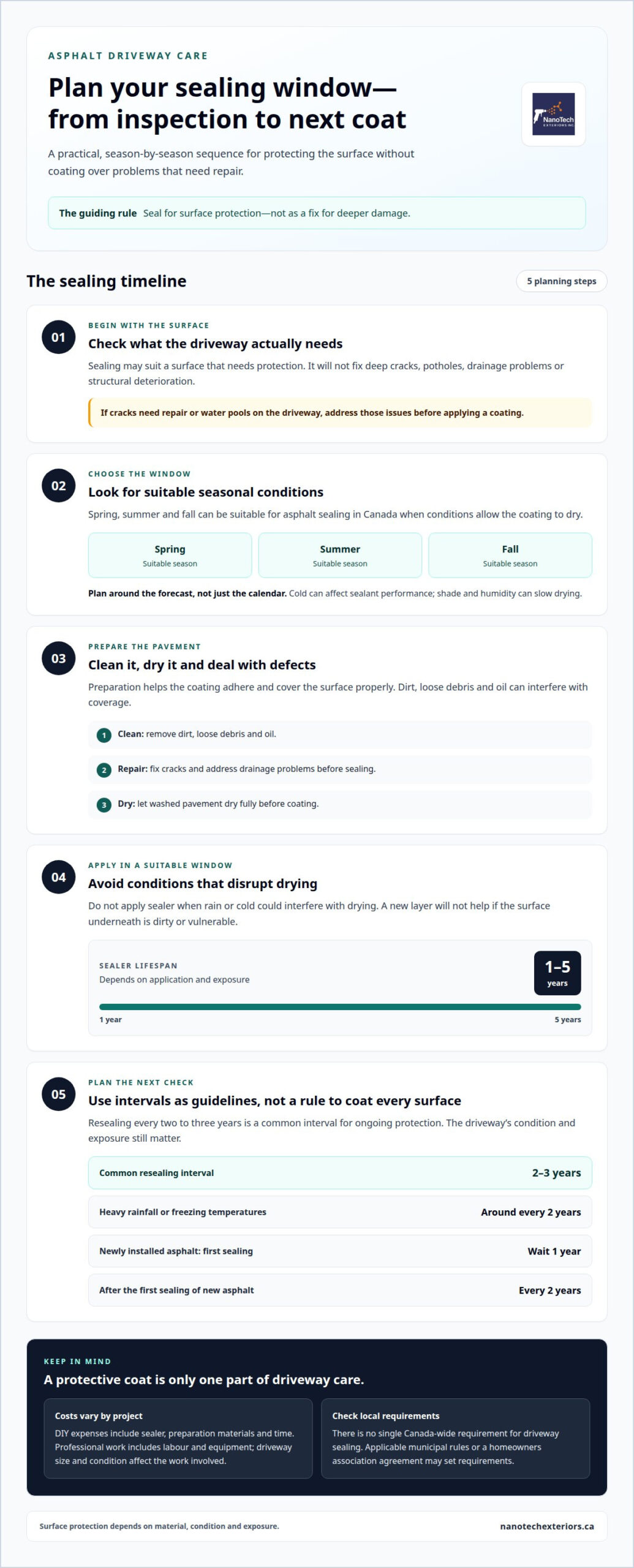
Spring, summer and fall are suitable seasons for sealing asphalt in Canada when conditions allow the coating to dry. Cold weather can affect sealant performance, while shade and humidity slow drying. Plan around the forecast, not just the calendar.
Resealing every two to three years is a common interval for ongoing protection. In areas with heavy rainfall or freezing temperatures, a driveway may need resealing around every two years. Properly applied sealer can last between one and five years, depending on application and exposure. For a newly installed asphalt driveway, one recommendation is to wait one year before the first sealing, then reseal every two years. These are guidelines, not a reason to coat pavement that’s still in good condition.
Preparation affects how well a coating adheres. The surface needs to be clean and dry, since dirt, loose debris and oil can interfere with coverage. Repair cracks and address drainage problems before sealing, because a coating won’t fix deeper defects. Let washed pavement dry fully, and avoid applying sealer when rain or cold could disrupt drying. Simply adding another layer won’t help a dirty or vulnerable surface.
DIY and professional sealing have different cost factors. A homeowner’s main expenses include sealer, preparation materials and time. Professional work includes labour and equipment, and the driveway’s size and condition affect the work involved. Compare the preparation and coverage required, not just the coating itself. Sealing costs depend on the project, and a quote is provided after a request.
There is no single Canada-wide requirement for driveway sealing. Whether it’s required depends on applicable municipal rules or a homeowners association agreement. Check the rules that apply to your property before scheduling work.
Benefits and drawbacks of sealing asphalt and concrete
A seal coat can fill small surface cracks and crevices, leaving a more even finish. It helps protect the pavement’s surface, but doesn’t make asphalt or concrete immune to Canadian weather. Its value depends on the material, its condition and the exposure it faces.
For asphalt, sealing may be especially useful when the mix has coarser aggregate, lower asphalt content or poor compaction. These characteristics can leave the surface more vulnerable to wear. A coating can help extend the life of that asphalt, but it won’t prevent every crack. If damage reaches deeper layers, a surface treatment alone won’t resolve the underlying problem.
Sealing may offer less benefit in some cases. Good-quality asphalt with finer aggregate may perform adequately without a coating. Pervious asphalt is another exception: sealing can interfere with its ability to let water pass through. The material matters, so the same treatment isn’t suitable for every driveway.
Sealing can also affect how a driveway handles winter weather. A sealed surface may help snow and ice melt faster, but that doesn’t mean it prevents all ice or salt damage. A coating also won’t eliminate potholes caused by structural deterioration. Deep cracks, drainage issues and potholes need attention beyond surface sealing.
Maintenance is part of the trade-off. Seal coating wears down over time and needs periodic renewal to keep protecting the surface. As it wears, material may end up in a yard or nearby stream, so consider runoff and application. The coating also needs proper surface preparation and suitable conditions to perform well.
For concrete, sealing protects the surface but doesn’t guarantee against cracking or other damage. If the concrete is already deteriorating, a coating won’t restore its structure. Consider the surface condition and material first: sealing makes the most sense when the driveway needs surface protection, not deeper repairs.
When to seal, resurface, or replace a driveway
Choose a repair based on the depth and spread of the damage, not surface colour alone. Seal coating protects asphalt, but it doesn’t repair deep cracks, potholes or drainage problems. Address those issues before applying any coating.
Small surface cracks or uneven drying after rain can signal that an asphalt driveway needs attention. If the pavement remains structurally sound, sealing may be appropriate after cracks and other defects are repaired. Resurfacing may suit a surface with widespread wear but a stable base. If damage is deep, extensive or linked to a failing base, replacement may be the more suitable route.
Sealing an old, cracked driveway can make problems worse if the coating covers unresolved damage or drainage issues. Seal coating won’t fix those defects, so repair them first. A surface coat protects the driveway, but it isn’t a substitute for repairs.
New asphalt also needs time before its first sealing. One recommendation is to wait one year after installation. Sealing too soon can interfere with the new pavement as it settles and cures, rather than providing useful protection.
Maintenance can help delay sealing, but it can’t fully replace a protective coating. Keep the pavement clear of debris, clean vehicle-fluid spills and address small cracks before water enters. These steps reduce avoidable wear, but don’t prevent all weather-related damage or make a deteriorated base sound.
Use this decision path:
- Seal: the asphalt is sound, with minor surface wear.
- Resurface: wear affects a broader area, while the base remains stable.
- Replace: deep cracks, potholes or drainage problems point to more extensive deterioration.
Cracks around ¼ inch are identified as a possible sign that replacement may be necessary. That measurement is a warning sign, not a repair diagnosis by itself. For a concrete driveway, discuss concrete sealing for your driveway when the surface needs protection rather than structural repair.
NanoTech Exteriors: Roof Repair
NanoTech Exteriors provides Roof Repair for homeowners dealing with damaged roofing, a separate concern from driveway sealing. If your driveway needs attention, let its surface condition guide whether sealing, resurfacing or replacement is appropriate. If you’ve also noticed roof damage, Roof Repair addresses that exterior maintenance need. Aging shingles may be suitable for Roof Rejuvenation, while more extensive roofing needs may call for Residential Roofing. The right option depends on the roof’s condition and the work required. Keeping driveway and roofing issues distinct helps you choose the right next step for each part of your home. Contact NanoTech Exteriors to discuss a roofing concern.
Choose a Practical Next Step for Your Driveway
Knowing what happens if you don’t seal your driveway can help you make a measured decision instead of rushing into a coating. Focus on what the surface needs now. A sound driveway may benefit from protection; a damaged one may need repairs before sealing. Concrete requires a different approach from asphalt, so base your choice on the material and its visible condition.
Keep the decision manageable. Note where damage appears, whether it’s spreading, and whether water collects in the same area. Those details help clarify whether the priority is surface protection or a more substantial repair. If you’re considering a protective treatment for a concrete driveway, contact NanoTech Exteriors about concrete sealing.
A clear assessment gives you a better starting point and helps you avoid treating every driveway problem the same way. Choose a next step that fits your surface, and you can move forward with greater confidence.
Frequently Asked Questions
How long does asphalt driveway sealer last?
Properly applied asphalt driveway sealer can last between one and five years. The range reflects differences in application, driveway condition and exposure to traffic and weather. For example, a frequently used parking area may show wear sooner than a section with little vehicle traffic. Consider the coating’s condition as well as elapsed time when planning maintenance, since its lifespan varies.
What Is Driveway Sealant?
Driveway sealant is a protective coating applied to the surface. For asphalt, it helps shield the pavement and can fill small surface cracks and crevices. It isn’t a structural repair material. Sealant won’t correct a pothole or fix a section with poor drainage, for example. The right product also depends on the material, since asphalt and concrete need suitable treatments.
What Is Driveway Sealing?
Driveway sealing involves preparing the surface and applying sealant across it. The coating creates a protective layer; it doesn’t rebuild the pavement underneath. A driveway with a small surface crack, for example, may be suitable for sealing after the defect is addressed. Sealing isn’t the same as resurfacing, which adds a new layer of paving material over an existing driveway.
What happens to an asphalt driveway if it is not sealed?
If you’re asking what happens if you don’t seal your driveway, the surface remains exposed to water, vehicle fluids and traffic without a protective coating. Existing cracks can widen as water enters and freezes, while oil, gas and grease can soften or corrode asphalt. The pace and extent of wear depend on the driveway’s condition, installation, drainage and exposure. An unsealed driveway doesn’t automatically fail.
How often should an asphalt driveway be sealed in Canada?
A common recommendation is to reseal asphalt every two to three years, with more frequent attention in areas exposed to heavy rainfall or freezing temperatures. A new driveway is often sealed one year after installation, then resealed every two years. Knowing what happens if you don’t seal your driveway puts that maintenance interval in context. Small cracks or uneven drying after rain can signal surface wear.
How much does professional driveway sealing cost in Canada?
Professional driveway-sealing costs depend on the project, and a quote is provided after a request. Key factors include driveway size, surface condition, preparation needs and any work to address cracks or other defects before coating. A driveway needing extensive repairs or difficult preparation involves different work from a clean, sound surface. A project-specific quote is the useful basis for budgeting.