There isn’t one age that determines when a roof is too old to be rejuvenated. Many asphalt shingle roofs last about 15 to 25 years, but age alone doesn’t settle the question: the shingles’ condition, roof records and signs of damage all matter.
If your roof is getting older, it’s reasonable to ask when a roof is too old to be rejuvenated. Visible wear and Ontario’s demanding weather can make the answer less straightforward than the date on an old invoice.
The key is the roof’s material and condition, not age alone. This article explains how to assess those factors, recognize warning signs and decide whether rejuvenation, repair or replacement is the more suitable next step.
Key Takeaways
- Roof age is only one part of the assessment; material, maintenance history and current condition help show whether rejuvenation may be suitable.
- Ontario’s snow, freeze-thaw cycles, winter winds and summer storms can all contribute to roof wear, so local weather matters.
- Missing or curling shingles, moss, leaks and repeated repairs can signal that a roof needs closer attention.
- Review your roof records and visible wear together to understand whether rejuvenation or another roofing option may better suit the roof.
How roofing material affects assessment
Roofing materials age differently, so a single age cutoff can mislead. Start by identifying the roof covering and locating installation or replacement records. This helps establish the roof’s actual age, which may differ from the age of the home.
Insurers generally scrutinize asphalt shingles more closely than metal, slate or tile because asphalt typically has a shorter expected lifespan. Some insurers may accept metal, slate, tile or concrete roofs for up to 40 or 50 years, depending on the insurer and the roof’s condition. These figures aren’t universal replacement deadlines. Material, maintenance and visible deterioration all shape an assessment.
Age can also affect insurance terms. Canadian insurers generally treat roofs under 10 years old as low risk and within their expected lifespan. For roofs over 20 years old, an insurer may require an inspection, limit coverage or offer actual cash value coverage. A 20-year-old roof can still be insurable when it’s in good condition, depending on material, location and insurer. That distinction matters when comparing repairs with replacement.
- Asphalt shingles: Check for curling, missing pieces and a history of repeated repairs. Their shorter expected lifespan often brings closer scrutiny.
- Metal, slate, tile or concrete: Record the material and look for visible deterioration. Their potential acceptance for 40 or 50 years doesn’t remove the need to assess condition.
- Flat roofing: Identify the membrane or covering in the roof records. Material-specific wear and repair history provide context that age alone cannot.
An older slate roof in sound condition, for example, calls for a different assessment from an asphalt roof of the same age with recurring leaks. Rejuvenation suitability also depends on the surface: a treatment for asphalt shingles isn’t a general solution for metal, slate or flat roofing. Matching the assessment to the material is the first step in deciding whether rejuvenation, repairs or replacement makes sense.
Ontario weather and roof wear
Ontario weather puts roofs through repeated seasonal stress. Heavy snow, freeze-thaw cycles and strong winter winds can accelerate wear, while spring rain and summer storms can expose leaks and water damage. A roof that looks sound after winter may still have problems that become apparent when rain reaches damaged areas.
Freeze-thaw cycles can widen existing gaps: water enters a small opening, freezes and expands. Wind can lift or loosen asphalt shingle edges, exposing the roof underneath. Snow and ice can also make damage harder to spot from the ground. That’s why age alone doesn’t reveal a roof’s current condition.
Arrange an inspection at least once a year and after major storms or high winds. Compare the findings with earlier records or photos. A new leak, missing shingles or fresh debris after a storm can signal a change that needs attention.
- After winter: Look from the ground for missing or displaced shingles and signs of water staining inside.
- After high winds: Check for visible debris and changes along roof edges or ridges.
- After heavy rain: Note new ceiling marks, damp areas or leaks, then record where they appeared.
A basic check can be done from the ground or with binoculars. Walking on a roof can be dangerous and may cause additional damage, so leave close inspection to a qualified professional. Keep dated photos and repair records together; they help distinguish long-term wear from storm-related changes. If Ontario weather has exposed a roof problem, a roofing assessment can help clarify the condition and whether repairs are needed.
Seasonal conditions affect roofs in different ways: heavy snow, freeze-thaw cycles and strong winter winds accelerate roof wear, while spring rain and summer storms increase the risk of leaks and water damage. The winter pressures are associated with wear, whereas the later wet-weather conditions are associated with water-related problems. Keeping those effects distinct can help frame what a roof is experiencing across the seasons, rather than treating every sign of trouble as the same kind of weather-related stress.
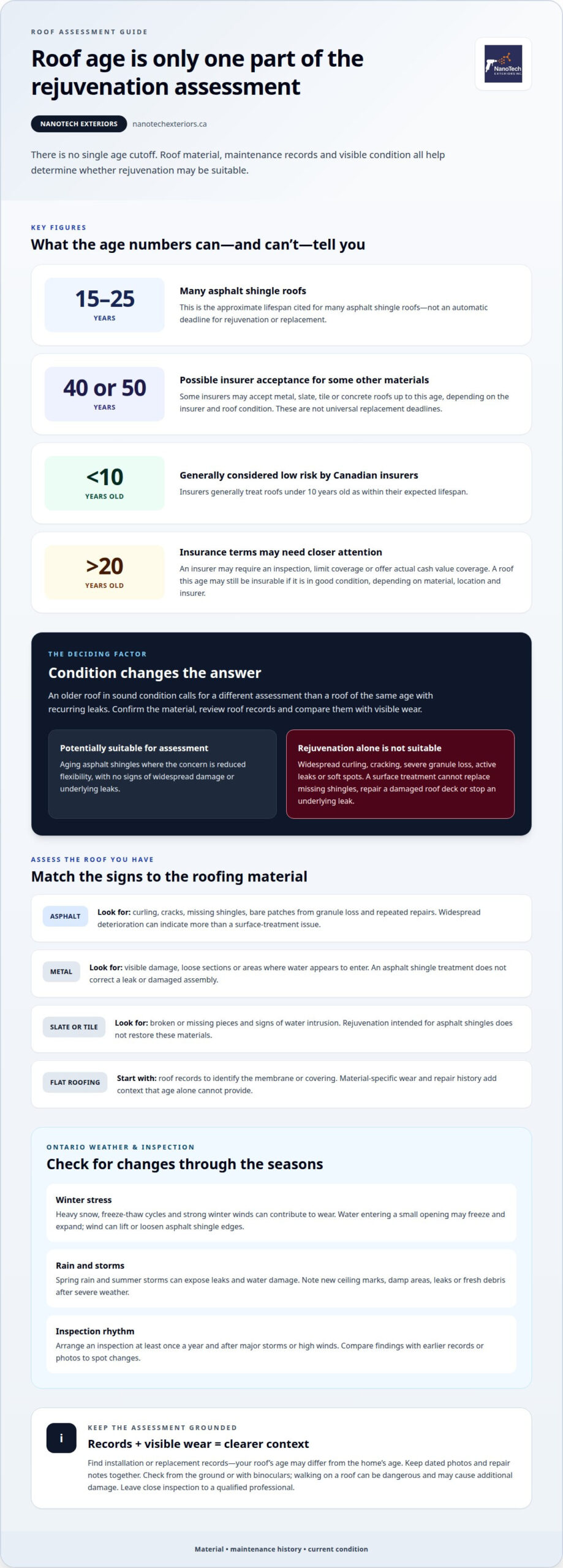
Visible signs of aging by roofing material
Widespread curling, cracking, severe granule loss, active leaks or soft spots mean rejuvenation alone isn’t suitable. A treatment can restore flexibility to aging shingles, but it can’t replace missing shingles, repair a damaged roof deck or stop an underlying leak.
Canadian insurers assess physical condition separately from age, considering visible wear, missing or curling shingles, moss, and leak or repair history. On an asphalt roof, check for bare patches where granules have worn away, cracked edges and shingles that no longer lie flat. A single repaired area tells a different story from repeated repairs across several sections.
- Asphalt shingles: Look for curling, cracks, missing shingles and widespread granule loss. These signs can indicate deterioration beyond a surface treatment.
- Metal roofing: Note visible damage, loose sections or areas where water appears to enter. A coating or shingle treatment doesn’t correct a leak or damaged assembly.
- Slate or tile: Check for broken or missing pieces and signs of water intrusion. Rejuvenation for asphalt shingles doesn’t restore these materials.
Water stains on ceilings or damp areas in the attic can point to leaks, even when the roof looks intact from the ground. Soft spots are more serious because they can indicate damage beneath the roof covering, which surface rejuvenation won’t address. Record where you find each issue and compare it with earlier repair notes.
Visible deterioration and a history of leaks may affect how an insurer assesses an older roof compared with a roof of similar age that has sound shingles and no documented repairs. Actual cash value coverage pays the depreciated value at the time of a loss, so keep repair records and dated photos together. The key distinction is whether wear affects shingle flexibility alone or points to missing material, water entry or damage below the roof surface.
Roofing over an existing layer almost always voids the shingle manufacturer’s material warranty, a consideration when assessing visible signs of aging and the roof’s history of prior covering.
How old is too old to rejuvenate an asphalt shingle roof?
There’s no single age that makes every asphalt roof unsuitable for rejuvenation. Statistics Canada says a typical shingled roof lasts anywhere from 15 to 30 years. That broad range reflects differences in shingle type, installation quality, ventilation, maintenance and climate. A roof near the end of its expected life may still have sound, flexible shingles, while a younger roof may already have serious damage.
Traditional asphalt roofs generally have a lifespan of 15 to 20 years, while many asphalt shingle roofs last about 15 to 25 years. These ranges help frame an assessment, not set a universal treatment cutoff. Some Canadian insurers begin asking questions, adjusting terms or applying a surcharge when a roof is around 15 to 20 years old. Past about 20 to 25 years, more insurers may limit replacement cost coverage or request a professional inspection.
For rejuvenation, the deciding question is whether the shingles are intact enough for treatment to restore flexibility. When a roof is too old to be rejuvenated depends on its condition, not age alone. Consider the full picture:
- Age and records: Confirm when the shingles were last fully replaced, then compare that date with repair history.
- Surface condition: Widespread cracking, missing shingles or severe granule loss point to deterioration a treatment can’t reverse.
- Underlying damage: Active leaks or soft areas call for attention to the source, not just the shingle surface.
An asphalt roof with aging but intact shingles may be suitable for rejuvenation. Widespread damage or underlying water problems need to be addressed, and replacement may be more appropriate. Keep invoices and dated photos together to track changes and support a clear assessment of the roof’s condition.
If your roof is approaching the age ranges above, discuss your roof’s condition and the factors that determine whether rejuvenation is appropriate.
NanoTech Exteriors: Roof Rejuvenation
NanoTech Exteriors offers Roof Rejuvenation for aging asphalt shingles that remain suitable for treatment. Its spray-applied treatment is designed to restore shingle flexibility and extend roof life by up to 15 years. It may offer an alternative to full replacement, with potential savings of up to 85% compared with a new roof.
If your roof has active leaks, soft spots or widespread missing shingles, treatment alone won’t resolve the problems. NanoTech Exteriors provides Roof Repair and Residential Roofing for damage that extends beyond the shingle surface. The next step is to assess the roof’s material, visible condition and repair history, then choose an option that fits.
Contact NanoTech Exteriors to discuss your roof and the available options.
Make a Clear Plan for Your Roof
Deciding when a roof is too old to be rejuvenated is about choosing a sensible plan for your home, not reaching a particular shingle age. Note what needs attention, keep roof records together and make decisions before a small concern becomes an urgent repair. A clear record also helps you compare future changes with the roof’s current condition.
If rejuvenation appears suitable, consider it in the context of your roof’s longer-term needs. If the assessment points to repairs or replacement, understanding why helps you plan the work needed to protect your home. The right next step depends on the roof’s actual condition.
For guidance on the options available for your roof, contact NanoTech Exteriors. A considered decision can help you feel more prepared for the work ahead.
Frequently Asked Questions
How do roof rejuvenation products work, and which roofing materials can they treat?
The right rejuvenation treatment depends on the roof material. NanoTech Exteriors applies spray-on nanotechnology that penetrates asphalt shingles and creates a water-repellent, UV-protected barrier. The treatment is for asphalt shingle roofs, not metal, slate or tile. Homeowners in Burlington, for example, should identify their roof material before considering rejuvenation.
How does Canada’s climate affect roof rejuvenation suitability and timing?
In Burlington, Hamilton, Oakville, Niagara, Kitchener, Guelph and Cambridge, snow, freeze-thaw cycles, winter winds, spring rain and summer storms can contribute to wear or reveal damage. Check for active leaks or storm damage before considering treatment. Rain has no effect once the treatment’s first layer has penetrated, approximately two hours after application.