Insurance usually doesn’t cover roof rejuvenation as routine maintenance. Whether insurance will cover roof rejuvenation if damage occurs later depends on your policy and the cause of the damage: insurers distinguish sudden events from wear that develops over time.
It’s reasonable to want a roof treatment that protects your home without complicating future coverage. But treatment doesn’t automatically change how an insurer assesses a claim. Check your policy’s terms for roof age, maintenance and damage rather than treating rejuvenation as a substitute for coverage.
This article explains how Canadian insurers may view roof rejuvenation, which exclusions and renewal terms to review, and what records can help document the roof’s condition and the work completed. It also addresses whether treatment changes the roof’s appearance and why an insurer generally focuses on the roof’s condition and the cause of a loss.
Key Takeaways
- Separate sudden storm damage from gradual wear when assessing what a roof claim may cover.
- Review roof-age exclusions, settlement terms and renewal conditions so you understand how they may affect coverage.
- Keep dated photos, treatment records and inspection documents to help show the roof’s condition and maintenance history.
- Understand the difference between treating existing shingles and changing the roof structure, as insurers may assess them differently.
Potential effects on claims and coverage retention
Insurers distinguish sudden roof damage from shingles worn out over time. That difference can affect both a claim decision and whether coverage continues at renewal.
Deductibles and Claim Decisions
A deductible is the amount you pay toward a covered loss before insurance contributes. Compare it with the repair estimate and the policy’s settlement terms before deciding whether to file. A small payout may not justify a claim, especially since a claim may remain on your record for 5 or more years. Check whether the damage came from a sudden event or gradual wear; that distinction affects how the claim is assessed.
Claim Documentation
Claim documentation is the evidence that records the roof’s condition, damage and repair history. Photograph the affected shingles and interior water damage, and keep a dated log describing what happened. An independent inspection report can help support an assessment alongside clear photographs. If the roof was treated, retain the invoice, treatment date, before-and-after photos, applicator inspection report and dealer documentation. Together, these records help distinguish storm damage from earlier wear. Save copies of repair estimates and insurer communications, too, so the timeline and reported damage remain clear.
Steps Before Filing
Before filing, review your policy, document the damage and establish the repair scope. Photograph visible damage within 24-48 hours after a storm, when conditions allow safe access. Avoid climbing onto a damaged roof; record what can be seen safely from the ground or indoors. Contact your insurer promptly about the reporting deadline. Most homeowners’ policies require roof damage claims within one year of the loss, while some require filing within 60 days or less for storm damage. Obtain estimates from at least two qualified contractors before agreeing to the proposed work. Keep dated copies of each estimate and inspection. These steps create a consistent record for assessing the claim and deciding what work is needed.
Confirming policy exclusions with an insurer
In Ontario, insurers apply policy terms to roof rejuvenation; roof coverage may change when a roof reaches 15-20 years. There isn’t one coverage outcome that applies to every homeowner.
Policy Terms and Insurer Differences
Policy terms define which roof losses are covered and which exclusions apply. Insurers may assess roof age, condition and maintenance differently, so renewal terms vary by policy. Review the wording on wear and tear, water entry, settlement basis and renewal eligibility. Then ask your insurer in writing: “Will insurance cover roof rejuvenation under my policy, and could treatment affect renewal?” Keep the response with your policy documents.
Roof Age and Eligibility
Roof age can affect whether an insurer continues coverage or changes its terms. In Ontario, insurers may change roof coverage when a roof reaches 15-20 years. A homeowner should check how the insurer counts age and whether it requires a dated inspection before issuing or renewing coverage. If the roof is flagged as too old to insure, request a written explanation of the decision and the specific policy criteria involved.
Roof Coverage and Exclusions
Exclusions describe conditions or causes of damage that a policy doesn’t cover. Compare the wording on sudden damage with exclusions for wear, deterioration and maintenance. For example, missing shingles after a windstorm may be assessed differently from gradual leaks linked to an ageing roof. Ask how your policy treats granule loss, prior repairs and water damage. To clarify the distinction, ask: “Will insurance cover roof rejuvenation, or only repairs for a covered loss?” Record the answer, including whether treatment affects any exclusion or settlement term.
Provincial and Insurer Rules
For rejuvenation coverage, the practical rules are found in your policy and insurer’s requirements; roof age can also affect Ontario coverage. Ask whether a roof inspection is needed, what documentation the insurer accepts, and whether treatment changes renewal terms. If roof restoration is under consideration, review roof rejuvenation considerations alongside the policy wording. Keep the insurer’s written response with dated roof records.
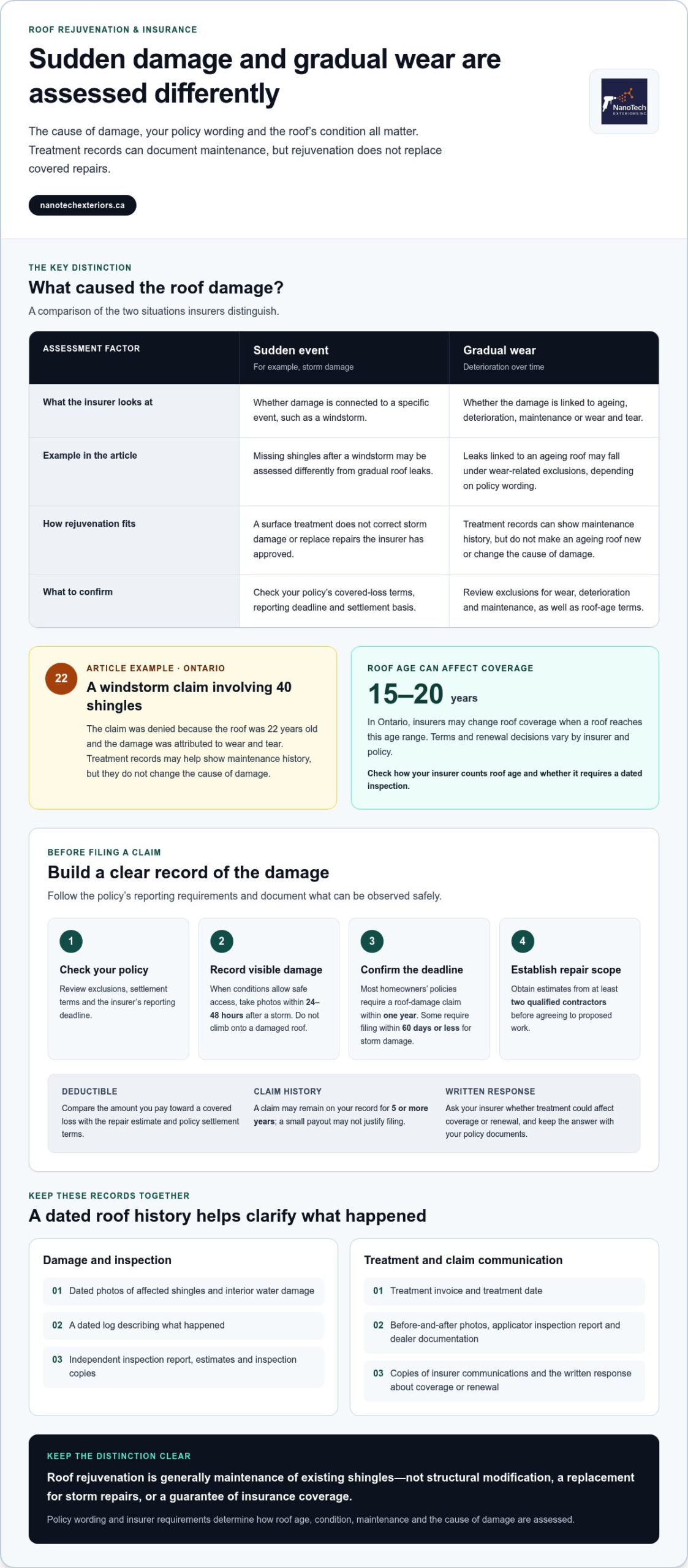
Roof rejuvenation as maintenance versus structural modification
Roof rejuvenation is generally maintenance, not structural modification. It treats existing shingles without tearing them off, changing the decking or altering the roof system. Insurers assess sudden damage differently from gradual wear. Treatment records can document maintenance, but rejuvenation doesn’t make an ageing roof new or replace repairs for storm damage.
Can homeowners choose rejuvenation instead of an insurer-approved repair or replacement? They can choose it for maintenance, but it isn’t a substitute for covered repairs the insurer has approved. If a storm damages shingles or the roof structure, follow the agreed repair scope: a surface treatment won’t correct underlying damage.
Wear-and-tear exclusions focus on deterioration over time, while weather-related claims concern damage from a specific event. For example, an Ontario windstorm claim involving 40 shingles was denied because the roof was 22 years old and damage was attributed to wear and tear. Treatment records may help show maintenance history, but they don’t change the cause of damage. Keep the date and inspection report with your roof documents.
Documented maintenance may be relevant to an insurer’s review, but its effect can vary. Insurer responses to rejuvenation vary, while maintaining shingles can save insurers and homeowners money over time. Ask whether documented maintenance affects renewal terms or premiums. Compare the written answer with the policy’s exclusions for age, wear and repairs before relying on any expected change.
A roof warranty and home insurance address different issues. A warranty covers defects, while weather, age and interior water damage may fall outside its coverage. Insurance policies assess covered losses under their own terms. If professional work damages a roof, insurers may not cover that damage, and homeowners may need to seek compensation from the roofer. Keep treatment records and warranty paperwork separate so each document supports the relevant issue.
Insurance company views on roof rejuvenation
Canadian home insurance generally covers insured sudden losses, not routine maintenance. Roof rejuvenation is maintenance, so the treatment itself isn’t ordinarily a covered loss. After storm or hail damage, coverage depends on whether the event and resulting damage meet the policy’s terms. Insurers assess the cause and condition of the roof, not just whether it was treated.
Insurers don’t all assess rejuvenation records in the same way. Their decisions may depend on roof age, documented condition, policy wording and renewal requirements. Treatment records show that maintenance took place, but they don’t prove later damage came from a storm. Keep the treatment date, invoice, inspection report and clear photos together to create a reliable timeline.
Keep evidence of the roof’s condition before treatment separate from evidence of a later loss. Before-and-after photos can show the shingles’ appearance, while dated storm photos can record missing shingles or visible impact damage. An inspection report describes the roof’s condition, and manufacturer information may explain the roofing material. These records give the insurer evidence to compare with the reported cause of damage.
For a gradual leak or failure on a roof over 20 years old, the estimated claim approval rate is about 25%. That estimate highlights why the cause matters: rejuvenation doesn’t remove age-related wear or turn a maintenance issue into sudden damage. At renewal, an insurer may consider roof age and condition alongside submitted documentation. Treatment records can inform that review, but don’t replace the policy’s eligibility terms.
If hail or wind damages shingles, distinguish the storm damage from existing wear in your records. The insurer assesses the covered loss and determines whether repairs or roof replacement fit the policy. Don’t treat rejuvenation as a substitute for the insurer’s approved scope of work. For a maintenance assessment, discuss your roof’s condition and keep the resulting documentation with your renewal records.
NanoTech Exteriors: Roof Rejuvenation
NanoTech Exteriors offers roof rejuvenation for aging shingles that need maintenance rather than structural repair. Its spray-applied treatment is designed to restore shingle flexibility and extend a roof’s lifespan by up to 15 years. It can be a practical alternative to replacement when the roof’s condition suits treatment, but it doesn’t replace repairs for storm damage or structural problems.
If you’re considering treatment, keep the invoice, treatment date and roof photos with your insurance records. Share them with your insurer when discussing coverage or renewal: rejuvenation doesn’t guarantee a change in policy terms. If the roof needs repairs or replacement instead, the right work depends on its condition.
Contact NanoTech Exteriors to discuss your roof’s condition and whether roof rejuvenation is a suitable option.
Make your next roof decision with clarity
Use your next renewal conversation to include roof condition in your home-maintenance plan. Ask your insurer to explain how proposed work relates to your policy, then keep the response with your roof records. This gives you a clearer basis for deciding what to do next instead of relying on assumptions about whether insurance will cover roof rejuvenation.
For your roof, choose work that matches its condition. NanoTech Exteriors provides Roof Rejuvenation, Residential Roofing and Roof Repair, helping homeowners address maintenance and repair needs through one roofing company. The insurer’s coverage decision is separate from the roof assessment, so consider both.
Contact NanoTech Exteriors for roof advice and take the next step with a clearer plan. A considered decision today can help you approach future roof maintenance with confidence.
Frequently Asked Questions
Does treatment change the appearance of my roof?
Yes. The treatment is designed to restore and improve the roof’s original appearance without changing its style. If asphalt shingles have faded, for example, rejuvenation is intended to refresh their existing look while treating the material. Clear photos taken before and after application can document the visible change and show how the finished roof looks from different angles.
How many years does it actually add to my roof’s life?
The treatment is designed to extend a roof’s life by up to 15 years. That’s the upper limit, not a result for every roof. Existing shingle condition and damage matter when assessing suitability. Rejuvenation is intended for aging shingles; it won’t correct a failed deck or replace sections that need structural work. An assessment helps distinguish treatable wear from damage requiring repair.
Is roof rejuvenation considered maintenance or a covered repair by insurers in Canada?
Insurers generally view roof rejuvenation as maintenance, not a covered repair. Home insurance responds to covered losses, such as sudden storm damage, according to policy terms; routine upkeep is different. Treating aging shingles, for example, is separate from claiming for shingles torn away by wind. Keep maintenance records separate from claim documents so the work and any later loss are clearly distinguished.
What roof damage and age exclusions apply to Canadian home insurance claims?
Policies commonly distinguish sudden damage from gradual deterioration, including wear and tear. A sudden weather event may be assessed differently from a slow leak linked to an ageing roof. In Ontario, insurers may change roof coverage when a roof reaches 15-20 years old. Review the policy’s wording on deterioration, water entry, roof age and settlement terms to understand how those conditions affect a claim.
Can roof rejuvenation affect home insurance coverage or premiums?
Roof rejuvenation can inform an insurer’s view of roof maintenance, but it doesn’t automatically change coverage or premiums. At renewal, a dated assessment and treatment records can help document the roof’s condition and work history. An invoice paired with dated photos, for example, provides more context than an invoice alone. Keep the insurer’s written response with your renewal documents.
Does roof rejuvenation qualify for an insurance discount in Canada?
Roof rejuvenation alone doesn’t establish eligibility for a Canadian home-insurance discount. Premium credits depend on an insurer’s criteria and the roof features it recognizes. A maintenance invoice documents completed work, but it doesn’t prove a separate impact-resistance classification. Ask your insurer which criteria apply to your policy and request a written discount decision before factoring a possible saving into your budget.