The greenest roof isn’t the one you buy; it’s the one you don’t have to replace. While many Hamilton homeowners feel pressured to tear off aging shingles to meet 2026 energy standards, the most eco-friendly choice is often the one already protecting your home. It’s a common struggle to balance the guilt of contributing to Ontario landfills with the reality of a C$12,000 replacement bill. You deserve a way to protect your property without draining your bank account or compromising your values. Finding effective sustainable roofing solutions Hamilton families can rely on shouldn’t be a source of stress.
In this guide, you’ll discover how to reduce your carbon footprint and save thousands by choosing restoration over replacement. We’ll break down how recent provincial legislation impacts your choices and why nanotechnology is changing the game for Canadian winters. You will learn how to extend your roof’s life by up to 15 years, cut your home energy costs, and find a local contractor who values long-term logic over quick fixes. It’s time to rethink what it means to go green in the GTHA by focusing on durability and science rather than just demolition.
Key Takeaways
- Quantify the environmental impact of roof tear-offs and learn how to keep unnecessary waste out of Ontario landfills.
- Compare the durability of metal and recycled rubber shingles to find the best fit for Hamilton’s unique weather patterns.
- Discover how nanotechnology-based roof rejuvenation restores shingle flexibility and protects your home for a fraction of the cost of replacement.
- Learn to evaluate the 15-year cost of ownership for various sustainable roofing solutions Hamilton residents can voluntarily adopt for long-term savings.
- Identify the specific signs that your roof is a candidate for restoration, helping you avoid the stress of a premature full replacement.
The Environmental Impact of Traditional Roofing in Hamilton
Every year, thousands of tonnes of roofing waste end up in local Hamilton landfills. It’s a staggering volume that often goes unnoticed by homeowners until the disposal bin arrives on their driveway. In Southern Ontario, our roofs face a brutal combination of high humidity from Lake Ontario and relentless freeze-thaw cycles. This environmental stress accelerates the breakdown of standard asphalt shingles, leading to shorter lifecycles and more frequent replacements than in milder climates. When we talk about sustainable roofing solutions Hamilton families need, we have to look at the entire lifecycle of the materials protecting our homes.
The urban heat island effect is another pressing concern for the GTHA. Dark, traditional roofs absorb massive amounts of solar radiation, raising local temperatures and forcing air conditioners to work overtime. While specialized installations like Green roofs are excellent for managing temperature and runoff, the majority of Hamilton homes still rely on petroleum-based shingles that trap heat and eventually fail. Understanding this impact is the first step toward making a more responsible choice for your property and the local environment.
Landfill Waste and the Ontario Roofing Crisis
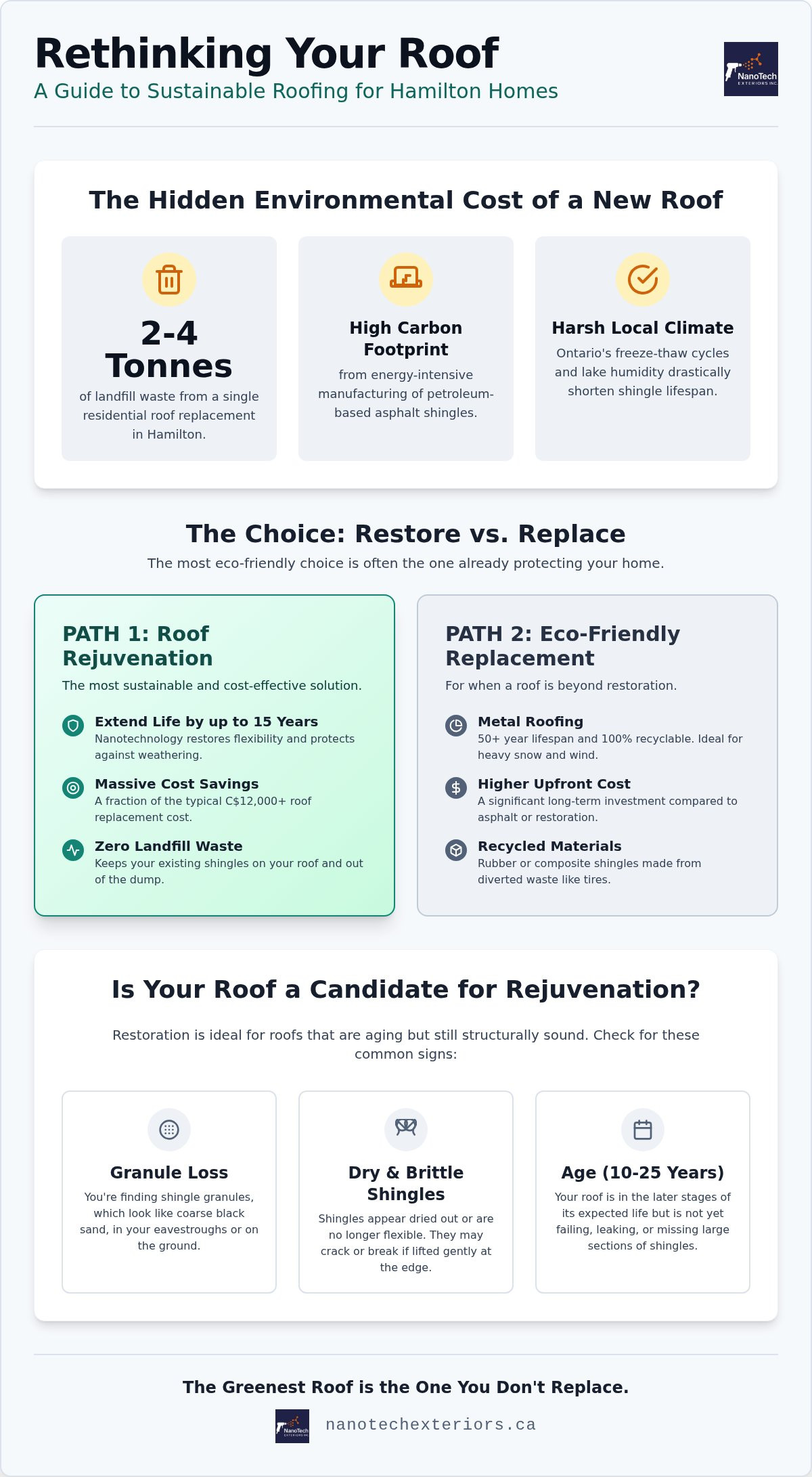
A single residential roof replacement can generate between two and four tonnes of debris. To visualize that, imagine filling three to five large construction dumpsters with heavy, grit-covered waste. Most of this material consists of composite shingles that are notoriously difficult to recycle in the Hamilton-Wentworth region. While some manufacturers claim their products are recyclable, the infrastructure at local dumps often isn’t equipped to process these mixed materials. Most of that old roof simply sits in a landfill for centuries, leaching chemicals into the ground.
Carbon Footprint of New Roof Construction
The environmental cost of a new roof begins long before the shingles reach your home. Asphalt is a petroleum-based product, meaning its production is directly tied to oil refining. The manufacturing process is incredibly energy-intensive, requiring high heat and significant water usage. When you factor in the carbon emissions from transporting these heavy materials from distant factories to the Hamilton area, the “fresh start” of a new roof looks much less green. Choosing local restoration or rejuvenation reduces these transportation-related emissions and keeps existing materials functional for longer.
Comparing Popular Eco-Friendly Roofing Materials for Ontario
Selecting a new roof in 2026 involves balancing immediate expenses against the long-term health of our local environment. While the greenest choice is often to restore what you already have, some structures eventually reach a point where a full replacement is unavoidable. The Canada Green Building Council offers extensive resources on how these material choices influence a home’s total carbon footprint. For those at this crossroads, the range of sustainable roofing solutions Hamilton contractors now provide includes everything from diverted waste products to high-performance metals.
Modern homeowners are no longer limited to basic asphalt. We now see a shift toward materials that prioritize durability and energy efficiency over low initial costs. These options are designed to withstand the specific stressors of the GTHA, from Lake Ontario’s humidity to the intense summer sun that bakes our urban centres.
Metal Roofing: A Long-Term Investment
Metal systems are a top-tier choice for properties on the Hamilton Mountain. They handle the Escarpment’s heavy snow loads and high wind speeds with ease, preventing the shingle blow-offs common with traditional materials. While the upfront cost is higher than asphalt, the 50-year lifespan effectively eliminates the need for two or three future replacements. This longevity is the ultimate form of sustainability. At the end of its life, metal is 100% recyclable, ensuring your home never contributes to the local landfill crisis. It’s a pragmatic, one-and-done solution for families planning to stay in their homes for the long haul.
Recycled Composite and Rubber Options
Rubber roofing, often manufactured from diverted Ontario tires, provides exceptional weather resistance. These shingles are engineered to mimic the aesthetic of natural slate or cedar shakes without the extreme weight or high maintenance. They carry superior impact resistance ratings, which is a critical feature for protecting your property during Southern Ontario hailstorms. While they require a premium budget compared to entry-level options, their ability to withstand freeze-thaw cycles without cracking makes them a sensible investment for our climate.
Cool roofs utilize specialized reflective coatings to bounce solar energy away from your living space. This technology can lower summer cooling bills by up to 15% in some cases, providing immediate relief during Hamilton heatwaves. Natural materials like slate and cedar remain beautiful, organic options; however, they require frequent wood sealing and specialized labour to maintain their integrity. Before you decide on a full tear-off and replacement, consider having a professional residential roofing assessment to see if your current system can be fortified rather than replaced.
Roof Rejuvenation: The Most Sustainable Choice in 2026
The most effective way to reduce your environmental impact is to avoid new consumption entirely. Roof rejuvenation represents a fundamental shift from the “disposable” mindset that has dominated the industry for decades. It is a scientifically backed nanotechnology treatment that restores the physical properties of aging shingles, keeping your existing materials out of the dump. For homeowners seeking sustainable roofing solutions Hamilton providers offer, this method stands out because it targets the root cause of roof failure: the loss of essential oils. This Landfill-Free philosophy ensures your existing structure remains functional for up to 15 additional years, effectively doubling the remaining life of an aging roof.
How Nanotechnology Extends Shingle Life
As shingles age, they lose the flexibility required to withstand Ontario’s thermal expansion and contraction. GoNano technology uses a molecular bonding process that penetrates deep into the asphalt matrix rather than just sitting on the surface. This treatment provides a permanent roof shingle granule loss solution by re-sealing the surface and locking protective granules in place against wind and rain. By replenishing the natural oils within the asphalt, rejuvenation prevents shingles from becoming brittle and cracking under the stress of Southern Ontario’s freeze-thaw cycles.
Environmental ROI: Restoration vs. Replacement
The circular economy is about keeping materials in use for as long as possible to minimize waste. A full tear-off requires massive energy for manufacturing and leaves a heavy carbon footprint from the logistics of hauling tons of debris. In contrast, a spray-applied treatment produces zero landfill waste and requires no heavy machinery or dumpsters on your property. While programs like Toronto’s Eco-Roof Incentive Program highlight the provincial push for greener buildings, rejuvenation offers a direct path to sustainability without the high cost of new materials. This approach is increasingly the preferred method for roof repair in Hamilton, Ontario, because it solves the problem while respecting the local environment.
Restoring your roof provides several immediate environmental advantages:
- Eliminates Waste: Keeps up to four tonnes of asphalt shingles out of local landfills per home.
- Reduces Emissions: Lowers the carbon footprint associated with manufacturing and transporting new materials.
- Preserves Resources: Extends the life of the petroleum-based products already on your home.
- Conserves Energy: Maintains the structural integrity of your roof to support better home insulation.
How to Choose the Best Green Strategy for Your Hamilton Home
Choosing between different sustainable roofing solutions Hamilton offers requires a clear-eyed look at both your home’s current condition and your long-term financial goals. A sustainable choice is only effective if it lasts; investing in premium materials on a failing structure is a waste of resources. Conversely, tearing off a roof that still has structural integrity is an environmental mistake. You must weigh the initial capital outlay against the total 15-year cost of ownership. While a full replacement with metal or recycled rubber has high upfront costs, rejuvenation offers a way to bypass that expense while achieving similar environmental outcomes. This focus on maximizing efficiency is also championed by experts like Underline Energy Concepts, who specialize in integrated energy upgrades for property owners.
Before committing to a major project, you need an objective assessment. Use our how to tell if roof needs replacing guide to identify subtle warning signs. Look for heavy granule loss in your gutters, curling shingle edges, or a general brittleness that suggests the asphalt oils have evaporated. If your shingles are physically intact but losing their protective grit, they are prime candidates for restoration. However, if you are considering heavier materials like natural slate, you must first verify that your roof’s structural framing can support the added weight without sagging.
Climate-Specific Considerations for Southern Ontario
Hamilton’s geography creates unique microclimates that demand specific roofing strategies. Homes tucked into the Dundas and Ancaster valleys often contend with higher moisture levels and slower drying times, making them susceptible to moss and algae growth. UV protection is equally critical during our increasingly hot summers, as intense solar radiation accelerates the degradation of shingle binders. Proper attic ventilation must complement your roofing choice to prevent heat buildup, which can cook shingles from the inside out. A well-ventilated, restored roof often outperforms a poorly ventilated new one.
Maximizing your green dollar in 2026 means prioritizing maintenance and fortification. If your roof qualifies for rejuvenation, you can redirect the thousands of dollars saved toward other home efficiency upgrades like better insulation or high-efficiency windows. This holistic approach ensures your home remains comfortable and efficient for years to come. To get started with a science-backed evaluation of your property, contact our team for a comprehensive roof rejuvenation assessment.
NanoTech Exteriors: Your Partner in Sustainable Hamilton Roofing
NanoTech Exteriors stands as a specialized advocate for Hamilton homeowners who value both fiscal responsibility and environmental stewardship. We don’t just replace materials; we preserve investments. By focusing on restoration rather than demolition, we actively reduce the volume of debris entering Ontario’s waste management system. Our team views rejuvenation as the primary line of defence for any property. It’s a pragmatic choice that aligns with the modern demand for sustainable roofing solutions Hamilton residents expect. We believe the smartest way to manage a home is to extend the life of what you already own.
While we are known for shingle restoration, our expertise extends across the entire building envelope. We provide specialized care for wood and concrete sealing, ensuring your decks and driveways last as long as your roof. For commercial or modern residential properties, our flat roofing services offer durable, weather-tight protection. Every solution we provide is anchored in material science and local climate data. The NanoTech process is built on transparency. We walk you through the results of our inspection so you can make an informed decision based on logic rather than high-pressure sales tactics.
Authorized GoNano Expertise
Being an authorized GoNano dealer means we bring world-class nanotechnology directly to your doorstep. We’ve established a proven track record in residential roofing in Burlington and the broader Hamilton area. This certification is a commitment to precision. Every treatment we apply comes with the peace of mind of a 15-year life extension guarantee. You can trust that the science behind our work is verified, effective, and tailored to the Southern Ontario climate. We use these advanced treatments to fortify your home against the elements without the need for a full tear-off.
Start Your Sustainable Roofing Journey Today
Beginning your transition to a more sustainable home is straightforward. We start with a transparent, health-based inspection of your current roof. If your shingles are a fit for rejuvenation, the application process is remarkably non-disruptive. There are no loud hammering noises, no messy tear-offs, and no heavy dumpsters damaging your driveway. It’s a clean, efficient process that respects your time and your property. The treatment is spray-applied, creating zero waste while providing immediate protection. Contact NanoTech Exteriors today to secure a customized eco-friendly quote and see how nanotechnology can protect your investment for the next 15 years.
Secure a Sustainable Future for Your Hamilton Property
Choosing the right path for your roof is a decision that impacts both your household budget and the local landscape. We’ve seen that the most effective sustainable roofing solutions Hamilton families can adopt focus on restoration rather than disposal. By using nanotechnology to fortify existing shingles, you can avoid the stress of a premature replacement and keep your property resilient against the moisture of Lake Ontario. It is a logical, science-based approach that prioritizes longevity and value.
NanoTech Exteriors is here to help you navigate these choices as an Authorized GoNano Dealer. Our treatments offer a 15-Year Life Extension Guarantee and can save you up to 85% compared to the expense of a full replacement. We believe in providing peace of mind through transparent inspections and proven results. You don’t have to choose between your wallet and the planet when a smarter alternative is available right here in the GTHA.
Request Your Free Sustainable Roof Assessment today to see if your home is a candidate for rejuvenation. It’s a simple way to invest in a more sustainable, worry-free future for your family.
Frequently Asked Questions
What is the most eco-friendly roofing option for a home in Hamilton?
Roof rejuvenation is the most sustainable choice because it prevents landfill waste by preserving your current materials. It is a pragmatic alternative among sustainable roofing solutions Hamilton homeowners can choose because it avoids the carbon-heavy manufacturing of new shingles. Unlike a full replacement, restoration has a near-zero carbon footprint while keeping your existing structure functional and adding up to 15 years of life to your property.
Can I really avoid a full roof replacement by using rejuvenation?
You can definitely avoid a full replacement if your shingles are still structurally sound and the underlying deck is free of rot. Rejuvenation is designed to restore the essential oils and flexibility of aging asphalt, which prevents the cracking and brittleness that lead to leaks. If your roof hasn’t suffered a major structural failure, this spray-applied nanotechnology can bypass the need for a costly and wasteful tear-off.
How much waste does a typical Hamilton roof replacement create?
A single residential roof replacement in the Hamilton area typically generates between two and four tonnes of debris. Most of this waste consists of composite asphalt shingles that are difficult to recycle locally and often end up in Ontario landfills. Choosing a restoration method instead of a full tear-off prevents this massive volume of waste from being buried, making it a much cleaner option for the local environment.
Are metal roofs better for the environment than asphalt shingles?
Metal roofs offer superior longevity and recyclability compared to traditional shingles, but they have a high initial carbon footprint due to the energy-intensive manufacturing process. While they last 50 years and are 100% recyclable at the end of their life, the production phase is significant. Restoration remains a greener choice because it requires no new material manufacturing and zero disposal of your current roofing system.
Is the GoNano roof treatment safe for my family and the local environment?
The GoNano treatment is a plant-based, eco-friendly solution that is safe for your family, pets, and surrounding landscaping. Because it is a spray-applied nanotechnology, there are no harsh chemical odours or toxic runoff to worry about during or after the application. It is designed to penetrate the shingles without harming the local ecosystem, making it a responsible choice for homes near the Dundas Valley or Lake Ontario.
How long does an eco-friendly roof rejuvenation treatment last?
A professional rejuvenation treatment from an authorized dealer extends the life of your asphalt shingles by up to 15 years. This longevity is backed by a 15-year life extension guarantee, ensuring your roof remains flexible and weather-resistant through many Southern Ontario winters. It effectively doubles the remaining life of shingles that have started to show signs of aging, such as granule loss or minor curling at the edges.
Do green roofing options help lower my home’s energy bills in Ontario?
Sustainable choices like cool roof coatings or reflective metal can significantly reduce your cooling costs during humid Hamilton summers. By reflecting solar radiation rather than absorbing it, these materials keep your attic cooler and reduce the strain on your air conditioning. Even rejuvenation helps by maintaining the structural integrity of your shingles, ensuring your roof system continues to work efficiently with your home’s insulation to manage internal temperatures. Beyond roofing, you can explore Energy efficient home improvements to learn how professional retrofit services can further optimize your home’s energy performance.
While specific municipal mandates for green roofs were halted by Bill 98 in 2026, homeowners should check for provincial energy efficiency grants or private insurance incentives. Some Ontario insurance providers offer discounts for homes with impact-resistant or fortified roofing systems. It is always best to consult with a local expert to see which current voluntary programs or tax credits might apply to your specific restoration or installation project.