Most roofing contractors will tell you that brittle shingles and granular loss are signs of an immediate disaster, but the truth is your roof might just be thirsty for its original oils. It is a common misconception that a weathered appearance always requires a full, five-figure teardown. If you are staring at your shingles and wondering how to tell if roof needs replacing, you are likely feeling the weight of a massive financial decision and looking for an honest assessment.
We understand that the fear of interior water damage is real, especially with Ontario’s increasingly volatile freeze-thaw cycles. You deserve a clear answer that doesn’t feel like a high-pressure sales pitch. This checklist provides a logical framework to help you distinguish between true structural failure and simple aging that can be reversed. You will learn how to protect your home’s integrity while avoiding the unnecessary stress of an expensive replacement.
By the end of this guide, you will know exactly what the 2024 Ontario Building Code requires for a safe home and how to identify the critical red flags that actually matter. We will also show you how modern science allows many homeowners to restore their existing shingles, providing total peace of mind for the next storm for a fraction of the cost of a new roof.
Key Takeaways
- Understand how the depletion of essential petrochemical oils compromises shingle flexibility and leads to premature failure in Ontario’s climate.
- Master a professional exterior inspection to learn exactly how to tell if roof needs replacing by spotting curling, cupping, or brittle shingles.
- Discover how to use your attic as an early warning system to find hidden leaks and structural stressors before they become catastrophic.
- Evaluate the “Point of No Return” for your shingles to determine if roof rejuvenation can safely delay a full replacement for up to 15 years.
Understanding the Lifecycle of an Ontario Roof
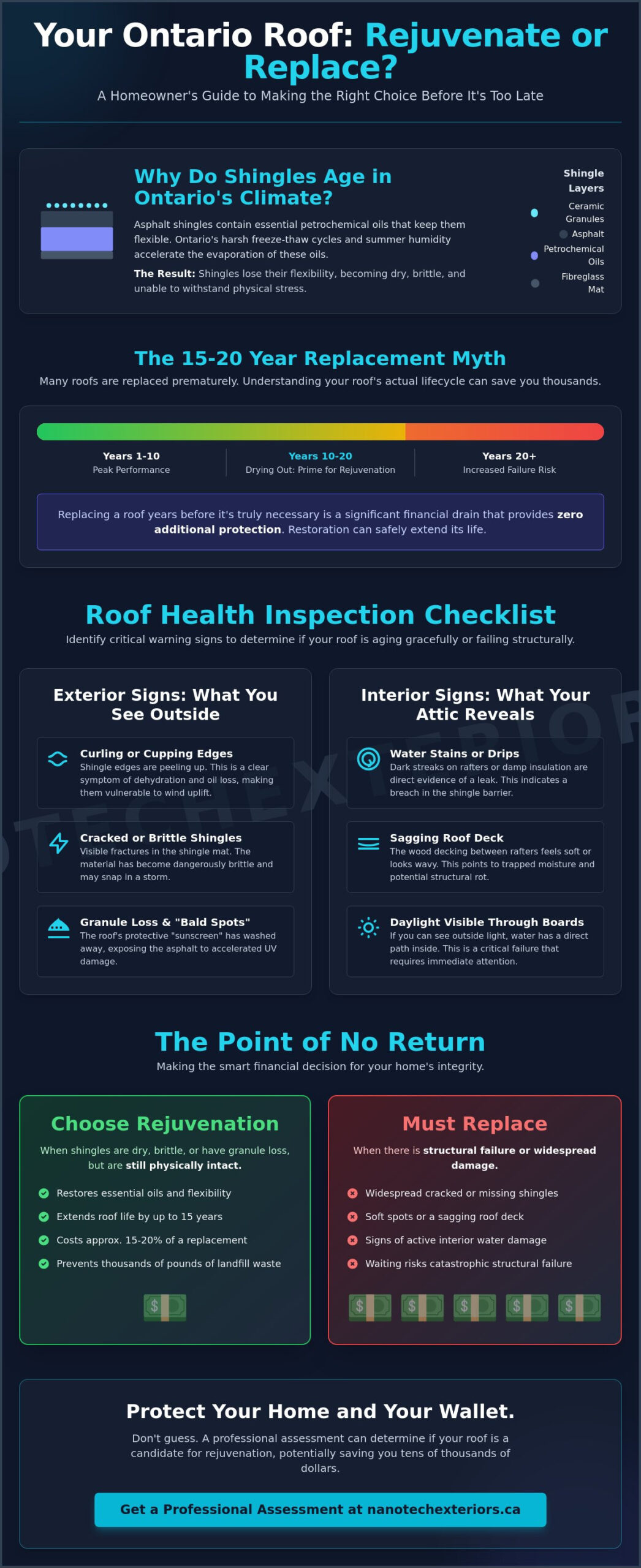
Asphalt shingles are essentially a complex sandwich of fiberglass or organic matting, saturated with asphalt and coated in ceramic granules. This specific design serves two primary purposes: keeping water out and remaining flexible enough to expand and contract as the weather shifts. The secret to this performance lies in petrochemical oils. These oils act as a plasticizer, allowing the shingle to withstand the physical stress of wind and rapid temperature changes without cracking. Understanding the Asphalt shingle lifecycle is the first step in learning how to tell if roof needs replacing or if you are simply seeing the natural evaporation of these vital oils.
In Southern Ontario, our climate is particularly aggressive toward these materials. High humidity levels in the summer followed by sudden temperature drops can accelerate the rate at which protective oils leach out of the asphalt. When shingles lose their oil, they become brittle and lose their grip on the protective granules. This leads to “cosmetic aging,” where the roof looks weathered but the underlying structure remains sound. Functional failure only occurs when the shingle can no longer prevent water from reaching the wooden deck below. Recognizing this distinction is the key to making a sensible, cost-effective decision for your home.
The 15-20 Year Shingle Myth
Traditional roofing wisdom suggests that a roof is “done” once it reaches the 15 or 20-year mark. This is often an industry marketing tactic rather than a structural reality. Many Ontario roofs are discarded when they are actually prime candidates for restoration. Replacing a roof five years before it is truly necessary is a significant financial drain that provides zero additional protection. If your shingles are still physically intact but are drying out, restoration can replenish those lost oils and extend the roof’s life without the massive expense of a full tear-off.
Identifying Structural Risk vs. Surface Wear
True failure happens when the shingles are so compromised that moisture begins to rot the wooden decking. Surface wear like minor granule loss or slight fading is often manageable. However, if you notice soft spots or sagging while walking on the surface, the issue has moved beyond the shingles. A professional roof inspection in Burlington can determine if the damage is superficial or structural. Roof integrity is ultimately defined by the strength and dryness of the underlying wooden deck.
The Ultimate Exterior Roof Inspection Checklist
Conducting a visual audit from the safety of the ground is the first step in learning how to tell if roof needs replacing. While you don’t always need to climb a ladder, a set of binoculars can help you spot subtle issues that might otherwise go unnoticed. You should follow a professional roof inspection checklist to ensure you cover every critical area. A systematic approach helps you identify whether the damage is localized or systemic across the entire surface.
- Curling or cupping: Look for edges that are peeling away from the roof deck.
- Cracked or brittle shingles: Identify areas where the asphalt mat has physically fractured.
- Bald spots: Search for patches where the protective ceramic coating has washed away.
- Biological growth: Spot moss or algae in shaded sections that trap moisture.
- Flashing integrity: Inspect the metal around chimneys and vents for rust or gaps.
Shingle Health: Curling, Buckling, and Cracking
Curling is more than just an aesthetic issue; it’s a clear symptom of dehydration. As the petrochemical oils evaporate, the asphalt mat begins to shrink and pull upward. This creates a “cupping” effect that leaves the edges of the shingle vulnerable to wind uplift. If you notice “clawing,” where the middle of the shingle bulges while the edges remain flat, the material has become dangerously brittle. These shingles often snap under the slightest pressure. This brittleness makes them unable to protect your home during a high-wind event or heavy storm, but if caught before they snap, they can often be saved. Learning how to tell if roof needs replacing involves looking past the surface to see if the shingle is still performing its core duty.
Granule Loss and Bald Spots
Think of shingle granules as the sunscreen for your roof. Their primary job is to reflect ultraviolet radiation and protect the underlying asphalt from the sun’s intense heat. When these granules wash away, the asphalt is left exposed, accelerating the drying process. You can often find evidence of this in your gutters; a thick layer of sand-like sediment is a major red flag. If you see bald spots on your roof, it’s time to investigate shingle granule loss solutions that can lock remaining granules in place and restore protection. Checking these signs early ensures you don’t wait until a leak occurs. If you’re unsure about the severity of the wear you see, a quick residential roofing consultation can provide the clarity you need.
Interior Red Flags: What Your Attic is Telling You
The exterior inspection tells part of the story, but your attic provides the final verdict. It acts as a diagnostic “black box” for your home’s health. When you’re evaluating how to tell if roof needs replacing, a trip into the crawlspace with a high-powered flashlight is mandatory. You are looking for evidence of moisture intrusion that hasn’t yet made it through your ceiling drywall but is already compromising your structure.
Start by scanning the underside of the roof boards and the rafters for dark streaks or white, powdery mineral deposits. These are the footprints of past or current leaks. Don’t assume a stain directly above a puddle is the entry point; water often enters at a higher peak and travels down the rafters before dripping. Another subtle sign is a sudden, unexplained spike in your energy bills. Under the 2024 Ontario Building Code, proper ventilation is strictly regulated to prevent heat buildup. If your vents are blocked or the system has failed, trapped heat will bake your shingles from the inside, significantly shortening their lifespan.
Detecting Active Leaks and Water Staining
Finding a localized damp spot doesn’t always mean you’re facing a five-figure bill. You might only need a targeted roof repair in Hamilton to address a specific failure point. Small leaks around chimneys or plumbing stacks are often just flashing issues that are easily resolved. However, widespread mould growth across the insulation is a much larger red flag. Persistent mould suggests that moisture is being trapped by poor ventilation or systemic shingle failure, which compromises your home’s air quality and structural safety.
Sagging Roof Decking and Light Infiltration
A healthy roof deck should be a firm, flat plane. If the rafters appear to be bowing or the plywood looks “wavy” between the supports, you likely have structural rot. This often manifests as a “spongy” feel when walking on the surface, indicating the wood has lost its load-bearing capacity. Moisture trapped in the attic essentially slow-cooks the plywood until it loses its structural integrity. Seeing direct sunlight peeking through the roof boards is an emergency signal that your roof requires immediate replacement to prevent a catastrophic collapse. This interior check is the most definitive way to know how to tell if roof needs replacing when exterior signs are ambiguous.
The Ontario Weather Factor: Why Local Roofs Age Faster
Southern Ontario homeowners face a specific set of environmental stressors that generic roofing guides often ignore. Our climate is defined by extreme volatility, moving from humid, baking summers to harsh, icy winters. This constant thermal movement is the primary reason local roofs often appear to age prematurely. Understanding these local factors is essential when you are learning how to tell if roof needs replacing, as surface-level wear in Ontario often hides a deeper loss of material flexibility.
In regions like Burlington and Oakville, lake-effect winds add another layer of stress. These high-velocity gusts put immense pressure on shingle adhesion. If the petrochemical oils have dried out, the shingles become stiff and lose their ability to “self-seal” against the roof deck. Once the wind gets under a brittle shingle, it can easily tear it away, leaving the wooden structure exposed to the elements. Heavy snow loads also play a role, as the weight of a mid-winter accumulation can cause an aging, brittle roof structure to sag or even crack under the pressure. The same freeze-thaw cycles that damage your shingles also threaten your home’s exterior wood surfaces, making professional exterior wood sealing services an equally important consideration for protecting your overall investment. Homeowners looking for a comprehensive overview of how these conditions affect their investment can benefit from reading about residential roofing in Burlington, Ontario and the modern solutions available in 2026.
The Impact of Freeze-Thaw Cycles in Southern Ontario
Water is a powerful mechanical force when it changes states. During an Ontario winter, moisture enters the microscopic cracks of a dehydrated shingle during the day. When temperatures plummet at night, that water freezes and expands, physically widening the cracks and weakening the asphalt mat. This cycle happens dozens of times every season in the GTHA. Brittle shingles are the first to fail during these cycles, making them a primary indicator for how to tell if roof needs replacing before the spring thaw brings inevitable leaks. Proper insulation and maintenance are your best defences against the ice damming that often follows these cycles.
UV Radiation and the Loss of Essential Shingle Oils
While winter is harsh, the summer sun is the silent killer of asphalt shingles. The intense heatwaves of 2026 have accelerated the “baking” process, especially for dark-coloured roofs that absorb more thermal energy. UV radiation breaks down the molecular bonds of the asphalt, causing the vital oils to evaporate. This process leaves the shingles thin, fragile, and prone to granule loss. Modern nanotechnology offers a way to reverse this damage by replenishing those lost oils and adding a new layer of UV protection. This scientific approach restores the flexibility needed to survive the next round of Ontario weather. If you suspect your shingles are drying out, consider a professional roof rejuvenation to fortify your home against future heatwaves.
Replacement vs. Rejuvenation: Making the Right Investment
Homeowners are often led to believe that once shingles show wear, a total teardown is the only option. This binary thinking overlooks a middle ground that can save you up to 85% of the cost of a new roof. It’s a smarter way to manage your property. While traditional contractors push for replacement to secure high-margin projects, a pragmatic approach focuses on the actual condition of the asphalt mat. If the shingles are still physically present but have simply lost their flexibility, you haven’t reached the “Point of No Return.” Knowing how to tell if roof needs replacing helps you avoid these unnecessary expenses while maintaining total structural integrity.
Choosing restoration over replacement also carries a significant environmental benefit. Asphalt shingles are heavy, oil-based, and non-biodegradable, making them a major contributor to local waste. By extending the life of your existing roof, you keep thousands of kilograms of debris out of Ontario landfills. This approach aligns with a modern, resource-conscious mindset that values fortification and longevity over the “disposable” culture of traditional construction. The same philosophy applies to your home’s other exterior surfaces; investing in exterior wood sealing services for your deck or siding can prevent the kind of moisture-driven decay that leads to costly replacements down the road.
When Rejuvenation is the Smarter Choice
Restoration is most effective when applied to roofs between 7 and 15 years old. This is the critical window where shingles have begun to lose their essential petrochemical oils but haven’t yet suffered permanent structural damage. GoNano rejuvenation works by penetrating the shingle on a molecular level, replacing the evaporated oils with a sustainable, soy-based formula. This process restores the flexibility and granule adhesion required to withstand Ontario’s freeze-thaw cycles for up to 15 years. Beyond the financial savings, choosing this alternative to roof replacement ensures your home remains protected without the chaos of a multi-day construction site. It’s an efficient, scientifically backed solution for the proactive homeowner.
When Replacement is Unavoidable
There are specific scenarios where a roof is truly too far gone for restoration. If your interior inspection revealed rotting plywood or if more than 20% of your shingles are missing or physically broken, rejuvenation is no longer a viable option. In these cases, you must transition to a full residential roofing project to protect your home’s structural safety. When selecting a Burlington roofing company, ensure they provide a transparent, detailed breakdown of the work. A professional team will prioritize the health of the underlying wooden deck and ensure your new system meets the latest 2024 Ontario Building Code standards for ventilation and eaves protection.
The decision shouldn’t be based on fear or conflicting advice. It should be based on data and material science. If the wood deck is dry and the shingles are merely brittle, you have a prime candidate for restoration. If the deck is soft and the shingles are shattered, replacement is the only responsible path forward. By following this logical framework, you can determine how to tell if roof needs replacing and make an informed investment that provides peace of mind for the next storm.
Secure Your Home’s Future with a Smarter Roofing Strategy
Distinguishing between superficial aging and structural failure is the key to protecting your property’s value. Ontario’s harsh freeze-thaw cycles and intense summer heat demand a roof that maintains its molecular flexibility. By mastering how to tell if roof needs replacing, you can avoid the massive expense of a premature teardown. You now have the framework to identify if your shingles are truly failing or if they simply require a scientific restoration of their protective oils.
NanoTech Exteriors is a local Authorized GoNano Dealer dedicated to helping homeowners in Burlington, Hamilton, and Oakville maximize their roofing investments. We offer a pragmatic alternative that can save you up to 85% compared to the cost of a full replacement. Our team provides an honest assessment based on material science rather than high-pressure sales tactics. We have served the local community for years with a focus on value and structural integrity.
Don’t wait for the next major storm to test your home’s integrity. Book Your Free Roof Health Assessment with NanoTech Exteriors today to see if your roof is a candidate for rejuvenation. You can fortify your home and enjoy lasting peace of mind with a solution that is both efficient and environmentally conscious.
Frequently Asked Questions
How can I tell if my roof needs replacing or just repair?
If the damage is confined to a specific area like a chimney flashing or a few wind-blown shingles, a repair is usually sufficient. However, if the shingles are brittle across the entire surface or the wooden deck is soft, replacement is the only way to ensure safety. Learning how to tell if roof needs replacing involves checking if the shingles still have the flexibility to shed water effectively without snapping under pressure.
What is the average cost of a roof replacement in Ontario in 2026?
Industry data for 2026 indicates that the average cost to replace an asphalt shingle roof in Ontario ranges from approximately $8,000 to $20,000. Most homeowners can expect to pay between $10,000 and $16,500 for a standard residential project. These costs are driven by material inflation and a continuing shortage of skilled roofing labour in the province, which typically accounts for 40 to 50 percent of the total price. For a detailed breakdown of what drives these costs and how to evaluate your options, the 2026 homeowner’s guide to residential roofing in Burlington, Ontario provides valuable context on current market conditions.
Can I spray something on my roof to make it last longer?
Yes, roof rejuvenation is a scientifically backed treatment that can be sprayed onto existing shingles to extend their lifespan by up to 15 years. This process uses nanotechnology to penetrate the asphalt and replenish the petrochemical oils that have evaporated over time. It is a highly efficient alternative for homeowners who want to delay a full replacement while maintaining structural protection and shingle flexibility.
How many years does a typical asphalt shingle roof last in Burlington?
A typical asphalt shingle roof in Burlington lasts between 15 and 20 years, though environmental stressors like lake-effect winds and freeze-thaw cycles often shorten this window. The moisture from Lake Ontario often accelerates biological growth, which traps dampness against the shingles. Regular inspections are critical to identify when the material has lost its ability to expand and contract with the seasons before a leak occurs.
Is it worth repairing a 20-year-old roof?
Repairing a 20-year-old roof is rarely a sound investment because the surrounding shingles are usually too brittle to facilitate a proper patch. When you attempt to lift old shingles to install new ones, they often snap, which can create more entry points for water. If the underlying deck is still healthy, rejuvenation is a more logical choice than a patchwork repair at this advanced stage of the shingle’s lifecycle.
What happens if I ignore a leaking roof for one season?
Ignoring a leaking roof for even one season can lead to extensive structural rot and hazardous mould growth within your attic space. Water travels quickly along rafters, saturating insulation and compromising the strength of your wooden roof deck. By the time the next spring thaw arrives, what could have been a minor intervention often escalates into a full, emergency roof replacement due to systemic moisture damage.
Does roof rejuvenation really work on old shingles?
Roof rejuvenation is specifically designed to work on aging shingles by restoring their molecular flexibility and granule adhesion. As long as the shingles are still physically intact and the roof deck is structurally sound, the treatment can effectively reverse the drying process. It is a proven method for identifying how to tell if roof needs replacing or if it can be fortified against the elements for another decade.
Can I install new shingles over my old ones to save money?
The 2024 Ontario Building Code allows for one layer of shingles to be overlaid on an existing roof, but this is rarely recommended for long-term value. Adding a second layer increases the weight load on your structure and traps heat, which causes the new shingles to fail prematurely. It also prevents a proper inspection of the wooden deck, potentially hiding rot or structural issues that require immediate attention.