Could the way you clear snow do more harm to your deck than the storm itself? For Guelph homeowners searching “protect wood deck from snow and ice Guelph,” the concern is understandable: moisture and repeated freeze-thaw cycles can wear down wood, while a sharp shovel or unsuitable ice melt can damage boards and finishes.
You don’t need to leave snow sitting on the deck or rush to apply a new finish. A careful winter routine can limit avoidable moisture exposure and reduce the risk of scratches and gouges. The key is knowing what to use, what to avoid, and how to tell whether your deck’s existing finish needs attention.
This guide covers gentle snow removal, careful ice management, and seasonal checks for signs of wear. You’ll also learn when sealing may fit into a longer-term maintenance plan. NanoTech Exteriors offers wood sealing in Guelph and serves homeowners in Burlington, Hamilton, Oakville, Niagara, Kitchener, and Cambridge.
Key Takeaways
- Learn how to protect wood deck from snow and ice Guelph winters bring with a careful clearing routine that reduces avoidable wear.
- Choose snow-clearing tools and ice-management methods with your deck boards and finish in mind.
- Use an autumn, winter, and spring maintenance plan to spot moisture concerns and keep drainage paths clear.
- Understand how snow removal, ice management, and wood sealing serve different purposes in deck care.
- Recognize when signs of wear call for a closer look before you consider sealing.
Why Guelph winters can be hard on a wood deck
Routine care can reduce avoidable winter wear, but no maintenance plan can make an exposed wood deck damage-proof. In Guelph, snow may linger on shaded boards while sunny areas thaw and refreeze. Moisture that remains in joints or around fasteners can also contribute to wear over time. To protect wood deck from snow and ice Guelph conditions bring, consider your deck’s exposure and condition, not just the forecast.
Decks don’t all face the same risks. Shade can slow drying, poor drainage can leave water sitting near the boards, and deeper snow can stay in contact with the surface longer. A deck with sound boards and a well-maintained finish may need different attention from one with peeling coating, open cracks, or previous repairs. Seasonal colour changes and minor surface wear don’t automatically signal structural trouble, but soft or loose boards, widening splits, or persistently damp areas deserve a closer look.
What snow, standing water, and freeze-thaw cycles can do
Water can enter small cracks, end grain, and gaps around joints. When it freezes, it expands and may add stress to these vulnerable areas. Repeated cycles can contribute to cracking or worsen existing damage, although a snowy winter won’t necessarily harm every deck. Check for blocked gaps and drainage paths, especially near the house, where piled snow and melting water may have fewer clear routes away from the structure.
These practical checks complement broader wood preservation techniques, which focus on limiting conditions that encourage wood deterioration. Keeping water from lingering is one useful part of that approach.
Why deck material and existing finish matter
Identify whether your boards are cedar, pressure-treated wood, or another material before choosing a treatment. Wood type, age, sun and shade exposure, past repairs, and existing coatings can all affect what care is appropriate. If you’re considering a new stain or sealer, check the product instructions for compatible surfaces and preparation requirements. Applying a product over an unsuitable or failing finish may not provide the protection you expect.
After snow clears, look over the deck without assuming every mark needs immediate treatment. Note where water collects, whether the coating is peeling or wearing unevenly, and whether boards feel soft or move underfoot. These observations can help distinguish routine seasonal wear from issues that need assessment before sealing or other maintenance.
How to remove snow and manage ice without damaging deck boards
Clear snow to reduce packed accumulation and make the surface safer, but use a light touch. To protect wood deck from snow and ice Guelph winters bring, follow a simple sequence: check the surface, choose a suitable tool, move snow carefully, then address slippery areas without gouging the boards.
A safer step-by-step snow-clearing routine
When conditions allow, clear manageable snowfall before it becomes heavy or compacted. Use a plastic shovel or soft-bristled broom, and avoid sharp metal edges that can scratch the finish or catch on gaps between boards. Work with controlled strokes. Where practical, push snow in the direction of the boards rather than scraping across them, and don’t lever the shovel against railings.
Leave a thin layer rather than forcing the tool down to bare wood. Move snow away from doorways and drainage paths, but avoid piling it against the house or somewhere meltwater will collect. The aim is to clear a usable route without putting unnecessary pressure on the deck.
What to do when ice has formed
Safety comes first. If the deck is slippery, restrict access until you can make it safer. Don’t attack ice with an axe, metal spade, or other sharp tool. A hard strike can gouge boards, damage the finish, or loosen fasteners. Letting ice loosen naturally may be safer than forcing it off.
Before using a de-icer, check the deck manufacturer’s guidance and the product label. Use it only if the label explicitly says it’s suitable for your deck material and existing finish, and follow the directions. Some products may affect coatings, nearby plants, or other surfaces. Don’t assume a product is deck-safe just because it’s sold for winter use.
Advice about common wood deck myths can help put snow and wood care in perspective: the practical concern is how moisture and clearing methods affect the surface, not simply the presence of snow. Gentle removal is a sensible precaution, not a promise that winter wear can be eliminated.
After clearing the deck, check for fresh scratches and spots where water may pool. If you’re unsure whether the existing finish needs attention, NanoTech Exteriors offers wood sealing in Guelph. Learn more about wood sealing advice before deciding whether it belongs in your maintenance plan.
Sealer, stain, or snow removal: what actually protects a wood deck?
These measures address different concerns. Snow clearing removes immediate accumulation, ice management helps address slippery conditions, and a suitable wood finish can help protect the surface from weather exposure. To protect wood deck from snow and ice Guelph winters bring, treat sealing as one part of maintenance, not a replacement for winter care.
| Measure | What it does | What it doesn’t do |
|---|---|---|
| Snow clearing | Removes snow from the deck and reduces prolonged accumulation. | Doesn’t repair existing damage or protect the wood from all moisture. |
| Ice management | Addresses slippery areas using methods suitable for the deck. | Doesn’t make the deck permanently slip-resistant or prevent ice from returning. |
| Wood sealing or staining | Provides a protective finish for suitable wood; some finishes also change its appearance. | Doesn’t melt snow, guarantee traction, or make the deck ice-proof. |
How wood sealers and stains differ
Sealers and stains vary in appearance, finish, and intended use. Some are designed to protect while keeping the wood’s natural look visible; others add colour. Product descriptions don’t always use these terms consistently, so check whether a product is intended for exterior decking and compatible with both the wood and any existing coating.
Before applying a new treatment, follow the manufacturer’s preparation and application instructions. An old finish may need specific preparation or may not be compatible with the product you’re considering. Avoid choosing a treatment based only on colour or a general claim about water resistance.
When sealing may help, and when it cannot solve the problem
A suitable finish may help protect sound wood from exposure, but it won’t correct underlying issues. Damaged or soft boards need separate attention, poor drainage still needs to be addressed, and slippery ice requires safe winter management. Sealing isn’t a substitute for clearing snow or keeping the deck safe to walk on.
There’s no universal reapplication interval. Check the finish manufacturer’s directions and assess the deck’s condition. Peeling, uneven wear, soft wood, or uncertainty about an existing coating are reasons to seek an informed assessment before applying anything new. NanoTech Exteriors offers wood sealing and serves Guelph; whether sealing is suitable depends on the deck’s material, existing finish, and condition.
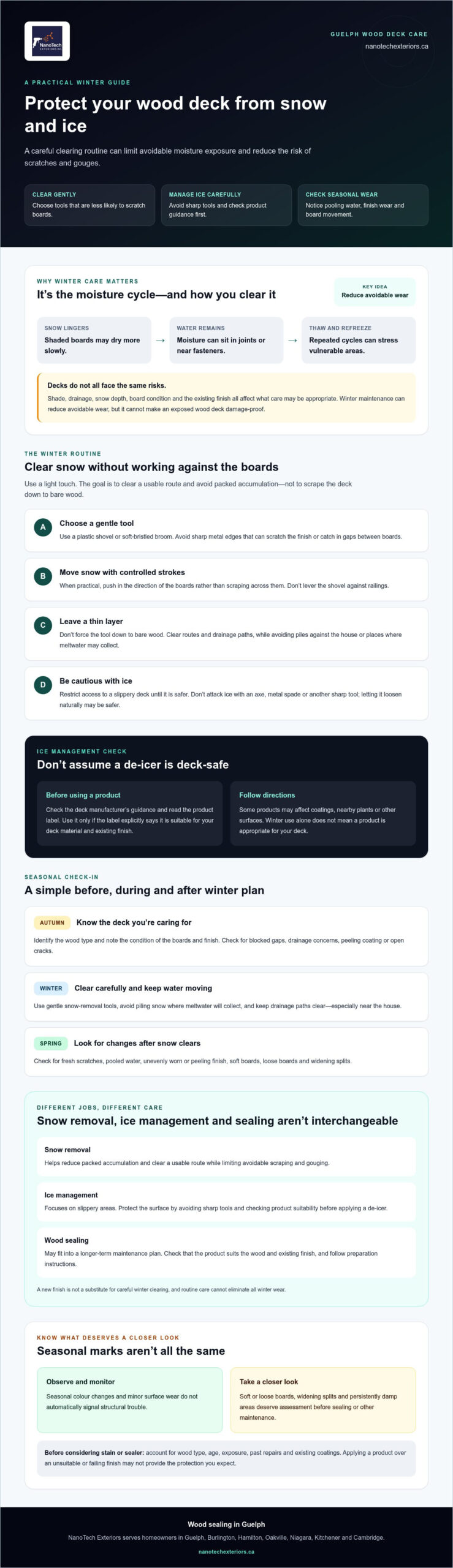
A Guelph wood-deck maintenance plan for before, during, and after winter
A simple seasonal routine makes it easier to spot changes before they become harder to address. To protect wood deck from snow and ice Guelph homeowners can build care around three checkpoints: prepare in autumn, monitor conditions through winter, and inspect the deck after the snow melts. Keep brief notes or photos of areas that collect water or show finish wear so you can compare them later.
Before the first snowfall
Walk around the deck while it’s clear. Look for loose boards, protruding fasteners, damaged railings, and places where water tends to collect. Remove leaves and other debris from the deck and its drainage paths. Debris can hold moisture against the surface or obstruct water flow.
Check the existing finish’s care instructions before deciding whether maintenance is due. If you’re considering a new treatment, confirm that it’s intended for exterior decking and suitable for the existing coating. Don’t apply a fresh finish simply because winter is approaching; let the wood’s condition and the product directions guide the decision.
During winter
Check the deck after snowfall and during thaws, especially in shaded areas or spots where meltwater tends to linger. Clear snow carefully with a plastic shovel or soft-bristled broom, and avoid sharp metal edges or forceful scraping. If ice makes the deck unsafe, limit access rather than trying to chip it off aggressively. Before using a de-icer, check the product label and deck manufacturer’s guidance for compatibility.
Keep an eye on drainage routes as conditions change. If snow or debris blocks a path where water normally drains, clear it when safe to do so. The goal is to avoid preventable moisture build-up without putting extra strain on the boards.
After the snow melts
Inspect the exposed surface once it’s safe to walk on. Compare areas that were covered with those that had more sun or airflow. Look for peeling or failed finish, cracks, splinters, loose fasteners, persistent dampness, or wood that feels unusually soft. Seasonal discolouration doesn’t always mean the deck needs a new coating, but worsening or repeated signs are worth investigating.
Repeated puddling calls for attention to drainage, not simply another layer of sealer. If the deck feels unstable or you notice damage that may affect its structure, arrange for a qualified assessment before treating the surface. If your inspection points to finish maintenance, review professional exterior wood sealing services as one possible part of your maintenance plan. For advice about wood sealing in Guelph, contact NanoTech Exteriors about wood sealing.
When professional wood sealing advice makes sense in Guelph
Not every winter mark means your deck needs sealing. First, identify the concern: snow left on the boards calls for careful clearing, a slippery surface needs safe ice management, and a worn finish may warrant a closer look. If boards are soft, damaged, or unstable, that’s a possible repair concern, not something a coating should be expected to fix.
An assessment can help clarify whether the wood and its existing coating are suitable for sealing, or whether another issue needs attention first. Suitability depends on the deck’s material, condition, and finish history, so don’t assume one product or treatment will work for every deck. Avoid expecting a specific lifespan or outcome before the surface has been evaluated.
Signs it may be time to ask about sealing
Consider getting advice if the finish looks weathered or wears unevenly, or if water seems to absorb into the wood repeatedly. These are reasons to assess the deck, not proof that sealing is the right solution. Peeling coating, soft areas, splintering, or visibly damaged boards may need repair or preparation before sealing is considered.
When you ask for advice, share what you know: whether the deck is cedar, pressure-treated wood, or another material; what finish has been used, if known; and when it was last treated. Point out recurring damp areas, peeling, or damage. If you’re unsure about the finish, say so rather than guessing.
A practical next step for Guelph homeowners
Clear photos can make it easier to describe what you’re seeing. Photograph the whole deck and close-ups of worn or damaged areas, then note where water collects and whether ice returns in the same places. This information won’t replace an in-person assessment, but it can help guide a useful conversation.
Ask what preparation may be needed, whether a proposed product is appropriate for your deck material and existing coating, and what maintenance to expect afterward. If the deck feels unstable or damage appears structural, seek an appropriate assessment before focusing on sealing. Wood sealing may be one part of a maintenance plan, but it doesn’t replace snow removal, drainage improvements, or needed repairs.
If you’re looking for professional wood sealing in Guelph, explore wood sealing options with NanoTech Exteriors. Share your deck’s material, finish history, and visible concerns to discuss whether sealing may be suitable.
Make winter deck care part of your routine
A few practical habits can help you protect wood deck from snow and ice Guelph winters bring. Clear snow gently with a suitable tool, manage slippery areas without striking the boards, and keep drainage paths clear. Then use seasonal inspections to spot finish wear or damage before deciding whether the deck needs further attention.
Snow removal and sealing have different roles. Clearing snow addresses winter accumulation; a suitable wood-sealing treatment may help protect the surface, but it won’t fix damaged boards or prevent ice. If the finish is peeling, the wood feels soft, or you’re unsure what coating is already there, get advice before applying a new treatment.
NanoTech Exteriors offers wood sealing in Guelph and across Burlington, Hamilton, Oakville, Niagara, Kitchener, and Cambridge. To discuss whether sealing may suit your deck, explore wood sealing options with NanoTech Exteriors. Share the deck’s material, finish history, and visible concerns to get the conversation started.
Frequently Asked Questions
Can I use salt or ice melt on a wood deck?
Use an ice melt only if its label and your deck manufacturer’s guidance explicitly say it’s suitable for the deck material and finish. Don’t assume a product is safe for wood just because it’s marketed for outdoor use. If you can’t confirm compatibility, avoid applying it and keep people off the icy area until it’s safer. Follow the product directions carefully, including instructions for clearing residue.
How should I shovel snow off a wood deck?
Use a plastic shovel or soft-bristled broom, and move snow with controlled strokes. Where practical, work in the direction of the boards to reduce scraping across them. Don’t force the shovel down against the wood or lever it against railings. Clear snow away from doorways and drainage paths, but avoid piling it against the house or where meltwater may collect.
Does sealing a wood deck prevent snow and ice damage?
No. A suitable finish may help protect wood from weather exposure, but it won’t prevent all winter wear or make a deck ice-proof. Sealer doesn’t melt snow or guarantee traction, and it won’t fix damaged boards or blocked drainage. Snow clearing and ice management remain separate tasks. If you’re deciding how to protect wood deck from snow and ice Guelph winters expose to moisture, consider sealing as one part of maintenance, not the whole solution.
When should I seal a wood deck in Guelph?
Seal a deck only when its condition, the existing coating, and the product instructions indicate it’s appropriate. The product label should specify suitable weather and surface conditions, including temperature and drying requirements. Don’t apply a new treatment over a peeling or incompatible finish without checking preparation guidance. If you’re unsure about the coating or timing, get advice before starting; suitable conditions depend on the product and the deck.
What happens if snow stays on a wood deck all winter?
Snow remaining on a deck doesn’t automatically mean it will be damaged. Risk depends on factors such as drainage, shade, wood condition, and how long moisture remains against the surface. Repeated thawing and freezing can put stress on existing cracks and joints. If it’s safe, clear snow gently when practical and watch for areas that stay wet or collect meltwater. Avoid forceful scraping that could harm the boards.
Can I use a metal shovel on a wood deck?
It’s better to avoid a metal shovel on wood decking. Its sharp or hard edge can scratch the finish, gouge boards, or catch on gaps, especially if you scrape forcefully. Choose a plastic shovel or soft-bristled broom instead, and use light, controlled strokes. Don’t strike ice with a metal spade or similar tool. If ice can’t be removed safely, restrict access until the walking surface is safer.
How do I know if my wood deck needs sealing or repair?
A worn or weathered-looking finish and recurring water absorption are reasons to assess the deck, not proof that sealing is needed. Peeling coating, soft or splintered boards, loose fasteners, or an unstable feel may point to a separate repair concern. Note the wood type, finish history, and locations of visible wear or standing water. NanoTech Exteriors offers wood sealing in Guelph; suitability depends on the deck’s material, condition, and existing coating.