A flat roof on a residential home is often treated like a commercial liability rather than a modern architectural asset. If you are constantly checking the ceiling for damp spots after a heavy Southern Ontario thaw, you aren’t alone. Many homeowners feel trapped between the fear of pooling water and the high cost of specialized contractors. Finding a balance between a roof that supports a beautiful rooftop deck and one that actually stays dry shouldn’t be this difficult. Whether you need an urgent flat roof repair Burlington service or a complete 2026-compliant installation, the goal remains the same: total peace of mind.
We understand that your home is your most significant investment and deserves more than a temporary fix. This guide reveals how to secure a leak-free residence for 20 years or more by utilizing advanced materials and smarter installation strategies. You’ll discover how the latest Ontario Building Code updates affect your project and how modern thermal regulation can slash your monthly energy bills. From selecting membranes that look great on contemporary homes to implementing nanotechnology for long-term protection, we provide the logical, professional insights you need to make an informed decision for your property.
Key Takeaways
- Select between EPDM and TPO materials by comparing their durability and heat-reflective properties against the unique weather patterns of Hamilton and Burlington.
- Identify the critical maintenance windows and signs that indicate a need for professional flat roof repair Burlington homeowners should address before the winter freeze-thaw cycle begins.
- Ensure your home remains compliant with the 2026 Ontario Building Code by prioritizing proper vapour barriers and high-efficiency insulation during the installation process.
- Learn how to maximize your property’s usable square footage by designing a flat roof system that safely supports a rooftop deck or patio.
- Discover how nanotechnology can rejuvenate aged membranes, offering a scientifically backed alternative to a full replacement while extending the roof’s lifespan.
Understanding Residential Flat Roofing Systems
Residential flat roofing is often misunderstood as a commercial transplant. In reality, it is a sophisticated engineering choice for modern Southern Ontario homes. By utilizing Residential Flat Roofing Systems, architects can create minimalist profiles that support rooftop living spaces. This design maximizes your property’s usable square footage, turning an empty roof into a functional patio or urban garden. Many homeowners avoid this style because of the “inevitable leak” myth. This concern is grounded in the failure of 20th-century materials, not current technology. Modern membranes are designed for longevity. If you are currently looking for flat roof repair Burlington, it’s likely your existing system was either poorly installed or has simply reached the end of its natural lifecycle.
Flat Roof vs. Sloped Roof: The Residential Debate
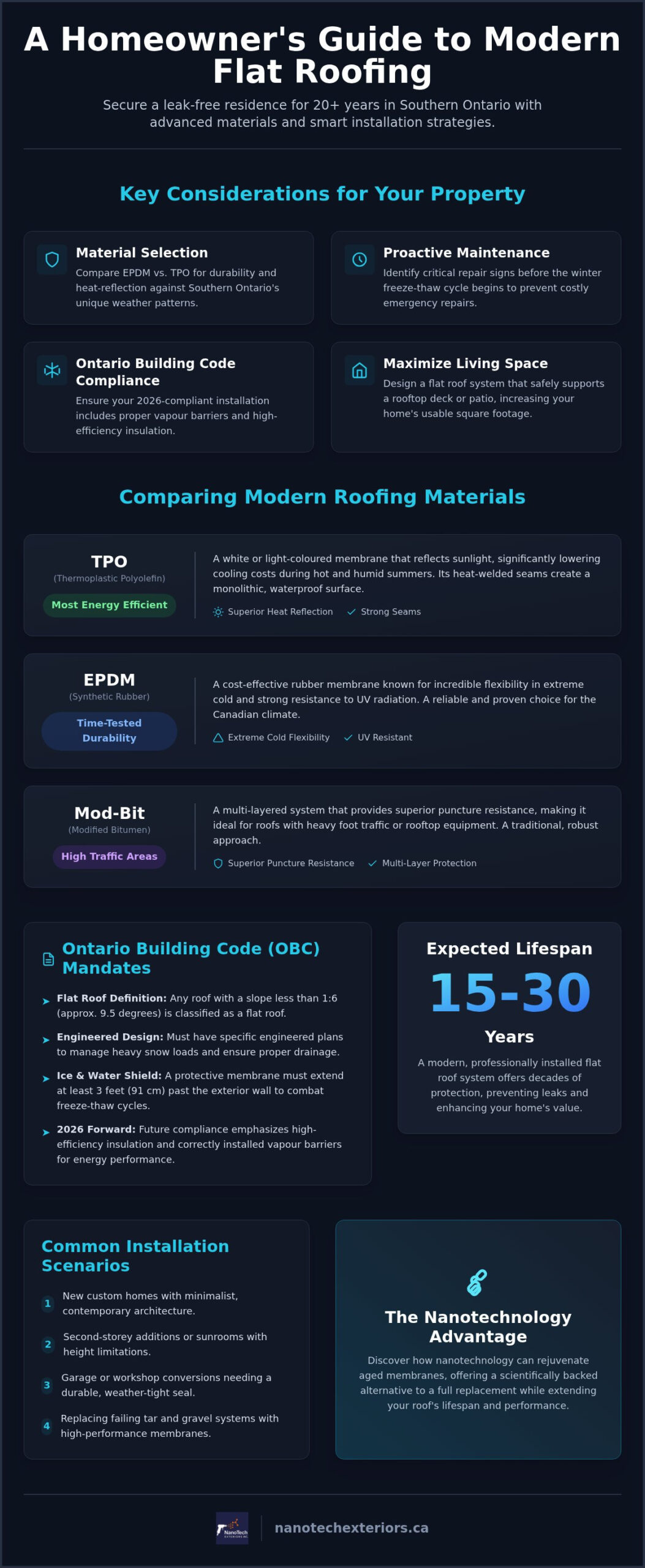
Deciding between a slope and a flat surface requires a logical assessment of your home’s structural needs. The 2024 Ontario Building Code (OBC) classifies any roof with a slope less than 1:6 as a flat roof. This classification mandates specific engineered designs to manage heavy snow loads and drainage. The OBC also requires an ice and water shield that extends at least 3 feet past the exterior wall to protect against freeze-thaw cycles. While asphalt shingles are a standard choice for sloped roofs, they lack the versatility of flat membranes. A well-installed flat system provides superior thermal regulation, potentially lowering your energy bills during hot Hamilton summers. It’s a pragmatic trade-off: you exchange the traditional look for increased living space and modern efficiency.
When to Install a Flat Roof on a Residential Property
New builds often lead the trend, but flat roofs are also ideal for specific home improvements. If your home currently features an aging multi-ply system, it is likely a candidate for an upgrade. Most flat roofs in our region have a lifespan of 15 to 30 years. If yours is approaching two decades of service, transition to a modern membrane or consider a professional refurbishment. This proactive approach prevents the pooling water and ice dams that lead to emergency flat roof repair Burlington calls during the spring thaw. Common scenarios for installation include:
- New custom homes with minimalist, contemporary architecture.
- Second-storey additions or sunrooms where structural height limits are a factor.
- Garage or workshop conversions that require a durable, weather-tight seal.
- Replacement of failing tar and gravel systems with high-performance synthetic membranes.
Whether you are building from scratch or restoring an existing structure, the focus should be on long-term fortification. Choosing the right material and ensuring it meets current provincial standards will protect your interior from water damage while enhancing your home’s modern appeal.
Comparing Flat Roof Materials: EPDM, TPO, and Modified Bitumen
Selecting the right membrane is a decision that dictates your home’s maintenance schedule for the next 20 years. In Southern Ontario, homeowners typically choose between four primary materials, each offering distinct advantages for our specific climate. EPDM, or synthetic rubber, is a durable and cost-effective choice. It’s known for its incredible flexibility. TPO (Thermoplastic Polyolefin) is a newer alternative that features heat-reflective properties. This “cool roof” technology is excellent for lowering cooling costs during humid July afternoons. If you find yourself needing a flat roof repair Burlington specialist, the cause is often a material that couldn’t handle the swing from a frozen January to a humid July.
- EPDM: A time-tested rubber membrane that resists UV radiation and remains flexible in extreme cold.
- TPO: A white or light grey membrane that reflects sunlight, making it the most energy-efficient option for modern homes.
- Modified Bitumen: A traditional multi-layered approach that provides superior puncture resistance for high-traffic areas.
- PVC: The premium choice for homeowners planning a rooftop deck, offering high resistance to chemicals and moisture.
For homeowners researching the technical standards of these systems, European specialists like Aannemersbedrijf Concordia provide a benchmark for excellence in bitumen and tiled roofing craftsmanship.
Which Material Wins for Southern Ontario Winters?
The local climate is notoriously hard on structural materials. A roof in Burlington must manage thermal expansion as temperatures shift from -20°C in the winter to +30°C in the summer. EPDM excels here because it can stretch and contract without cracking. However, TPO and PVC offer superior seam strength because their joints are heat-welded rather than glued. Choosing the right material initially reduces the frequency of flat roof repair Burlington calls over the next two decades. For those looking to fortify their current setup, exploring professional residential roofing options can provide a clear path to long-term protection.
Aesthetic and Colour Options for Homeowners
Curb appeal matters even on a flat surface. While commercial buildings usually prioritize function, residential roofs must integrate with your home’s siding and trim. Black EPDM is discreet and helps melt snow faster in the winter. Conversely, white TPO membranes provide a clean, contemporary look that suits minimalist architecture. If your roof is visible from the street or an upper window, consider a smooth finish rather than a textured one to maintain a sleek appearance. You don’t have to sacrifice style for structural integrity; modern membranes allow you to achieve both while ensuring your home stays dry.
The Residential Flat Roof Installation Process
A successful flat roof installation is a methodical sequence of technical steps. It isn’t just about laying down a sheet of rubber; it’s about building a multi-layered shield that protects your home from the unpredictable Southern Ontario climate. By following a structured installation process, homeowners can avoid the recurring costs of flat roof repair Burlington services caused by poor initial workmanship. The process begins with a structural assessment to verify the deck’s integrity. In Hamilton and Burlington, older homes often require reinforcement to meet the 2024 Ontario Building Code snow load requirements before the new system is applied.
- Step 1: Structural Assessment: We inspect the roof deck for rot or sagging to ensure it can handle the weight of the new membrane and potential snow accumulation.
- Step 2: Vapour Barrier and Insulation: A high-performance vapour barrier is installed to prevent interior moisture from damaging the high-efficiency insulation panels above.
- Step 3: The Tapered System: We install sloped insulation panels to create a “tapered system,” which is essential for directing water toward the drainage points.
- Step 4: Membrane Application: The final membrane is applied using adhered, ballasted, or mechanically fastened methods, depending on the specific material and structural needs.
The Critical Importance of Proper Drainage
“Flat” is a misnomer in the roofing world. To realize a 2% minimum slope, we carefully plan the drainage layout to eliminate the “No Pooling” rule violations that lead to early membrane failure. You must choose between internal drains, which run through the home’s interior, and scuppers. Scuppers are openings in the perimeter wall that lead to external eavestroughs. For most residential properties in our region, scuppers are the pragmatic choice because they’re easier to maintain and integrate seamlessly with your home’s existing exterior drainage system.
Flashing and Sealing: The Vulnerable Points
The majority of flat roof repair Burlington calls originate from failures at penetrations rather than the membrane itself. Skylights, chimneys, and vents are the most common culprits for leaks. We use counter-flashing to provide a secondary layer of protection over the base flashing, ensuring a watertight transition. Flashing is the primary defence against water intrusion, acting as a resilient seal that redirects water away from the most vulnerable joints and penetrations of the roof. Every corner and edge must be sealed with technical precision to ensure the entire system remains fortified for its 20 plus year lifespan.
Maintenance and Longevity in the Southern Ontario Climate
Southern Ontario’s climate is uniquely aggressive toward building materials. The freeze-thaw cycle is the primary cause of structural fatigue, acting as the number one enemy of flat roofs in Hamilton and Burlington. When water enters a tiny fissure and freezes, it expands with immense force, widening the gap. This process repeatedly stresses the membrane and seams throughout the winter. If you ignore these micro-fractures, you will eventually require an emergency flat roof repair Burlington call. Preventing this damage starts with consistent debris management; leaves and twigs often clog scuppers and drains, causing water to pool and freeze in place.
A proactive maintenance strategy involves two annual inspections. Use this checklist to ensure your system remains fortified:
- Spring: Inspect for “alligatoring” or surface cracking and ensure winter ice hasn’t pulled flashing away from the masonry.
- Autumn: Clear all drainage paths and scuppers of autumn leaves to prevent autumn rain from pooling.
- Year-round: Look for blisters or bubbles in the membrane, which indicate trapped moisture beneath the surface.
Heavy accumulation after an Ontario blizzard is a valid concern, but DIY snow removal is often more dangerous than the snow itself. Metal shovels can easily puncture a TPO or EPDM membrane, leading to immediate leaks once the temperature rises. If you must clear snow, use a plastic shovel and leave a 5-centimetre layer of snow as a protective buffer.
Managing Ice and Snow on a Flat Roof
Ice dams on flat roofs typically form at the perimeter or near scuppers where drainage is restricted. Unlike sloped roofs, where ice builds at the eaves, flat roof ice dams create standing water that can sit for weeks. Heat cables are a pragmatic solution to keep these drainage paths open during deep freezes. They provide a clear channel for meltwater, preventing the build-up that forces moisture back under the perimeter flashing.
Extending Lifespan with Professional Care
Professional care is the most reliable way to ensure your roof reaches its full 30-year potential. Regular inspections are often a requirement for maintaining warranty validity. Catching a small puncture early and patching it is significantly more affordable than a full flat roof repair Burlington project. To help you evaluate your current roof, read our 2026 Ontario Homeowner’s Checklist to spot early signs of failure. If you notice any warning signs, scheduling a professional flat roofing assessment can save you from costly interior damage.
Professional Flat Roof Solutions with NanoTech Exteriors
Choosing a contractor for a residential project shouldn’t feel like a commercial transaction. At NanoTech Exteriors, we treat every flat roof repair Burlington project with the technical precision required for Southern Ontario’s unique environmental stressors. Our approach is grounded in logic and material science. We don’t just patch leaks; we fortify your home’s entire structural envelope. By integrating GoNano nanotechnology, we offer a modern alternative to the traditional “tear-off and replace” cycle. This disruptive technology allows us to protect both new installations and existing membranes, ensuring your roof remains resilient against the elements for decades.
Why We Are the Trusted Local Choice
Our team lives and works in the Burlington, Hamilton, and Oakville corridor. This local presence means we have a deep understanding of the 2024 Ontario Building Code and the specific weather patterns that affect our community. We realize that a residential job site is also your home. Our professional installation teams prioritize site cleanliness and minimal disruption to your daily routine. We provide transparent, educational service that empowers you to make the right decision for your property without facing high-pressure sales tactics. Learn more about our Residential Roofing in Burlington to see how we tailor our services to your specific neighbourhood.
Restoration: The NanoTech Advantage
Can we save your existing flat roof? This is the first question we answer during our comprehensive rejuvenation assessment. Many homeowners are told a full replacement is their only option, but our nanotechnology solutions can often restore flexibility to aging EPDM and TPO membranes. This process replenishes the essential oils lost to UV exposure, effectively sealing micro-fissures before they become major liabilities. Choosing strategic refurbishment over a full replacement allows you to save significantly while extending the lifespan of your roof by 10 to 15 years. It’s a sensible, cost-effective way to achieve peace of mind without the expense of a complete structural overhaul.
Our customized drainage solutions are another pillar of our service. We design systems specifically for the intense rainfall patterns seen in Southern Ontario, ensuring that water is moved off your roof efficiently. Whether you require a new flat roofing system or a specialized repair, we focus on long-term outcomes rather than quick fixes. We are committed to being your expert guide, providing the proven results and scientific credibility you expect from a local leader.
Fortify Your Home Against the Southern Ontario Climate
Your residential flat roof is a sophisticated system that requires technical precision rather than a standard patch. Long-term success in our region depends on selecting high-performance membranes like TPO or EPDM and ensuring your drainage layout meets the 2% minimum slope. By prioritizing consistent seasonal maintenance and keeping scuppers clear, you avoid the recurring stress and expense of emergency flat roof repair Burlington calls during the spring thaw. Modern technology has finally solved the “inevitable leak” problem, provided you choose a partner who understands local architectural requirements and building codes.
As an authorized GoNano dealer serving Burlington, Hamilton, and Oakville, NanoTech Exteriors provides the scientific credibility needed for lasting protection. We specialize in Southern Ontario freeze-thaw protection, offering unique rejuvenation services that can often save your existing membrane from premature replacement. Your home deserves a roof that supports your lifestyle while providing absolute peace of mind. Take the first step toward a more efficient, leak-free property today by booking a professional review of your current system.
Get Your Free Residential Flat Roof Assessment in Burlington or Hamilton
Frequently Asked Questions
How much does a residential flat roof installation cost in Ontario?
The total investment for a new installation depends on the square footage, the current condition of the roof deck, and the chosen membrane material. Factors such as the insulation thickness required by the 2024 Ontario Building Code and the complexity of the tapered drainage system also influence the final cost. While some homeowners prioritize the reliability of EPDM, others choose premium PVC for its longevity. We recommend a professional assessment to determine the most cost-effective path for your specific property.
How long does a flat roof last on a residential home?
A professionally installed residential flat roof typically lasts between 15 and 30 years in the Southern Ontario climate. This lifespan depends heavily on the quality of the material used and the consistency of seasonal maintenance. EPDM and TPO membranes are specifically designed to handle our region’s extreme temperature swings. However, implementing specialized nanotechnology treatments can extend the life of an aging membrane by up to 15 years, delaying the need for a full replacement and saving significant costs.
Can I walk on my flat roof or use it as a deck?
You can use a flat roof as a living space, but the structure must be specifically engineered to support the additional weight of a deck and furniture. Standard membranes are not designed for high foot traffic and can puncture easily if used as a floor. If you plan to build a rooftop patio, we recommend a reinforced PVC membrane or a pedestal-supported deck system. This ensures the waterproofing layer remains protected while you maximize your home’s usable square footage.
What is the best material for a flat roof in Southern Ontario?
TPO and EPDM are often considered the best materials for our region due to their durability and thermal performance. TPO is particularly effective for homeowners looking to lower cooling costs because its reflective surface sheds heat during humid Hamilton summers. EPDM is a pragmatic, reliable choice for its extreme cold-weather flexibility. The best choice for your home depends on whether you prioritize energy efficiency, puncture resistance, or the ability to support a rooftop terrace for your family.
Do flat roofs leak more than sloped roofs?
Flat roofs don’t inherently leak more than sloped roofs, but they are less forgiving of poor installation or neglected maintenance. Most leaks originate from failing flashing around chimneys or clogged scuppers rather than the membrane itself. When a system is designed with a proper 2% slope and a tapered insulation system, water moves efficiently toward the drains. Modern materials have largely eliminated the leak problems associated with older tar and gravel systems, provided the perimeter is properly sealed.
Can you install a flat roof in the winter in Burlington?
Installation is possible in the winter, but it requires specific technical adjustments to account for the cold. Many adhesives used for EPDM and TPO membranes have temperature thresholds for proper bonding. While we can perform a flat roof repair Burlington homeowners need during an emergency, full installations are most efficient during the spring and autumn. If a winter project is necessary, we use mechanically fastened systems or specialized cold-weather materials to ensure the structural integrity of the seal.
How do I know if my flat roof can be repaired or needs replacing?
A repair is suitable for isolated issues like small punctures, whereas replacement is necessary if the membrane has widespread “alligatoring” or structural rot is present in the deck. However, many aging roofs that appear to be failing are actually candidates for rejuvenation. Our nanotechnology treatments can restore flexibility to brittle membranes, sealing micro-fissures and extending the roof’s life. A professional assessment is the only way to determine if a flat roof repair Burlington service can save you from a full replacement.
Are flat roofs energy efficient?
Flat roofs are highly energy efficient when paired with high-performance insulation and reflective membranes. Systems using white TPO reflect a significant portion of solar radiation, reducing the heat load on your home during the summer. Additionally, the 2024 Ontario Building Code mandates enhanced insulation standards that improve thermal regulation year-round. These modern systems work to keep your interior temperatures stable, which leads to lower monthly energy bills and a smaller environmental footprint for your household. To further enhance these savings, many homeowners consider solar installations; resources from Azimuth Renewable Energy can help you understand how renewable energy incentives can make these projects more affordable.