What if those curling shingles on your roof aren’t a sign that you need to spend a fortune on a replacement, but are actually a symptom of “oil dehydration” that can be scientifically reversed? It’s stressful to look up at your home and see edges lifting, especially when you’re already managing the high cost of living in Ontario. You’re likely worried about the upcoming spring thaw and the conflicting advice from contractors who insist a total tear-off is your only path forward. Understanding what causes asphalt shingles to curl in Ontario is the first step toward protecting your home and your budget.
We realize that you want peace of mind and a roof that performs as intended. This guide will help you identify the specific environmental and structural triggers behind shingle damage, including the impact of the 2025 Ontario Building Code updates and our province’s unique climate. You’ll discover the critical difference between cupping and clawing, and how nanotechnology can replenish lost oils to restore flexibility. We’ll show you how to extend your roof’s life safely, allowing you to avoid the massive expense of a full replacement while keeping your home dry and secure.
Key Takeaways
- Learn exactly what causes asphalt shingles to curl in Ontario, from harsh lake-effect humidity to the natural “volatilization” of essential protective oils.
- Distinguish between cupping and clawing to understand if your roof’s deterioration is driven by poor attic ventilation or simple environmental aging.
- Realize how maintaining clear soffit vents and managing tree shade can prevent premature shingle failure before moisture damage compromises your home’s structure.
- Discover how roof rejuvenation using GoNano technology can replenish shingle flexibility and extend the life of your roof by up to 15 years.
- Save significantly on traditional replacement costs by choosing a scientifically backed restoration method that addresses the root cause of shingle brittleness.
Understanding Shingle Curling in the Ontario Climate
Shingle curling is more than a cosmetic nuisance; it’s a physical signal that your home’s primary defence is struggling. This phenomenon occurs when asphalt shingles lose their flat profile and begin to lift away from the roof deck, creating gaps that invite moisture. To be precise, shingle curling is the loss of adhesion and flexibility due to environmental stressors. If you’ve noticed the edges of your shingles turning upward or the centres bulging, you’re witnessing the slow degradation of the material’s structural integrity.
In our province, the search for what causes asphalt shingles to curl in Ontario often leads directly to our volatile weather patterns. While early-stage curling might seem like a minor aesthetic issue, it represents a transition toward structural failure. Once the shingle lifts, it can no longer shed water effectively or resist high winds. This creates a “perfect storm” for leaks, especially during the heavy rainfalls and rapid thaws typical of the Great Lakes region. Understanding the science behind this lifting is essential for any homeowner looking to avoid an unnecessary and expensive full roof replacement.
The Role of Southern Ontario’s Humidity
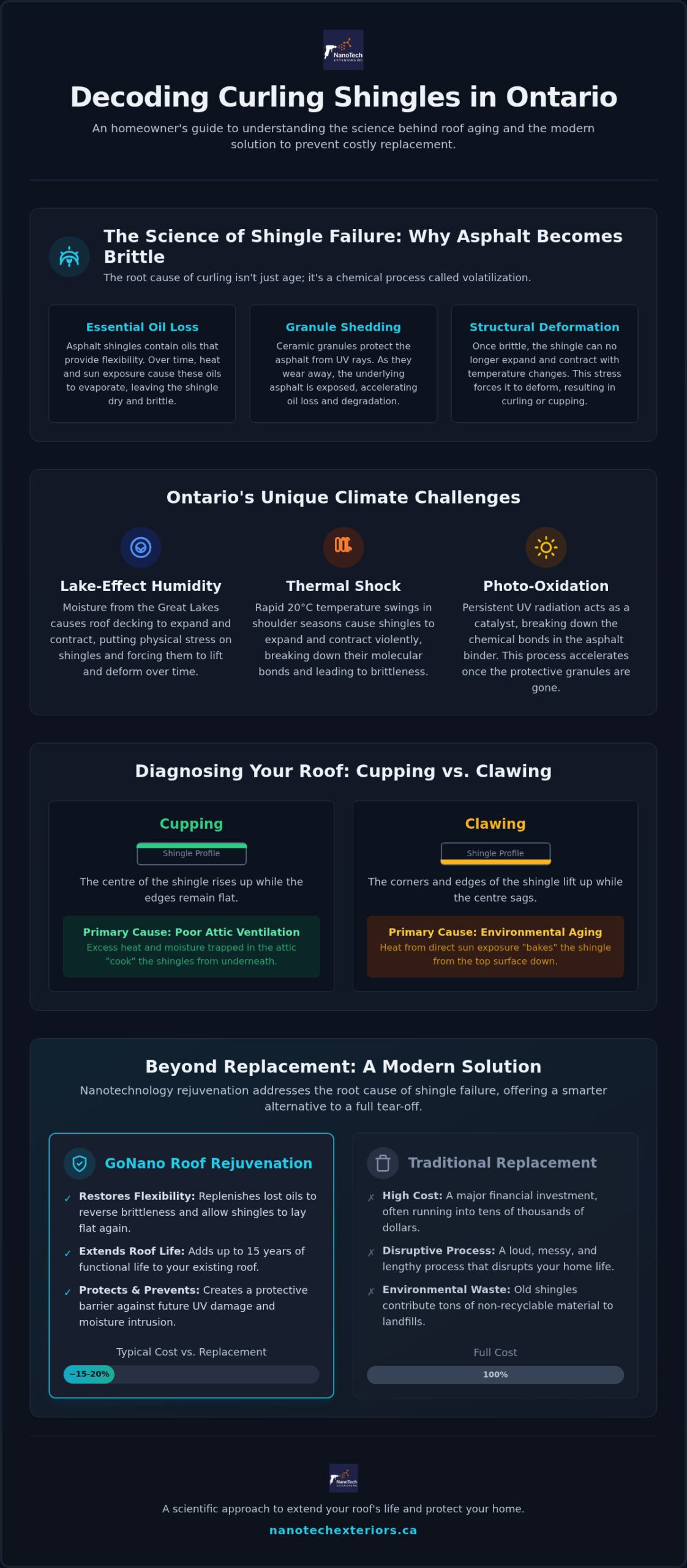
The Great Lakes act as a massive moisture pump, creating a microclimate characterized by high humidity and fluctuating dew points. When moisture becomes trapped within the roof deck, it causes the underlying wood sheathing to expand and move. This subtle shifting physically pulls at the roofing fasteners and disrupts the asphalt shingle composition. Because the shingles are pinned to a moving base, the stress eventually forces the edges to deform. Homes in Burlington and Hamilton are particularly at risk due to their proximity to the water. These properties face higher saturation levels than inland cities, often resulting in visible curling much earlier in the roof’s lifespan.
Thermal Shock: The Silent Shingle Killer
Thermal shock describes the rapid expansion and contraction of roofing materials during Ontario’s unpredictable shoulder seasons. It isn’t uncommon to experience a 20-degree temperature swing within a single day in October or April. When the sun hits a dark roof, surface temperatures can soar, only to plummet the moment the sun sets. These extreme cycles stress the asphalt bonds at a molecular level. Over a 10-year period, a roof endures thousands of these “shock” events. Each cycle makes the shingles slightly more brittle and less capable of laying flat. Eventually, the material reaches a breaking point where it loses its ability to remain pliable, leading to the permanent distortion we recognize as curling.
The Science of Shingle Failure: Why Asphalt Becomes Brittle
A standard asphalt shingle is a carefully balanced recipe of fiberglass or organic mat, a thick layer of asphalt binder, and a surface coating of ceramic granules. The technical performance depends on the asphalt itself. It contains essential polymeric oils that allow the shingle to expand and contract. When these oils evaporate through a process called volatilization, the balance is lost. This chemical shift is a fundamental reason for what causes asphalt shingles to curl in Ontario. As the shingle loses its internal weight and pliability, it naturally begins to deform and lift.
Granule loss plays a massive role in accelerating this failure. These small stones aren’t just for colour; they’re a protective shield. When granules shed, the underlying asphalt is exposed to direct sunlight. This leads to a feedback loop where the shingle gets hotter, loses more oil, and curls faster. Darker shingles, such as charcoal or deep black, are particularly vulnerable. They absorb more thermal energy than lighter alternatives, often reaching surface temperatures that “bake” the asphalt mat from the outside in. If you’ve noticed a significant amount of sand in your downspouts, your roof’s protective layer is likely thinning.
Photo-oxidation and UV Exposure
UV rays act as a persistent chemical catalyst. This process, known as photo-oxidation, breaks down the molecular chains that hold the asphalt binder together. The ceramic granules on the surface serve as the first line of defence by reflecting solar heat. Once these granules are compromised, your shingles are effectively “baking” in the summer sun. You can often see the signs of this solar damage by looking for areas where the shingles appear shiny or smooth. This indicates the asphalt has melted and re-hardened, a clear sign that the material is becoming dangerously brittle.
The Loss of Polymeric Oils
Flexibility is the most critical trait for any roofing material in a climate defined by intense freeze-thaw cycles. Without its natural oils, a shingle transitions from a flexible shield to a glass-like state. It becomes prone to cracking and lifting during the first cold snap. This often starts with a roof shingle granule loss solution being needed because the bond between the granules and the asphalt has weakened. Research into preventing shingle issues suggests that when the structural mat loses its pliability, it can no longer withstand the physical tension of the roof deck’s movement. If your shingles feel crunchy or stiff underfoot, they’ve reached a state of advanced volatilization. A professional roof rejuvenation assessment can determine if these lost oils can still be replenished to save the structure.
Cupping vs. Clawing: Identifying the Specific Culprit
Determining the exact pattern of deformation is essential for a professional roof inspection in Burlington. While both symptoms look similar from the ground, they tell very different stories about your home’s structural health. Identifying these patterns early allows you to address the root issue before it leads to a catastrophic leak. Cupping typically signals moisture or heat issues from below, while clawing often indicates the natural end of a shingle’s chemical lifespan. Recognizing these visual cues is the first step in diagnosing what causes asphalt shingles to curl in Ontario homes.
Cupping: The “Bottom-Up” Problem
When the edges of your shingles turn upward to form a concave shape, you’re looking at cupping. This is almost always a sign that your roof is being “cooked” from the underside. Poor attic ventilation is the most common driver. If the hot, humid air from your home can’t escape through the ridge vents, it becomes trapped against the roof deck. This heat transfers directly to the shingles, causing them to dry out and lift. Improperly installed insulation can also create “hot spots” by blocking soffit vents, which prevents the essential cross-ventilation needed to keep the deck cool. Beyond the heat damage, cupped shingles are highly vulnerable to wind uplift. During a standard Ontario thunderstorm, these raised edges act like small sails, allowing wind to get underneath and rip the shingles away from the fasteners.
Clawing: The “Top-Down” Problem
Clawing is the opposite of cupping; the edges of the shingle curl downward while the centre bulges upward. This is a classic symptom of advanced age and oil depletion. As shingles reach the 12 to 15-year mark, the asphalt mat shrinks as it loses its internal moisture and polymeric oils. Because the shingle is physically shrinking, it pulls itself into a claw-like tension. This shape is particularly dangerous during the Ontario winter. Clawed shingles disrupt the natural flow of water toward your gutters, creating small ridges that trap melting snow. This often leads to ice damming, where water backs up under the shingles and penetrates the roof deck. While clawing indicates a shingle is becoming brittle, it’s often the ideal stage for rejuvenation if the structural mat hasn’t yet cracked or lost its integrity.
How to Prevent and Manage Curling Before Leaks Occur
Preventing shingle damage requires a proactive approach rather than waiting for water to drip through your ceiling. While understanding what causes asphalt shingles to curl in Ontario is vital, implementing a regular maintenance schedule is what actually protects your investment. A roof is a system, and when one component fails, the shingles often bear the brunt of the stress. By focusing on airflow and surface protection, you can significantly delay the onset of brittleness and lifting.
Overhanging branches do more than drop leaves; they create persistent shade that prevents shingles from drying properly after a storm. This trapped moisture encourages moss growth and accelerates granule loss. Similarly, clogged gutters cause water to back up under the eave protection, saturating the roof deck and forcing shingles to deform. Annual cleaning is a non-negotiable task for any homeowner. If you discover widespread lifting or brittleness during your maintenance, consulting a roof repair specialist in Hamilton can provide a definitive path forward before the damage becomes structural.
Optimizing Attic Ventilation
A healthy attic is the foundation of a long-lasting roof. The building industry generally follows the 1:300 rule, which suggests that for every 300 square feet of attic floor space, you need at least one square foot of net free ventilation area. If your insulation blocks the soffits, heat builds up and “cooks” the shingles from the underside. Signs of poor airflow are often hidden. During a cold snap, check your attic for frost on the underside of the roof sheathing or rusted roofing nails. These are clear indicators that moisture isn’t escaping. Improving this airflow can halt minor curling by cooling the roof deck and reducing the thermal stress on the asphalt binder.
Seasonal Maintenance for Ontario Roofs
Ontario’s climate demands two specific check-ups to ensure your roof remains resilient. In the autumn, identify any brittle shingles before the weight of heavy snow arrives. Brittle material is prone to cracking under the physical load of a winter storm. During the spring thaw, look for shingles that buckled or shifted during the intense freeze-thaw cycles. Following a 2026 Ontario homeowner’s checklist ensures you don’t miss these critical transition periods. Catching these issues early allows for targeted repairs or rejuvenation rather than a total tear-off.
Beyond Replacement: Restoring Curled Shingles with Nanotechnology
While traditional roofing contractors often insist that a total tear-off is the only solution for lifting shingles, modern material science offers a more efficient path. Roof rejuvenation in Burlington has emerged as a scientifically proven alternative to the high cost of replacement. By using GoNano technology, we address the root chemical failure rather than just covering up the symptoms. This process involves penetrating the shingle mat to replenish the polymeric oils that have evaporated over time. It’s a pragmatic choice for homeowners who want to maximize their existing investment without the stress of a massive construction project.
Choosing rejuvenation is up to 85% more cost-effective than a full replacement. Beyond the financial relief, there is a significant environmental benefit to consider. Asphalt shingles are a major contributor to Ontario’s waste stream, often taking centuries to decompose. By extending the life of your roof, you keep thousands of pounds of debris out of local landfills. This sustainable approach aligns with the long-term thinking required for modern home maintenance in our province. It’s a smarter way to manage your property that values both your budget and the environment.
How Nanotechnology Reverses Brittleness
GoNano doesn’t simply sit on the surface like a paint or a sealant; it works at a molecular level to re-bond the asphalt mat to the protective granules. This treatment restores the essential flexibility needed to survive the intense thermal shock cycles common in Southern Ontario. Once applied, the nanotechnology creates a hydrophobic barrier. This shield prevents heavy rains and melting snow from penetrating the shingle, effectively stopping the moisture cycles that drive curling from the inside out. The formula mimics the natural oils found in fresh asphalt, filling the microscopic voids left behind by years of UV exposure. It transforms a brittle, failing shingle back into a pliable, waterproof barrier that can withstand our harsh climate.
Is Your Roof a Candidate for Rejuvenation?
Not every roof can be saved, which is why a scientific assessment is critical. We use a series of physical tests to determine if your shingles still have the structural integrity to absorb the GoNano treatment. If you’re concerned about what causes asphalt shingles to curl in Ontario, the smartest next step is an evaluation. Generally, your roof is a strong candidate for rejuvenation if it meets these criteria:
- The shingles are between 8 and 20 years old.
- Curling is in the early stages and hasn’t led to widespread cracking.
- The roof deck remains structurally sound with no significant rot.
- Granule loss is present but hasn’t exposed the underlying fiberglass mat entirely.
Acting at the first sign of lifting allows you to secure a 15-year life extension for your roof. Early intervention is the key to avoiding the massive expense of a full tear-off. Booking a scientific roof assessment with NanoTech Exteriors provides the clarity you need to make an informed, value-driven decision for your home.
Secure Your Home’s Future with Scientific Restoration
Understanding what causes asphalt shingles to curl in Ontario is the first step toward avoiding a massive, unnecessary expense. Whether your roof is suffering from attic-driven cupping or age-related clawing, the core issue is almost always the depletion of essential protective oils. You don’t have to accept a full tear-off as your only option. By choosing a scientific restoration, you can reverse brittleness and fortify your home against the unpredictable Great Lakes climate.
As an authorized GoNano dealer, NanoTech Exteriors offers a pragmatic alternative that can save you up to 85% compared to traditional replacement costs. Our process replenishes the asphalt’s internal chemistry, extending your roof’s life by up to 15 years while providing a hydrophobic shield against moisture. It’s a sensible, sustainable choice that prioritizes value and long-term protection. Save your roof and your budget—get a free Roof Rejuvenation quote from NanoTech Exteriors today. We’re here to help you make the smartest decision for your home’s longevity.
Frequently Asked Questions
Is it normal for shingles to curl after only 10 years in Ontario?
It is quite common for shingles to show signs of curling after a decade in our climate. The intense UV exposure and rapid temperature swings in Southern Ontario accelerate the loss of essential oils. while shingles are often rated for 20 years, environmental stressors usually trigger deformation much earlier than the manufacturer’s estimate. Ten years is often the point where oil depletion becomes visible.
Can curling shingles be flattened or repaired without replacing the whole roof?
You can restore curling shingles without a full replacement if the structural mat is still intact. Simply nailing them down or using adhesive is a temporary fix that doesn’t address the root cause. Nanotechnology treatments like GoNano replenish the lost oils, restoring the material’s flexibility so it can lay flat again. This scientific approach treats the underlying brittleness instead of just the visual symptom.
How does poor attic ventilation specifically cause shingles to cup?
Poor ventilation traps hot, humid air in your attic, which effectively “cooks” the shingles from the underside. This heat transfer causes the shingle’s bottom layer to dry out faster than the top, creating internal tension that forces the edges to turn upward. This is a primary factor in what causes asphalt shingles to curl in Ontario, specifically leading to the concave shape known as cupping.
Will insurance cover roof replacement if my shingles are curling?
Insurance providers typically view shingle curling as a maintenance issue or normal wear and tear rather than sudden accidental damage. Unless the curling is a direct result of a specific event like a severe hailstorm or wind damage, it’s unlikely to be covered. It’s always best to review your policy, but most homeowners find that restoring their roof is an out-of-pocket investment in property protection.
What is the average cost to fix curling shingles in the Burlington area?
Minor shingle repairs in the Burlington area typically range between $300 and $800 for small sections. If the curling is widespread, a full replacement in 2026 often costs between $10,000 and $16,500 for a standard residential home. Choosing roof rejuvenation instead can save you up to 85% compared to those replacement costs while providing a long-term solution for the entire roof surface.
Can I apply a roof sealant myself to stop shingles from curling?
We don’t recommend DIY roof sealants as they often create a surface film that traps moisture inside the shingle. This can actually accelerate rot and further deformation. Professional nanotechnology treatments are designed to penetrate the asphalt mat and restore its internal chemistry. A surface-level sealant won’t solve the underlying oil depletion that causes the material to become brittle and lift in the first place.
How long does a roof rejuvenation treatment last compared to a new roof?
A single roof rejuvenation treatment can extend the life of your existing shingles by up to 15 years. While a brand-new roof is marketed to last 20 to 25 years, many Ontario roofs begin to fail much sooner due to our unique environmental stressors. Rejuvenation offers a way to achieve a similar lifespan for your current roof at a significantly lower financial and environmental cost.
What happens if I ignore curling shingles on my Ontario home?
Ignoring curled shingles is a significant risk that eventually leads to structural water damage. As the shingles lift, they lose their ability to shed water, making your home vulnerable to leaks during the spring thaw. Furthermore, raised edges are easily caught by the wind, which can lead to shingles being torn off entirely. Addressing what causes asphalt shingles to curl in Ontario early prevents these minor issues from becoming expensive emergency repairs.