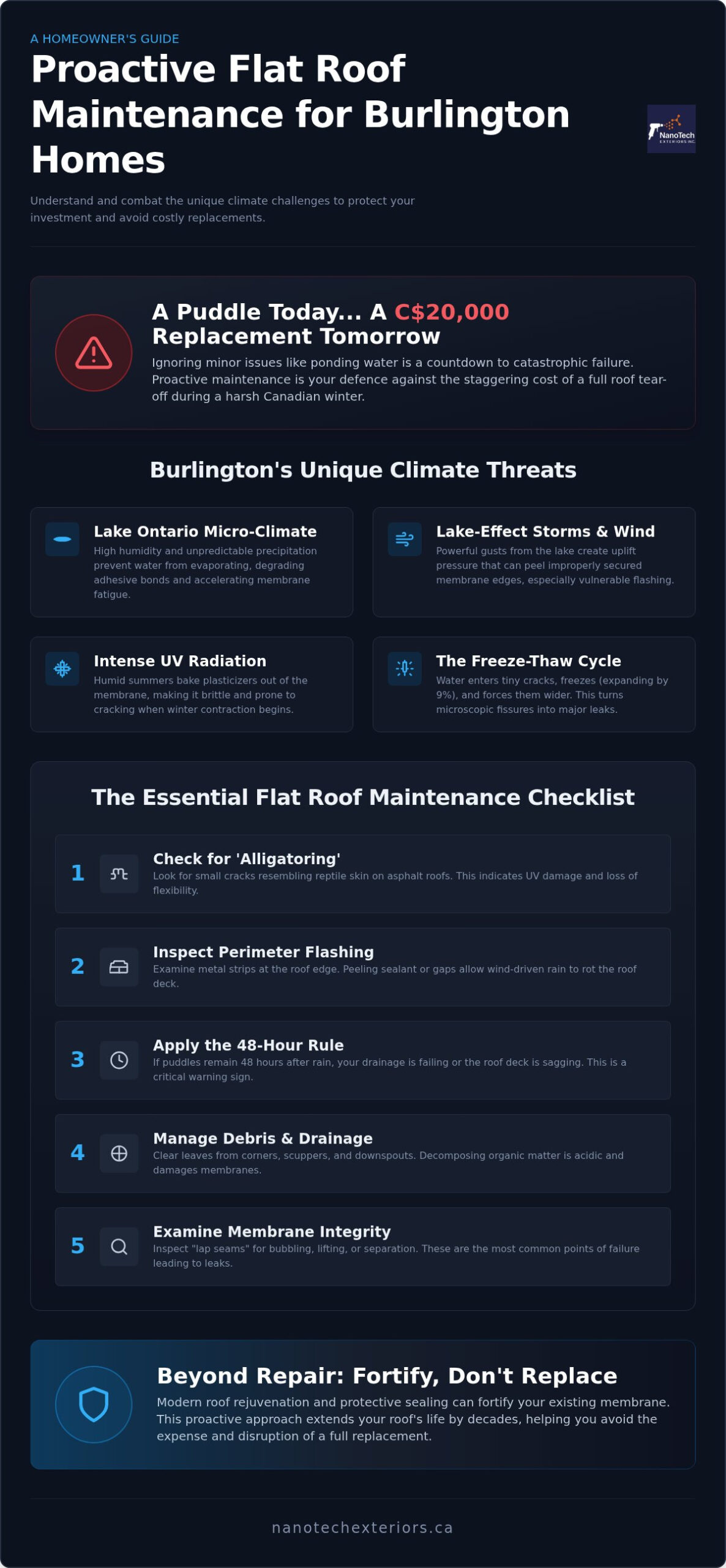
If you see a puddle on your roof after a heavy Burlington rain, it isn’t just water; it’s a countdown to a C$20,000 replacement bill. Most homeowners in the Halton Region view their flat roofs with a sense of quiet anxiety, especially when February’s freeze-thaw cycles turn minor moisture into destructive ice dams. You’ve likely spent a restless night wondering if that slight ceiling stain is a simple fix or the start of a structural disaster. It’s a common fear, but it doesn’t have to be your reality.
Effective flat roof maintenance Burlington homeowners can rely on starts with understanding our unique Lake Ontario micro-climate. This guide provides a clear, proactive strategy to fortify your home against the elements and avoid the staggering costs of a full tear-off. You’ll learn how to identify early warning signs of membrane failure and discover modern rejuvenation methods that extend your roof’s life by decades. We will examine the critical difference between a surface repair and a permanent solution, ensuring your home remains dry and secure through the harshest Canadian winters.
Key Takeaways
- Understand how the Lake Ontario micro-climate and rapid temperature shifts accelerate membrane fatigue on local residential properties.
- Implement a proactive checklist for flat roof maintenance Burlington homes require to ensure scuppers and drains remain clear before the winter freeze.
- Identify the specific performance differences between EPDM and TPO materials to make informed decisions about your roof’s long-term durability.
- Learn the proper techniques for conducting safe roof inspections and how to document “lap seam” separation before it leads to structural damage.
- Explore how modern roof rejuvenation and protective sealing can fortify your existing membrane and help you avoid the expense of a full replacement.
Why Flat Roof Maintenance in Burlington is Unique
Burlington homeowners in neighbourhoods like Shoreacres or The Orchard often have modern, flat-roofed additions or contemporary designs. These aren’t just aesthetic choices; they’re structural systems facing a unique set of stressors. Unlike homes further inland, Burlington’s proximity to Lake Ontario creates a micro-climate characterized by high humidity and unpredictable precipitation. Prioritizing flat roof maintenance Burlington ensures that these local stressors don’t turn into structural failures.
Ignoring a small pool of water in October is essentially inviting a disaster by January. Ponding water is the primary enemy. When water sits on a membrane for more than 48 hours, it begins to degrade adhesive bonds. In Burlington, our autumns are often damp, which prevents these pools from evaporating. By the time the first deep freeze hits, that trapped water has already compromised the surface integrity. A simple inspection is a fraction of the cost of a C$15,000 emergency replacement during a blizzard.
The Lake-Effect Storm Factor
Wind speeds coming off the lake can be significantly higher than those in North Burlington. These gusts create uplift pressure that can peel back improperly secured membrane edges. When combined with the heavy, wet lake-effect snow common in Southern Ontario, the load on a residential flat roof can exceed its design limits. Various flat roof materials, such as EPDM or TPO, react differently to these loads, but the flashing remains the most vulnerable point. If your flashing is loose, the wind will find it. This leads to moisture infiltration that rots the roof deck long before you see a drip in your living room.
The Freeze-Thaw Cycle in Southern Ontario
Burlington experiences frequent temperature swings where the thermometer bounces above and below zero within a single day. This is the freeze-thaw cycle. When water enters a tiny crack and freezes, it expands by approximately 9%. This expansion forces the crack wider. By February, which is statistically the most volatile month for local roofing systems, these microscopic fissures can become full-blown leaks. Additionally, while we focus on the cold, the intense UV radiation during our humid summers also plays a role. It bakes the plasticizers out of the membrane, making it brittle and prone to cracking when the winter contraction begins. Proactive flat roof maintenance Burlington relies on addresses these seasonal transitions before the damage becomes irreversible.
The Essential Flat Roof Maintenance Checklist
A roof doesn’t fail all at once. It happens in stages, often starting with small, manageable issues that escalate during a Burlington storm. Effective flat roof maintenance Burlington homeowners can perform involves a disciplined seasonal routine. By catching these red flags early, you protect your home’s structural integrity and your bank account through consistent flat roof maintenance Burlington schedules.
- Alligatoring: Look for a pattern of small cracks in asphalt-based roofs that resemble reptile skin. This indicates the material has lost its flexibility due to UV exposure and is nearing the end of its functional life.
- Perimeter Flashing: Examine the metal strips along the roof edge. If the sealant is peeling or the metal is pulling away, wind-driven rain will find a path inside, rotting the fascia and roof deck.
- The 48-Hour Rule: Monitor any standing water. If a puddle remains two days after a storm, your drainage system is failing or the roof deck has begun to sag, creating a weight load the structure wasn’t designed to hold.
Debris Management and Drainage
Organic matter is a silent killer for flat membranes. When autumn leaves collect in corners, they decompose into an acidic sludge. This sludge chemically breaks down the roof’s protective layers over time. Clear scuppers and downspouts are your first line of defence against ice damming. If water cannot escape during a mid-winter thaw, it will freeze into a solid block. This ice then backs up under your flashing and into your rafters. Ensuring your downspouts are clear is a simple task that prevents a C$5,000 interior repair bill.
Membrane Integrity Inspection
Seams are the most common point of failure. Inspect the “lap seams” where membrane sheets overlap. Any signs of bubbling, lifting, or separation require immediate attention. You might also notice “blisters,” which are raised pockets of air or moisture trapped between layers. Never pop these yourself; doing so creates an immediate leak and complicates the eventual repair. On modified bitumen roofs, look for excessive granule loss in your gutters. This suggests the surface is no longer protected from the sun. If you spot these issues, it’s a good idea to seek a professional flat roofing assessment before the next heavy snowfall hits the Halton Region.
Common Flat Roof Materials in Burlington Homes
Selecting the right material for your home is the first step in effective flat roof maintenance Burlington residents must consider. Each membrane reacts differently to the Halton Region’s humidity and heavy snow loads. Understanding these differences allows you to choose a system that balances initial cost with long-term protection. While aesthetics matter, the primary goal is always a watertight seal that survives the February freeze.
- EPDM (Rubber): Known as the durability king, this synthetic rubber is ideal for Ontario winters. It remains flexible even in extreme cold, which prevents the cracks that often plague less resilient materials.
- TPO (Thermoplastic): This white membrane reflects solar heat, keeping your home cooler in July. It’s a modern favourite for energy-conscious builds in areas like Millcroft.
- Modified Bitumen: A traditional choice for residential extensions, this multi-layer system provides excellent puncture resistance.
- PVC: Often chosen for high-end modern designs, PVC offers superior chemical and fire resistance, though it typically requires a larger initial investment.
Comparing EPDM vs TPO for Residential Use
EPDM is a time-tested solution for the Canadian climate. It’s generally more affordable to install and can last up to 30 years if you stay on top of your maintenance schedule. However, its black surface absorbs heat, which can increase cooling costs during Burlington’s humid summers. TPO is the newer challenger. It’s highly resistant to UV radiation and fungal growth. While TPO is slightly more expensive upfront, its energy efficiency often offsets the cost over time. For homeowners in the Orchard area looking for a balance of longevity and eco-friendliness, TPO is frequently the preferred choice. Both materials require regular inspections to ensure seams remain watertight against lake-effect rain.
Modified Bitumen: Pros and Cons
Modified bitumen remains popular because its multi-layer construction makes it incredibly tough. It can withstand the physical stress of snow removal or accidental foot traffic better than single-ply membranes. The downside is the installation process. It requires precise heat application or high-quality adhesives. If the installation is flawed, the layers will eventually delaminate and trap moisture. This is why professional oversight is non-negotiable for this material. If you’re unsure about the current state of your layers, it’s helpful to learn how to tell if your roof needs replacing before a minor leak becomes a major structural failure. Reliable flat roof maintenance Burlington relies on starts with knowing exactly what material is over your head and how it’s aging.
How to Perform a Safe Roof Inspection
A thorough inspection is the cornerstone of flat roof maintenance Burlington homeowners must prioritize before the winter freeze. You don’t need to be a structural engineer to spot trouble, but you must be disciplined about safety. Start by ensuring your ladder is rated for your weight and secured to the fascia or a stable anchor point. Wear rubber-soled shoes with excellent grip, as even a dry membrane can be surprisingly slick if there is a fine layer of dust or organic silt present.
Once you’re on the roof, your primary tool is your smartphone. Document everything. Take wide-angle shots of the entire surface and close-ups of every seam, vent, and flashing point. These photos are invaluable for insurance claims or when discussing professional flat roofing repairs with a contractor. During your walk, perform the “soft spot” test. If the membrane feels spongy or has significant “give” under your weight, the underlying wood deck is likely saturated and rotting. If you encounter these areas, stop your DIY inspection immediately; the structure may be compromised.
Visual Cues from the Ground
You can often identify a failing system without even pulling out the ladder. Walk across the street and look at your roofline. If you see any unusual dipping or sagging, it indicates that water weight has permanently deformed the rafters. Check your exterior soffits for dark water stains or peeling paint. These are clear signs that your perimeter flashing has detached, allowing water to bypass the gutters and run down your walls. Inside the home, look for yellowing circles on the ceiling or bubbling drywall, which often appear weeks before a visible drip begins.
The Professional Inspection Advantage
While a homeowner can spot obvious tears, a specialist uses technology to see what’s happening beneath the surface. Professional teams utilize thermal imaging cameras to detect “cold spots” in the roof assembly. These spots indicate trapped moisture that hasn’t yet leaked through the ceiling but is currently destroying your insulation’s R-value. In some cases, a pro will perform a core sample, which involves removing a small cylinder of the roof layers to check for deep-seated rot. This level of detail is a standard part of high-quality residential roofing in Burlington. Knowing the exact state of your insulation determines whether you can simply rejuvenate the surface or if a more intensive intervention is required.
Beyond Repair: Protective Sealing and Rejuvenation
Most homeowners believe their options are limited to temporary patches or a C$20,000 full replacement. There is a smarter middle ground. Protective sealing and rejuvenation represent a shift toward material science in flat roof maintenance Burlington residents can utilize to double their roof’s lifespan. Instead of replacing a functional but aging membrane, we fortify the existing structure. This process fills microscopic fissures and restores the flexibility lost to years of Ontario UV exposure. It’s a pragmatic solution that prioritizes value over the disruption of a major construction project.
Nanotechnology is the driver behind this modern approach. Traditional coatings sit on top of the membrane and eventually peel due to constant expansion and contraction. In contrast, rejuvenation treatments penetrate the surface to alter the material’s molecular structure. This creates a hydrophobic barrier that actively repels Lake Ontario’s humidity and prevents water from pooling in the seams. It is a permanent fortification rather than a temporary cover-up. Preparing for this treatment is straightforward. It requires a deep clean to remove organic silt and the reinforcement of any loose flashing to ensure the seal is absolute.
NanoTech’s Specialized Flat Roof Care
Our specialized sealing services are designed to stop water ingress before it reaches your roof deck. By restoring the membrane’s integrity, we eliminate the need for a premature tear-off, which keeps thousands of pounds of roofing waste out of local landfills. This sustainable approach aligns with our commitment to efficient, long-term property care. Just as we offer professional exterior wood sealing to preserve your deck, our roof rejuvenation protects your home’s most critical asset from the top down.
Scheduling Your Annual Maintenance
Timing is everything when protecting your investment. Autumn is the optimal window for flat roof maintenance Burlington homes need before the snow arrives. A NanoTech Exteriors maintenance visit is a methodical process. We begin with a high-pressure debris removal and a rigorous seam check. Once the surface is prepared, we apply the rejuvenation treatment, which bonds to your existing EPDM or TPO membrane. This proactive step provides the peace of mind that your roof is ready for whatever February brings. Don’t wait for a ceiling stain to take action. Book your Burlington flat roof inspection today to see if your roof is a candidate for rejuvenation.
Secure Your Home Against the Next Burlington Winter
Managing a flat roof in the Halton Region doesn’t have to be a source of constant anxiety. By prioritizing consistent drainage checks and identifying seam fatigue early, you move from reactive crisis management to proactive property protection. The most significant takeaway is that a failing membrane doesn’t always necessitate a full replacement. Modern nanotechnology offers a way to fortify your existing structure, restoring its flexibility and water-repelling properties for years to come.
Investing in reliable flat roof maintenance Burlington homeowners can depend on ensures your home remains a dry, secure sanctuary regardless of the lake-effect snow. As an Authorized GoNano Dealer with specialized Southern Ontario expertise, we focus on restoration over replacement. We provide 10-year labour guarantees on our qualifying services to give you absolute peace of mind. Don’t let a minor leak become a major structural disaster next February.
Protect your home with professional flat roof maintenance from NanoTech Exteriors. Taking the first step today ensures your roof is ready for whatever the Ontario climate throws its way.
Frequently Asked Questions
How long does a flat roof typically last in Burlington?
A residential flat roof in Burlington typically lasts between 15 and 30 years, depending on the material used and the maintenance history. EPDM rubber membranes often reach the 30-year mark, while modified bitumen systems usually range from 15 to 20 years. The deciding factor is often the local micro-climate; without proactive care, the frequent freeze-thaw cycles in the Halton Region can reduce these lifespans by several years.
What is the average cost of flat roof maintenance in Ontario?
Maintenance costs vary based on the roof’s size, its current condition, and the specific services required, such as debris removal or seam fortification. While we don’t provide fixed pricing here, regular flat roof maintenance Burlington homeowners invest in is a small fraction of the expense required for a full structural replacement. Consistent inspections help you avoid the high costs associated with emergency repairs and water damage restoration.
Can I walk on my flat roof to clear snow?
You can walk on most flat roofs, but you must exercise extreme caution to avoid damaging the membrane or slipping. Use a plastic shovel rather than metal to prevent punctures, and never scrape the surface directly. During a Burlington winter, it’s safer to leave a thin layer of snow rather than risking a tear. If you’re unsure about the roof’s structural load capacity after a heavy storm, consult a professional.
What causes ponding water on a residential flat roof?
Ponding water is usually caused by clogged scuppers, compressed insulation, or a structural sag in the roof deck. Even a “flat” roof requires a slight slope to direct water toward drainage points. If debris blocks these exits, water accumulates and creates weight that further deforms the structure. In Burlington’s damp autumns, this standing water can quickly degrade membrane adhesives and lead to leaks if left for more than 48 hours.
Is it better to repair or replace a leaking flat roof?
The choice depends on the age of the membrane and the extent of the moisture damage. If the leak is isolated to a single seam and the insulation remains dry, a repair or rejuvenation treatment is the most logical path. However, if the underlying wood deck is rotting or the membrane has widespread “alligatoring,” a replacement is necessary. Modern rejuvenation can often save a roof that traditional contractors might suggest replacing.
Does a flat roof require more maintenance than a sloped roof?
Flat roofs require more frequent monitoring because they cannot rely on gravity to shed water and debris as efficiently as sloped systems. While a sloped roof might hide issues for years, a flat system will show signs of failure, such as ponding or seam lifting, much sooner. A bi-annual inspection schedule is recommended for Burlington properties to ensure that drainage systems remain clear and perimeter flashing stays securely attached.
Are there specific Burlington bylaws for flat roof drainage?
Burlington municipal bylaws generally prohibit homeowners from directing roof drainage onto adjacent private properties. Your system must discharge water onto your own land or into a municipal storm sewer where permitted. When performing flat roof maintenance Burlington residents should ensure their downspouts are positioned at least 1.2 metres away from any property line. It’s best to verify current drainage regulations with the City of Burlington building department before modifying your system.
How do I know if my flat roof insulation is wet?
You can identify wet insulation by looking for “spongy” areas when walking on the roof or observing persistent interior ceiling stains. A more scientific method involves professional thermal imaging, which detects temperature differences caused by trapped moisture. Wet insulation loses its R-value and can lead to mould growth and deck rot. If the insulation is saturated, the membrane must usually be removed to replace the damaged core and protect the home’s structure.