What if the gritty granules in your gutters aren’t a death sentence for your home, but a solvable symptom of a harsh season? Every spring, homeowners across the province climb their ladders with a sense of dread, fearing that the inevitable roof damage after winter Ontario delivers will cost them tens of thousands of dollars. You’ve likely spent the last few months listening to the wind howl and watching ice build up, wondering if your attic is one thaw away from a disaster. It’s a valid concern; the freeze-thaw cycles of 2026 have been particularly brutal on asphalt shingles, often leaving them brittle and prone to failure.
We understand the anxiety that comes with seeing a few loose shingles or a patch of discolouration. However, a full replacement is often an unnecessary expense when modern science offers a smarter way. This guide will help you distinguish between minor cosmetic wear and urgent structural threats. You’ll learn how to identify hidden damage using our professional checklist and discover how roof rejuvenation can restore your shingles for a fraction of the cost of a new roof. By the end of this article, you’ll have a clear plan to protect your home and ensure peace of mind before the spring rains arrive.
Key Takeaways
- Identify how Southern Ontario’s unique freeze-thaw cycles and UV exposure accelerate shingle aging and granule loss.
- Master a 7-point inspection checklist to accurately detect roof damage after winter Ontario before the spring rainy season starts.
- Understand the science of shingle brittleness and why restoring internal oils is the key to preventing cracks and leaks.
- Explore how roof rejuvenation technology can add up to 15 years of life to your roof for a fraction of the cost of a full replacement.
- Implement proactive spring maintenance to clear drainage paths and protect your home from the weight of ice-damaged tree limbs.
Understanding the Impact of Ontario Winters on Your Roof
Southern Ontario’s climate, specifically within the Golden Horseshoe, presents a unique challenge for residential roofing. Unlike the consistent deep freeze of the north, regions from Burlington to Niagara experience erratic freeze-thaw cycles that act like a slow-motion wrecking ball on asphalt shingles. This volatility is the primary catalyst for the roof damage after winter Ontario homeowners discover during their spring inspections.
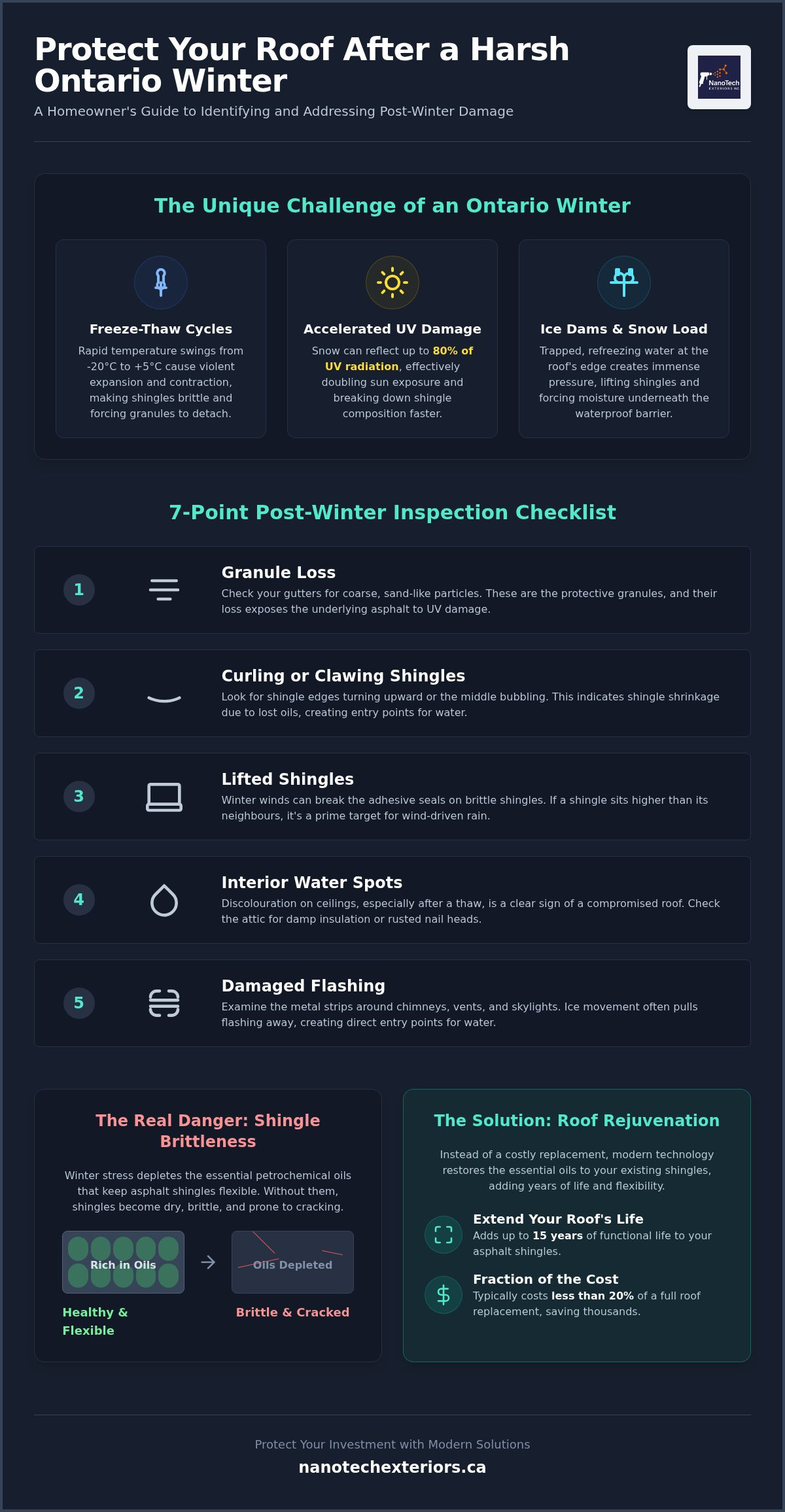
We often associate UV damage with the peak of July, but winter is arguably more aggressive. Snow can reflect up to 80 percent of UV radiation back onto the roof surface. This effectively doubles the sun’s impact, accelerating the breakdown of the protective granule layer and leaving the underlying asphalt exposed. While competitors often focus on the rare risk of roof collapse from snow weight, the more common danger is this silent, chemical degradation of the shingle’s flexibility.
The Heavy Toll of Ice Dams and Snow Loads
An ice dam is a ridge of ice that forms at the edge of a roof and prevents melting snow from draining, typically caused by heat escaping from a poorly insulated attic. When heat leaks into the roof space, it melts the bottom layer of snow. This water flows down to the cold eaves and refreezes. These ice dams exert immense mechanical pressure, forcing stagnant water upward beneath the first few rows of shingles. Over time, this cycle lifts the shingle edges and allows moisture to bypass the primary waterproof barrier.
Temperature Fluctuations: The Expansion and Contraction Cycle
Thermal shock is the most persistent threat to shingle longevity in our province. In Ontario, it’s common to see nights plummeting to -20°C followed by sunny afternoons reaching +5°C. These rapid shifts cause the roofing materials to expand and contract violently. During these cycles, shingles lose the essential petrochemical oils that maintain their pliability. Without these oils, the asphalt becomes dry and brittle. Roofs that have reached the 10-year mark are especially susceptible to this stress. At this age, the shingles often lack the internal resilience to survive another season of extreme temperature swings without developing micro-cracks that lead to structural leaks.
7 Warning Signs Your Roof Suffered Damage This Winter
Assessing your property after the final thaw requires a systematic approach. While some issues are obvious, the most dangerous forms of roof damage after winter Ontario homeowners face are often subtle. Identifying these signs early can prevent a minor repair from escalating into a catastrophic failure during the spring rains.
- Granule Loss: If you find what looks like coarse sand in your gutters after the first spring melt, your shingles are shedding their protective layer. This happens when the thermal expansion discussed earlier forces the granules to detach from the brittle asphalt.
- Curling or Clawing: Look for shingles with edges that turn upward or mid-sections that bubble. This “clawing” indicates the shingle has lost its internal oils and is shrinking, leaving the roof deck vulnerable.
- Lifted Shingles: Winter winds frequently exploit shingles with weakened adhesive strips. If a shingle is sitting higher than its neighbours, the seal is broken.
- Interior Water Spots: Stains on your ceiling that only appear during a rapid thaw or heavy spring rain are clear indicators of a compromised roofing system.
If you notice these red flags, a professional roof rejuvenation assessment can often stabilize the shingles before the damage becomes irreversible.
Visual Inspection from the Ground
You don’t always need a ladder to spot trouble. Use binoculars to check the “line” of your roof. A dip or sag can indicate that heavy snow loads have stressed the underlying rafters. Pay close attention to “bald spots” where shingles have lost significant granule coverage. You should also examine the flashing around chimneys and vents. Ice movement often tugs these metal components away from the roof, creating easy entry points for water.
The Attic Audit: Hidden Winter Leaks
The attic often reveals what the exterior hides. Grab a flashlight and look for rusted nails or damp, matted insulation. Rusted nail heads are a primary sign of “slow leaks” caused by ice dams that have already subsided. If you can see daylight through the roof boards, your home has suffered structural shifting or significant shingle loss. Understanding how to tell if roof needs replacing is essential at this stage to decide between a simple restoration or a more intensive repair. Catching these indicators now ensures your home remains dry during the upcoming storm season.
Why Shingle Brittleness is the Real Post-Winter Danger
Asphalt shingles are essentially a complex sandwich of fibreglass and oil-rich bitumen. Their performance depends on the presence of essential petrochemical oils that allow the material to remain pliable. During a typical Ontario winter, the combination of extreme cold and high UV reflection triggers a process of chemical dehydration. The shingles don’t just get cold; they lose their molecular lifeblood. This “drying out” is the hidden catalyst for the most pervasive roof damage after winter Ontario homeowners encounter.
This loss of oil leads directly to brittleness. When a shingle becomes brittle, it loses its ability to handle “thermal shock.” In the early spring of the Golden Horseshoe, temperatures might be -5°C at dawn and +12°C by noon. A healthy, oil-rich shingle flexes during these shifts. A brittle one cracks under the tension. Traditional repairs often fail at this stage. You can’t simply apply caulking to a crack in a brittle shingle because the surrounding material is too stiff to bond effectively. The repair becomes a rigid point on a surface that still needs to move, which often leads to further tearing during the next cold snap.
The Problem with Brittle Shingles
Brittleness is a structural liability that compromises the entire roofing system. When asphalt loses its pliability, it no longer holds roofing nails with the necessary tension. During high-wind spring storms, these “loose” shingles are the first to blow off. Furthermore, brittle shingles lose their impact resistance. Even a minor spring hailstorm can shatter a dehydrated shingle that would have easily deflected the ice years earlier. If you’ve noticed sand-like debris in your drainage system, looking for a roof shingle granule loss solution is the first step toward restoring that lost resilience.
Restoring Flexibility vs. Patching Leaks
Homeowners often fall into the trap of “patchwork” maintenance. They fix one leak in April, only to find another in June. This happens because a patch only treats the symptom of a localized failure, whereas brittleness is a roof-wide condition. A patch is a temporary fix for a much larger oil deficiency. In contrast, rejuvenation is a comprehensive restoration strategy. The chemical goal of roof rejuvenation is to re-saturate the asphalt core with bio-based oils, restoring the molecular flexibility required to withstand the next decade of Ontario seasons. It’s a proactive investment that stops the cycle of constant, expensive, small-scale repairs.
Spring Roof Maintenance: Protecting Your Investment
Proactive maintenance is the most effective way to mitigate the roof damage after winter Ontario leaves behind. Once the snow has fully receded, you have a brief window to act before the heavy spring rains begin. This period is about more than just cleaning; it’s a strategic effort to ensure your home’s primary defence system is ready for the next season of environmental stress. Taking these steps now prevents minor winter wear from turning into a costly emergency repair in June.
Safe Gutter Maintenance
Your first priority should be the drainage system. During the winter, a mixture of organic debris and shed shingle granules creates a heavy, wet “gutter sludge.” This substance traps moisture directly against the fascia board and the roof’s edge, leading to rot and shingle deterioration. You must clear this sludge to ensure that spring downpours can flow freely away from your foundation. While you are on the ladder, check for loose or sagging brackets. The weight of ice and snow often pulls these fasteners away from the house, compromising the entire system. If you notice that your wooden deck or stairs have also suffered from winter moisture, consider exterior wood sealing services to prevent further splintering and rot.
Vegetation management is equally vital. Ice storms in the Golden Horseshoe frequently weigh down tree limbs, causing them to sag and scrape against the roof surface. These branches act like sandpaper, stripping away the protective granules you need to shield the asphalt from UV radiation. Trim any branches that are within six feet of your roofline. This also reduces the risk of squirrels and other pests using the trees as a bridge to reach your attic, where they can cause significant structural harm.
Beyond structural repairs, spring is often a season for aesthetic renewal throughout the home. If you’re considering a bathroom renovation, Sunnyside Glass Solutions Ltd. provides valuable design inspiration for frameless glass shower doors, helping homeowners achieve a modern, clean look.
The Professional Inspection Advantage
A ground-level check is a good start, but a professional assessment offers a level of precision that most homeowners cannot achieve alone. Expert inspectors look for “telegraphing” patterns on the roof surface that indicate internal structural stress or moisture trapped beneath the shingles. In 2026, many leading firms use drone technology to capture high-resolution imagery of peaks and valleys that are too dangerous to access manually. This technology allows for a comprehensive view of every vent, chimney saddle, and flashing point.
Organizing these findings is essential if you plan to file an insurance claim. Most standard Ontario policies cover sudden storm damage but exclude gradual wear. A professional report provides the documented evidence you need to prove that damage occurred during a specific winter event. If your inspection reveals that your shingles are becoming brittle but are still structurally sound, you can book a roof rejuvenation assessment to restore flexibility and extend the life of your roof without a full replacement.
Beyond Replacement: Restoring Your Roof with Nano-Technology
Traditional roofing companies often present homeowners with a binary choice: patch a leak or replace the entire roof. However, in 2026, NanoTech Exteriors offers a scientifically backed third option that directly addresses the root cause of roof damage after winter Ontario weather leaves behind. By moving beyond the “tear-off and replace” mentality, we can restore the structural integrity of your shingles at a molecular level.
Using GoNano technology, we treat your roof with a bio-based compound that penetrates deep into the asphalt. This isn’t a surface coating; it’s a deep-tissue restoration. The treatment re-saturates the shingles with the essential oils lost during the harsh freeze-thaw cycles described earlier. This process adds up to 15 years of life to your roof while providing an 85% cost savings compared to a full replacement. It’s a pragmatic solution for the sensible homeowner who values both protection and financial efficiency.
The Rejuvenation Process
The application is remarkably efficient and non-disruptive. Our technicians use a specialized spray-applied system to distribute the GoNano treatment across the entire roof surface. Within hours, the shingles absorb the formula, which restores their original flexibility and deepens their colour, making an older roof look and perform like new. Unlike a full replacement, there are no heavy bins, no pounding hammers for days, and no risk of nails being left in your lawn. For local residents, our roof rejuvenation Burlington Ontario guide provides a detailed look at how this process performs in our specific regional climate.
Is Your Roof a Candidate for Rejuvenation?
Not every roof is a fit for this technology. Rejuvenation is most effective for asphalt shingles that are between 8 and 20 years old and still possess a healthy level of their original granule coverage. If your roof has suffered significant structural rot, sagging rafters, or widespread missing shingles, a traditional replacement may be necessary. However, if your primary issue is brittleness and minor granule loss, restoration is the logical first step. We recommend starting with a data-driven evaluation to determine the current health of your shingles. You can get a free roof health assessment from NanoTech Exteriors to see if your home qualifies for this innovative protection before the next storm season arrives.
Secure Your Home for the Seasons Ahead
Identifying roof damage after winter Ontario has passed is the first step in avoiding the financial burden of a premature replacement. We’ve seen how the Golden Horseshoe’s freeze-thaw cycles strip shingles of their essential oils, leading to the brittleness that invites leaks. Instead of settling for a temporary patch or an expensive total replacement, you can choose a scientifically backed restoration that adds up to 15 years of life to your home. It’s a sensible, proactive approach that prioritizes long-term value over quick fixes.
As an authorized GoNano dealer serving Burlington, Hamilton, and Oakville, we specialize in identifying hidden wear before it becomes a structural disaster. Our rejuvenation process offers up to 85% cost savings compared to traditional replacement, giving you peace of mind without the unnecessary stress of a construction site on your lawn. Don’t wait for the next heavy downpour to test your shingles. Book your post-winter roof assessment with NanoTech Exteriors today to ensure your property stays fortified. Your roof has worked hard all winter; now it’s time to give it the renewal it deserves.
Frequently Asked Questions
How do I know if my roof has winter damage?
You can identify damage by looking for specific physical changes in your shingles. Check your gutters for sand-like granules and look for shingles that appear to be curling or “clawing” at the edges. These signs indicate that the asphalt has become brittle. This is the most common form of roof damage after winter Ontario homeowners encounter, often leading to leaks during the first heavy spring thaw.
Will insurance cover roof damage from snow or ice?
Most standard Ontario home insurance policies cover sudden and accidental damage, such as a roof collapse from heavy snow or a fallen tree limb. However, they typically don’t cover gradual wear and tear or damage caused by a lack of maintenance. Documenting your spring inspections and keeping records of professional assessments can be helpful if you need to file a claim for storm-related issues.
Is roof rejuvenation better than a full replacement?
Rejuvenation is the smarter choice if your shingles are still structurally sound but have become brittle or lost their granules. It allows you to restore the pliability of your roof for a fraction of the cost of a new installation. While a full replacement is necessary for roofs with structural rot, rejuvenation is a more efficient and environmentally conscious way to protect a maturing roof.
Can I repair a roof in the winter in Ontario?
Emergency repairs can be performed in the winter to stop active leaks, but they are often temporary. Asphalt shingles are very brittle in sub-zero temperatures and won’t seal properly until the weather warms up. Unless you have an immediate internal leak, it’s more effective to schedule your restoration or repairs for the spring when the materials can bond correctly to the roof deck.
How much does it cost to fix an ice dam leak?
The cost of fixing an ice dam leak depends on whether the damage is limited to the shingles or has reached the interior drywall and insulation. Minor shingle repairs are relatively affordable, but emergency structural work can be more intensive. Proactive maintenance and ensuring proper attic ventilation are the most cost-effective ways to prevent these leaks from occurring during the harsh freeze-thaw cycles in Ontario.
What happens if I ignore minor shingle damage after winter?
Ignoring minor damage allows moisture to seep into the roof deck, which eventually leads to rot and mould growth. Small cracks caused by winter’s thermal expansion will only widen during spring storms. What starts as a simple loss of shingle flexibility can quickly escalate into a full structural failure, eventually forcing you into an expensive roof replacement that could have been avoided with early intervention.
How long does roof rejuvenation last compared to a new roof?
A single roof rejuvenation treatment can add up to 15 years of life to your existing shingles. While a brand-new asphalt roof in Ontario typically lasts between 25 and 30 years, rejuvenation provides a significant extension for a much lower investment. It acts as a fortification layer that restores the molecular integrity of the asphalt, allowing your current roof to perform like new for another decade.
Do I need to replace my whole roof if only a few shingles are missing?
You don’t necessarily need a full replacement for a few missing shingles, but their absence is often a sign of a larger problem. If the surrounding shingles are brittle, they may crack when a roofer tries to lift them for a repair. In these cases, treating the entire surface with a rejuvenation compound is the best way to secure the remaining shingles and prevent future blow-offs.