Replacing your roof in Ontario is a massive expense that most homeowners could delay for over a decade if they understood the science of shingle decay. It’s a common frustration; you notice granules in your eavestroughs or a minor leak after an ice storm, and suddenly you’re told the only fix is a full, expensive replacement. You want peace of mind during a Burlington blizzard, not an unexpected financial burden. We agree that the traditional “tear off” industry standard is often unnecessary for shingles that still have structural potential.
By following a professional roof maintenance checklist Ontario residents can use year-round, you’ll gain the confidence to identify early warning signs before they become emergencies. This guide provides a clear, season-by-season plan to protect your home from harsh weather while lowering your long-term ownership costs. We’ll explore how to maintain attic health, spot shingle fatigue, and use modern rejuvenation methods to extend your roof’s life by 10 to 15 years. It’s time to stop reacting to leaks and start protecting your investment with logic and precision.
Key Takeaways
- Understand how Ontario’s specific freeze-thaw cycles and intense UV radiation accelerate shingle brittleness and structural decay.
- Implement a proactive roof maintenance checklist Ontario residents can follow to spot granule loss and drainage issues before they lead to costly interior leaks.
- Identify the critical link between attic ventilation and shingle longevity to prevent heat-related “hot spots” and winter ice damming.
- Explore roof rejuvenation as a modern maintenance alternative that restores essential oils to asphalt shingles, adding up to 15 years of functional life.
- Learn why professional inspections are vital for detecting micro-fissures and hidden damage that standard visual checks often fail to reveal.
Why Ontario’s Climate Demands a Specialized Roof Maintenance Schedule
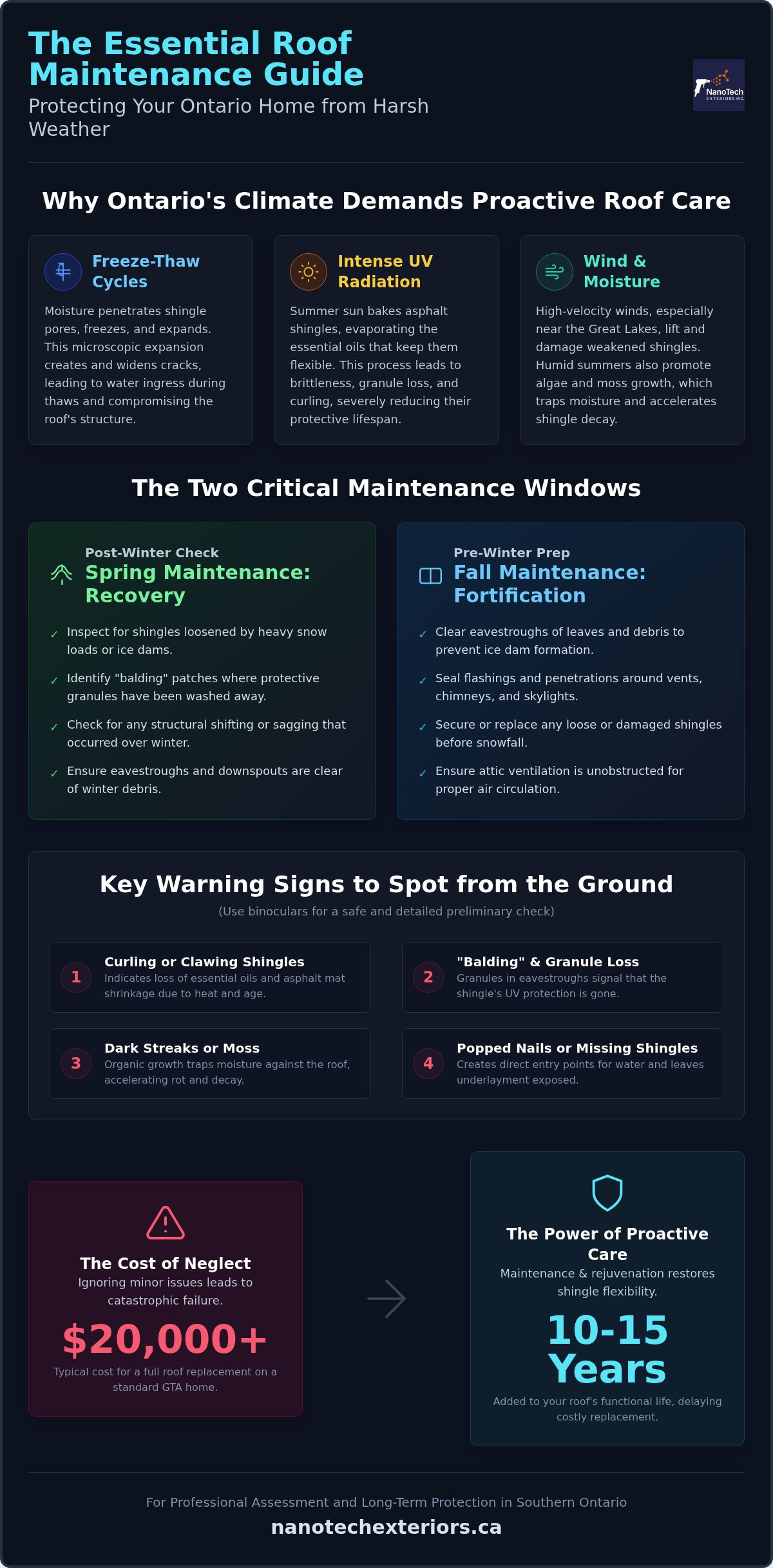
Ontario’s climate is uniquely aggressive toward residential structures. While most homeowners view their roof as a static shield, it’s actually a dynamic system constantly under environmental stress. In Southern Ontario, the primary antagonist is the “Freeze-Thaw” effect. When temperatures oscillate around the 0°C mark, moisture trapped within shingle pores expands as it turns to ice. This microscopic expansion forces cracks to widen, eventually compromising the essential functions of a roof and leading to water ingress during the next thaw.
Summer brings its own set of challenges. The high UV radiation levels in the Golden Horseshoe act as a slow-motion kiln for asphalt shingles. This radiation evaporates the volatile oils that keep shingles flexible. Without these oils, the material becomes brittle, loses its protective granules, and eventually curls. If you live near the Niagara Escarpment or Lake Ontario, high-velocity wind patterns add mechanical stress, lifting weakened shingles and exposing the underlayment to the elements. By 2026, the shift toward proactive maintenance has become a necessity for those looking to avoid the skyrocketing costs of emergency labor and material shortages.
Spring vs. Fall: The Two Critical Maintenance Windows
A reliable roof maintenance checklist Ontario residents follow must prioritize two specific seasonal windows. Spring maintenance focuses on recovery. You’re looking for shingles that were loosened by heavy snow loads or ice dams that may have backed up water under the eaves. It’s the time to ensure the winter hasn’t caused structural shifting or “balding” shingle patches where granules have washed away.
Fall maintenance is about fortification. Before the first heavy snowfall, clearing your eavestroughs is mandatory to ensure proper drainage. Clogged gutters are the primary cause of ice dams in Burlington and Oakville. Sealing penetrations around vents and chimneys ensures that your home remains airtight and dry during the relentless freeze-thaw cycles of January and February. A bi-annual check is the professional standard for preserving structural integrity in our region.
The Real Cost of Neglect in Southern Ontario
Ignoring minor wear often leads to catastrophic failure. A simple maintenance task, like sealing a flashing or clearing a downspout, costs very little but can prevent a full replacement that often reaches $20,000 for a standard GTA home. Additionally, many Canadian insurance providers now scrutinize roof age and condition before renewing policies or approving claims. Consistent upkeep ensures you stay within the “low-risk” category for coverage. Effective roof maintenance is a proven value-preservation strategy for GTA real estate that protects your equity as much as your attic.
The Essential Exterior Roof Maintenance Checklist for Ontario Homes
Maintaining the exterior of your home requires a methodical approach that prioritizes structural health over simple aesthetics. While a roof might look functional from the driveway, a detailed roof maintenance checklist Ontario homeowners can rely on focuses on the “vulnerable joints” that first succumb to our climate. Using a Government of Canada maintenance guide as a baseline for safety and standards ensures you’re following verified best practices for residential upkeep. Effective maintenance starts with identifying material fatigue before it manifests as an interior ceiling stain.
Shingle health is the primary indicator of your roof’s remaining lifespan. You should look for curling, which happens when the asphalt mat shrinks due to the depletion of essential oils, or “balding” areas where the protective granules have washed away. These granules aren’t just for colour; they provide the UV shield that prevents the sun from baking the shingle into a brittle, useless state. In Southern Ontario’s humid summers, you may also notice dark streaks of algae or moss growth. This organic matter traps moisture against the shingles, accelerating rot and physical degradation of the material.
Visual Inspection from the Ground (Safety First)
You don’t need to climb a ladder to perform a high-quality preliminary check. Using a pair of binoculars allows you to safely spot sagging rooflines or missing shingle tabs from the ground. Look specifically for “popped” nails, which appear as small bumps under the shingles; these are entry points for moisture and make the roof more susceptible to wind uplift. Debris accumulation in the valleys is another critical red flag, as trapped leaves and twigs act like a sponge, holding water against the shingles for weeks at a time.
Eavestrough and Drainage Management
Clogged gutters are a leading cause of foundation issues and winter ice dams. During your inspection, check for “granule sludge” in the eavestroughs. Finding a significant amount of sand-like sediment indicates that your shingles are reaching the end of their protective cycle. Ensure that your downspouts are clear and discharge water at least six feet away from the home’s foundation. This simple step prevents hydrostatic pressure from building up in your basement walls during heavy spring rains.
Soffit and Fascia Integrity
Your roof’s perimeter is the first line of defence against local wildlife. Raccoons and squirrels in the GTA are notorious for exploiting small gaps in the soffit or fascia to enter attics. Inspect these areas for wood rot, peeling paint, or physical damage. If you notice signs of decay in your exterior wood components, it’s often a symptom of trapped moisture behind the fascia board. Protecting these elements with Professional Exterior Wood Sealing Services can prevent structural rot and animal intrusions. If you’re unsure about the state of your shingles, a professional roof assessment can provide the technical clarity you need to plan your next move.
Beyond the Shingles: Critical Attic and Ventilation Checks
A comprehensive roof maintenance checklist Ontario homeowners use must look beneath the surface. While shingles are the visible shield, the attic serves as the lungs of your roofing system. In cities like Hamilton and Guelph, maintaining a cool attic is the absolute secret to long-term roof health. If your attic is too warm during the winter, it creates a localized freeze-thaw cycle on your roof deck. Heat escaping from your living space melts the bottom layer of snow, which then runs down to the colder eaves and refreezes into destructive ice dams. Proper insulation acts as a thermal barrier, keeping that heat where it belongs and ensuring the roof surface stays at a consistent, ambient temperature.
During the summer, a poorly ventilated attic becomes a kiln. “Hot spots” occur when air stagnates in specific sections of the roof, causing the shingles above to reach temperatures far exceeding the ambient air. This extreme heat accelerates the evaporation of the asphalt’s essential oils, leading to premature brittleness and cracking. Checking for signs of condensation or mould on the underside of the roof deck is a vital maintenance step. If the wood appears damp or shows dark spotting, your ventilation system isn’t effectively removing the moisture that naturally rises from your home.
Assessing Attic Ventilation Flow
Airflow must be continuous to be effective. When you’re in the attic, ensure that your soffit vents aren’t blocked by blown-in insulation; installing baffles is a simple fix that guarantees a clear path for fresh air. You should also inspect ridge vents and static vents for obstructions like bird nests or accumulated debris. This constant stream of air prevents shingles from “baking” during humid Ontario summers, preserving the flexibility of the asphalt mat. Without this flow, even the highest quality shingles will fail years before their intended expiry date.
Identifying Interior Warning Signs
Your attic rafters and ceiling drywall often tell a story that the exterior hides. Look for water stains or discolouration along the wood members, which indicate slow leaks or significant condensation. In the peak of a Canadian winter, check for “frost” on the tips of nail heads protruding through the roof deck. This frost is frozen interior humidity, a clear signal that your ventilation is inadequate. High attic humidity directly causes shingle curling by warping the wood deck underneath and forcing the asphalt mat to pull away from its fasteners. Addressing these interior issues is just as critical as fixing a missing shingle.
Shingle Restoration: A Modern Step in Your Maintenance Routine
Many homeowners believe the only response to an aging roof is a total tear-off and replacement. This outdated perspective ignores the scientific reality of asphalt degradation. A modern roof maintenance checklist Ontario residents use in 2026 includes roof rejuvenation as a vital middle step. This process involves applying a bio-based oil that penetrates the asphalt mat, effectively restoring the essential oils that have evaporated due to the UV stress mentioned earlier. It isn’t just a patch; it’s a structural renewal of the shingle’s chemical composition.
Nanotechnology has transformed roof restoration from a temporary fix into a disciplined maintenance task. By chemically rebonding the internal structure of the shingle, we can stop the cycle of brittleness and cracking. This approach offers a significant environmental benefit. Canada generates an estimated 1.5 million tonnes of roofing waste annually, much of which consists of asphalt shingles that still have structural potential. Restoration allows you to keep your existing roof out of Ontario landfills for up to 15 more years. For a deep dive into the process, read our Roof Rejuvenation in Burlington, Ontario guide.
Rejuvenation vs. Traditional Maintenance
Traditional maintenance is often reactive, focusing on clearing debris or patching visible holes. In contrast, rejuvenation is a spray-applied treatment that restores shingle flexibility and significantly improves granule adhesion. If your roof is between 10 and 15 years old, restoration is a logical financial choice. It typically provides the same protective benefits as a new roof for roughly 85% less than the cost of a full replacement. If you’ve noticed excessive sediment in your gutters, this Roof Shingle Granule Loss Solution provides the technical data on how restoration stabilizes your roof’s surface.
When is Your Roof a Candidate for Restoration?
Timing is everything when it comes to material science. The “sweet spot” for maintenance usually falls when a roof is between 7 and 15 years old. We use a “Flex Test” to determine candidacy. If a shingle can still bend without snapping, the internal asphalt is healthy enough to absorb the restorative oils. Rejuvenation should always be performed before major leaks occur. Once the wood deck underneath has suffered structural rot, the window for restoration has closed. If you want to see if your home qualifies for this maintenance hack, you can book a scientific assessment of your shingles today.
Professional Inspections and Long-Term Protection in Southern Ontario
While a DIY visual check is a strong first step, it often fails to detect “micro-fissures” in the shingle mat. These tiny fractures are the precursors to structural failure and are nearly impossible to see from the ground without specialized optics. A professional roof maintenance checklist Ontario specialists follow involves more than just looking for missing shingles. It requires an understanding of material science to determine if the asphalt is still chemically viable. At NanoTech Exteriors, we take a scientific approach to shingle health, moving beyond guesswork to provide data-backed recommendations for restoration or repair.
Our service area spans the Golden Horseshoe, from the historic homes in Niagara-on-the-Lake to the modern developments in Kitchener. This local expertise is vital because weather patterns vary significantly across the region. A home in Hamilton faces different wind-load stresses than one in Oakville. By creating a multi-year maintenance plan tailored to your specific property type, you can effectively manage your home’s exterior health and avoid the replacement trap that catches so many unprepared homeowners. Consistent professional oversight ensures that the UV and moisture issues discussed earlier are addressed before they compromise your attic.
What to Expect During a Professional Maintenance Visit
A professional visit is comprehensive and logical. We use a combination of drone technology and manual inspections to examine every roof facet, including hard-to-reach peaks and valleys. During this assessment, we perform minor “tune-up” repairs such as re-sealing flashings around chimneys and securing loose shingle tabs. You’ll receive a detailed report outlining your roof’s current life expectancy and a clear set of restoration options. This transparency allows you to make informed decisions based on logic rather than the fear of a sudden leak.
Your Next Steps for a Worry-Free Roof
Booking a maintenance assessment in Burlington or Hamilton is the most direct path to peace of mind. Before our team arrives, ensure that your driveway is clear and any sensitive patio furniture is moved away from the roofline. This preparation ensures we can work efficiently and safely while assessing your home. If you’re still debating whether to invest in maintenance or a full tear-off, consult our guide on How to Tell if Your Roof Needs Replacing. Taking action now secures your home against the unpredictable Ontario weather of 2026 and beyond.
Secure Your Home’s Future Against the Ontario Climate
Protecting your property from Southern Ontario’s relentless freeze-thaw cycles requires more than a reactive approach. By implementing a consistent roof maintenance checklist Ontario residents can trust, you shift from managing emergencies to preserving equity. You’ve learned that attic ventilation is as critical as shingle health and that modern rejuvenation can extend your roof’s functional life by 15 years. This proactive strategy ensures your home remains a dry, secure sanctuary while avoiding the immense costs of premature replacement.
As an authorized GoNano dealer serving Burlington, Hamilton, and Oakville for over a decade, NanoTech Exteriors specializes in logical, science-based solutions. We can help you realize up to 85% savings compared to the price of a full roof replacement by restoring your shingles before they fail. Don’t wait for the next heavy snowfall or summer heatwave to reveal a hidden weakness in your roofing system. Book Your Professional Roof Maintenance Assessment Today and gain the peace of mind that comes with expert protection. Your roof is your home’s first line of defence; keep it strong and resilient for years to come.
Frequently Asked Questions
How often should I perform roof maintenance in Ontario?
You should perform roof maintenance at least twice a year, specifically during the spring and autumn months. This bi-annual schedule allows you to address damage from winter ice dams and prepare for the next cycle of freeze-thaw stress. Following a consistent roof maintenance checklist Ontario homeowners can rely on ensures that small issues like loose flashings don’t turn into major leaks. Regular checks help maintain the structural integrity of your asphalt shingles and prevent expensive emergency repairs.
Can I do my own roof inspection safely?
You can safely conduct a preliminary inspection from the ground using a pair of high-powered binoculars. This method allows you to spot missing shingles, curling edges, or sagging rooflines without the physical risk of falling. If you identify structural issues or require a closer look, it’s best to hire a professional with “Working at Heights” certification. Experts have the safety equipment and training to navigate steep pitches that are often dangerous for the average homeowner to manage.
What are the most common signs of roof damage after an Ontario winter?
The most common signs of post-winter damage include “balding” shingles where granules have washed away and popped nails caused by the expansion of freezing water. You should also look for interior water stains on attic rafters or ceiling drywall. These signs often indicate that ice dams prevented proper drainage during the winter months. Identifying these indicators early is a key part of an effective roof maintenance checklist Ontario residents use to avoid premature roof failure.
Is roof rejuvenation better than just repairing a few shingles?
Roof rejuvenation is often superior to localized repairs because it treats the entire roof surface rather than just fixing a single symptom. While a repair might stop a specific leak, rejuvenation restores the essential oils to all your shingles, preventing future brittleness across the whole structure. This modern maintenance step can add up to 15 years of life to your roof for a fraction of the cost of a full replacement, making it a smarter long-term investment.
How long does a typical roof maintenance check take?
A typical professional roof maintenance assessment takes between 45 minutes and two hours, depending on the size and complexity of your home. During this time, a technician will evaluate shingle flexibility, check attic ventilation, and inspect all penetration points like vents and chimneys. This efficient process provides you with a detailed report on your roof’s current health. It’s a small time investment that can save you weeks of stress and significant financial expense in the future.
Will maintaining my roof help with my home insurance claim?
Maintaining your roof and keeping detailed records of your upkeep can significantly help during a home insurance claim. Many Canadian insurers look for evidence of regular maintenance to ensure that a leak wasn’t caused by simple neglect. If you can prove that you followed a professional maintenance schedule, you’re in a much stronger position to have your claim approved. It demonstrates that the damage was likely caused by a sudden, covered peril rather than gradual decay.
What is the best month to clean eavestroughs in Southern Ontario?
In Southern Ontario, the best time to clean your eavestroughs is in late November or early December, once the majority of the leaves have fallen. Clearing them at this time ensures that water can flow freely away from your home during the early winter thaws. If your gutters remain clogged when the first heavy freeze hits, you’re at a much higher risk of developing ice dams. A secondary cleaning in late spring is also recommended.
Does a roof maintenance checklist differ for flat roofs?
A maintenance checklist for flat roofs differs significantly because these systems rely on a waterproof membrane rather than overlapping shingles. You must check for “ponding” water that doesn’t drain within 48 hours, as well as blisters or cracks in the membrane surface. While residential asphalt roofs focus on drainage and shingle flexibility, flat roofs require a closer look at the integrity of the seams and the condition of the scuppers. Regular maintenance is vital for preventing structural rot.