Did you know that a single roof replacement in Ontario sends roughly 1.5 tonnes of asphalt waste to our local landfills, where it can take up to 400 years to decompose? It is a staggering environmental cost that many homeowners feel forced to accept when their shingles begin to fail. You shouldn’t have to choose between a massive financial blow and the guilt of contributing to Ontario’s shrinking landfill capacity. If you feel the pressure of rising construction costs in 2026, you aren’t alone in looking for a smarter, more responsible alternative.
This report reveals how sustainable roof restoration Ontario residents are now adopting can extend the life of existing shingles by 10 years or more. We will show you how nanotechnology and advanced restoration strategies provide a protective shield against the elements while helping to lower your home energy costs. You will learn the critical difference between high-maintenance green roofs and efficient restoration, giving you a clear, logical path to a durable home without the stress of a full replacement.
Key Takeaways
- Realize why 2026 trends favour long-term material care over disposable construction. Shift your focus toward circular economy principles to better protect your property.
- Discover how sustainable roof restoration Ontario services utilize nanotechnology at a molecular level. This process restores essential oils and flexibility to aging shingles.
- Uncover the reality of asphalt waste in Canada. Learn how to keep tonnes of construction debris out of local landfills in your community through smarter preservation.
- Evaluate the cost-benefit ratio of restoration. Compare the carbon footprint of revitalizing existing materials against traditional full replacements or plant-based green roofs.
- Identify the specific steps to begin your restoration journey. Start with a professional assessment tailored to Southern Ontario’s unique weather patterns.
The Evolution of Sustainable Roof Restoration in Ontario
The housing market in our province has reached a critical turning point. In 2026, we are seeing a definitive shift away from the “disposable” mindset that has dominated the construction industry for decades. Sustainable roof restoration Ontario homeowners are now adopting is defined as the strategic process of revitalizing existing materials to avoid premature replacement. It is an informed choice that prioritizes long-term material care over the waste-heavy cycle of tearing off and starting over. By choosing to restore rather than replace, you are participating in a modern movement that values efficiency and environmental responsibility.
Our local climate is particularly harsh on traditional roofing systems. Southern Ontario cities like Hamilton and Guelph experience high humidity and aggressive freeze-thaw cycles that act as a catalyst for shingle degradation. When moisture enters small cracks and expands during a typical Ontario winter, it compromises the shingle’s structural integrity from the inside out. Adopting a sustainable roof restoration Ontario strategy ensures these vulnerabilities are addressed before they lead to total failure. Proactive maintenance significantly reduces your home’s total lifecycle carbon footprint while ensuring your property remains fortified against the elements.
Why Traditional Roofing is an Environmental Challenge
Asphalt shingles are essentially petroleum-based products. Their manufacturing process is energy-intensive, and the logistics of transporting tonnes of heavy material across the GTA further increases their environmental impact. Most residents find that the reality of how long do asphalt shingles last is often disappointing compared to the bold marketing claims of the past. While some homeowners explore complex options like Green Roofs Explained, these systems are frequently impractical for the average residential home due to weight constraints and structural requirements. The environmental cost of a full replacement includes both the carbon emitted during production and the staggering volume of waste sent to our local landfills.
The Shift from Replacement to Rejuvenation
Replacing a roof is a massive, disruptive undertaking. It typically involves a three-day tear-off process that fills your driveway with bins and your lawn with debris. Rejuvenation offers a sensible alternative. It is a clean, two-hour spray application that works at a molecular level to renew the surface. This approach represents a core pillar of 2026 sustainability by focusing on material life extension rather than total replacement. Roof rejuvenation is a nanotechnology-driven process that restores essential oils to shingles, returning the flexibility they need to survive another decade of volatile weather. It’s a faster, cleaner, and more logical way to protect your investment.
Landfill Diversion: The Circular Economy of Your Roof
The staggering reality of modern construction is that asphalt shingles account for roughly 8% of total building-related waste in Canada. Every time a homeowner chooses a full tear-off, they contribute to a massive environmental burden that lingers for centuries. In 2026, the focus has shifted toward the “circular economy.” This concept is simple: we keep materials in use for their maximum possible lifespan rather than treating them as disposable assets. By choosing sustainable roof restoration Ontario residents can actively divert tonnes of debris from local landfills while maintaining the structural integrity of their homes.
Quantifying the Waste: Tear-off vs. Restoration
A standard bungalow roof replacement in Southern Ontario creates approximately 2 to 3 tonnes of waste. Most of this material ends up in landfills because Southern Ontario has limited specialized recycling facilities for asphalt shingles. This creates a significant logistical and environmental challenge for our municipalities. If you want to understand the full financial and environmental impact of these choices, you can learn how to save money on roof replacement by choosing life-extension over total removal. Restoration eliminates the need for heavy bins and keeps your driveway clear of debris.
Protecting Local Ecosystems in Southern Ontario
Sustainable practices go beyond just waste reduction. Preventing roof leaks is essential for protecting your home’s insulation, which in turn maintains high energy efficiency and reduces heating costs. We prioritize using non-toxic, eco-friendly treatments that are safe for your gardens, pets, and local wildlife. For those interested in broader municipal efforts, Toronto’s Eco-Roof Incentive Program provides an excellent example of how our region is incentivizing smarter roofing choices. A comprehensive roof inspection in Burlington is the first step in determining if your shingles can be saved. If your roof is a candidate, roof rejuvenation offers a pragmatic path to long-term protection without the environmental guilt of a tear-off.
Nanotechnology: The Science of Sustainable Shingle Care
Traditional roofing relies on bulk material replacement, but modern science offers a more precise alternative. GoNano nanotechnology operates at a molecular level to modify the physical properties of your existing shingles. Instead of merely sitting on the surface, these nanoparticles penetrate deep into the asphalt matrix to seal micro-fissures and reinforce the internal structure. This level of sustainable roof restoration Ontario homeowners now have access to represents a significant leap over older, surface-level coatings. It is a sophisticated method of renewal that addresses the root cause of shingle failure rather than just masking the symptoms.
The primary reason shingles fail is the loss of essential oils, which leads to a loss of flexibility. As these oils evaporate, shingles become stiff and prone to cracking during Ontario’s volatile temperature swings. GoNano chemistry works by replacing these lost oils, effectively “re-plasticizing” the asphalt. This restoration of flexibility allows the roof to expand and contract without sustaining damage. Additionally, the treatment provides advanced UV protection by reflecting the harsh summer sun. This prevents thermal shock, a common issue in Southern Ontario where roof temperatures can fluctuate by thirty degrees in a single day. By stopping moisture penetration, you effectively eliminate the conditions that lead to brittle shingles restoration needs later on.
How Nanoparticles Extend Roof Life by 15 Years
The application creates a powerful shielding effect that prevents granule loss, which is the “armour” of your shingle. When granules stay in place, the underlying asphalt remains protected from the elements. Nanotechnology treatments create a hydrophobic surface that sheds water and prevents algae growth in Ontario’s humid summers. Unlike traditional acrylic “roof paints” that eventually crack, peel, and trap moisture, nanotechnology becomes a permanent part of the shingle. It does not wear away or lose its efficacy over time, providing a consistent barrier against rain, sleet, and snow.
The Environmental Profile of GoNano Treatments
Choosing a nanotechnology-driven approach is a win for the environment. These modern spray treatments are low-VOC (Volatile Organic Compounds), meaning they don’t release harmful chemicals into the air around your home. The efficiency of this process is remarkable; one single treatment can prevent the need for two future roof replacements over the next few decades. This aligns perfectly with the goals of provincial sustainability initiatives, such as the Eco-Roof Incentive Program, which encourages homeowners to adopt technologies that improve building longevity. As an authorized dealer for GoNano products, NanoTech Exteriors ensures that every application meets rigorous scientific standards for performance and safety.
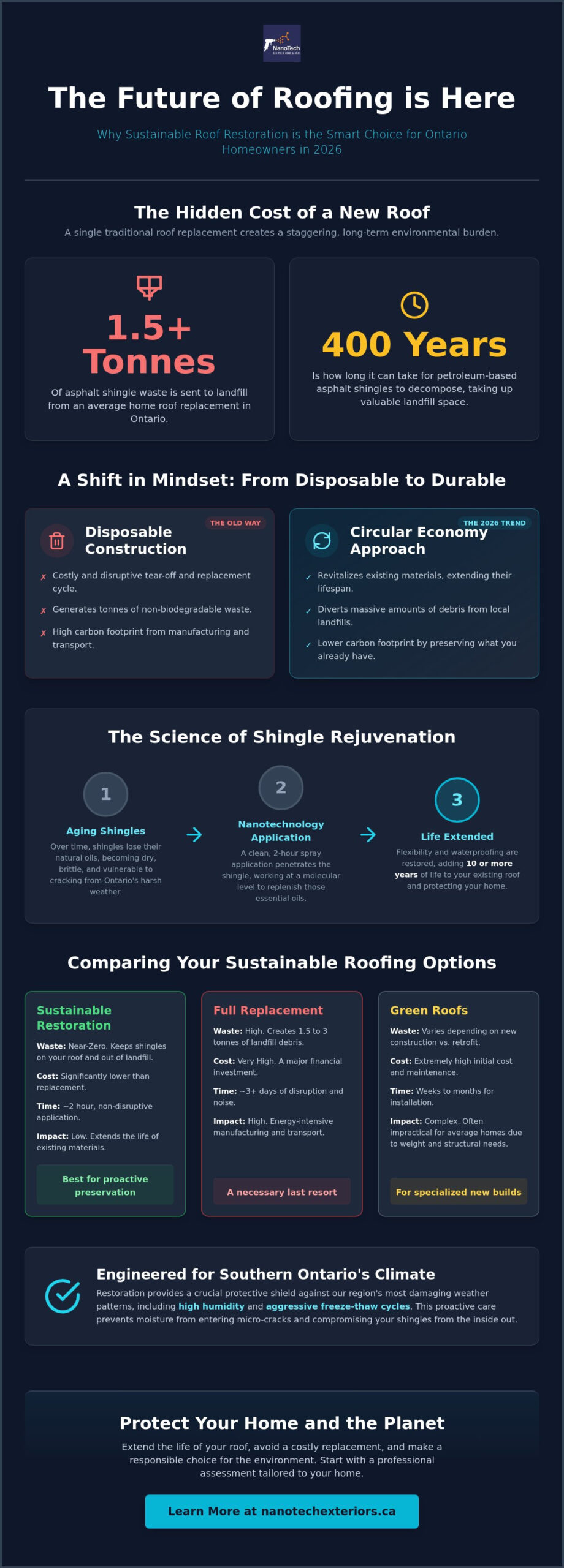
Comparing Sustainable Options: Restoration vs. Replacement vs. Green Roofs
Choosing a “green” roof in 2026 often leads to confusion between biological solutions and material preservation. While vegetated systems offer undeniable environmental benefits, they are structurally demanding. Most Ontario residential frames simply aren’t built to support the saturated weight of a soil-based system without expensive, invasive reinforcements. Sustainable roof restoration Ontario offers a more pragmatic middle ground for the average homeowner. It provides the environmental benefits of material diversion while maintaining an ROI that makes sense for a household budget. Rejuvenation typically costs about 15% of a full replacement, delivering 85% cost savings that you can redirect into other home efficiency upgrades.
The decision framework for Ontario homeowners should balance structural capacity, environmental impact, and long-term value. We’ve broken down the key differences below:
- Restoration: Best for shingles that are 7 to 15 years old and structurally sound. It offers the lowest carbon footprint and highest ROI.
- Replacement: Essential when the roof deck is compromised or shingles have reached total failure. It’s an opportunity to upgrade to higher-quality, durable materials.
- Green Roofs: Ideal for flat-roof commercial buildings or custom-built eco-homes designed for heavy loads. They provide excellent insulation but require significant maintenance.
Carbon Footprint Comparison
Embodied carbon refers to the total emissions generated from extracting, manufacturing, and transporting a product. New asphalt shingles carry a high carbon debt due to their heavy petroleum content and the energy required for manufacturing and GTA-wide logistics. In contrast, a restoration spray has a negligible footprint. We must also consider the “hidden” carbon costs of heavy waste hauling and disposal fees at Ontario depots. Implementing a roof shingle granule loss solution allows you to bypass these emissions entirely by keeping your current materials in peak condition for another decade.
When Replacement is the Only Sustainable Choice
Restoration is a powerful tool for life extension, but it isn’t a cure-all for structural neglect. If your roof deck shows signs of sagging, persistent internal leaks, or widespread rot, restoration is no longer a viable or safe path. In these specific cases, the most sustainable choice is a high-quality replacement that prevents further damage to your home’s envelope. Our approach to residential roofing in Burlington focuses on using durable, impact-resistant materials that reduce the frequency of future replacements. A roof that protects your insulation and interior for thirty years is ultimately more eco-friendly than a cheap, fifteen-year alternative that fails prematurely. If you’re unsure which path is right for your home, request a professional roof rejuvenation assessment to determine if your shingles are candidates for restoration.
Implementing Your Sustainable Roof Strategy in Ontario
Smart property management also involves looking beyond just the shingles. Many of our clients integrate their roofing strategy with exterior wood sealing services to protect decks, fences, and siding simultaneously. Southern Ontario’s climate doesn’t just attack your roof; it wears down every exposed surface through UV radiation and moisture cycles. By coordinating these maintenance tasks, you simplify your home care schedule and ensure every component of your exterior is fortified against the elements. It’s a pragmatic way to organize your home’s upkeep while maximizing the lifespan of all your building materials.
The Assessment: Is Your Roof a Candidate for Rejuvenation?
Not every roof is a candidate for restoration, and we’re honest about that. A professional assessment focuses on three critical pillars: shingle age, granule condition, and structural integrity. If your shingles are between 7 and 20 years old and still have their structural backing, they are likely ideal for rejuvenation. Sometimes, a minor roof repair in Hamilton or Guelph is necessary to fix localized damage before the full restoration spray is applied. Homeowners in the Niagara region facing similar localized damage concerns can benefit from reviewing a dedicated roof repair Niagara Falls guide to understand how climate-specific factors affect their restoration options. We encourage you to review our guide on how to tell if your roof needs replacing to self-qualify your home’s needs before booking a specialist. This transparency helps you make an informed decision without feeling pressured into a service you don’t need.
The NanoTech Advantage: Expert Guide to Restoration
NanoTech Exteriors has established itself as the leader in sustainable roof restoration Ontario from Kitchener to Niagara by sticking to a logic-driven, science-backed process. We don’t use high-pressure sales tactics because the results of nanotechnology speak for themselves. Our goal is to provide you with the peace of mind that comes from a 15-year life extension and a home that is better protected against thermal shock and moisture. We act as your expert guide, helping you navigate the shift toward a more efficient, waste-free roofing solution. Stop the cycle of premature replacements and start protecting your investment with a smarter alternative. Book your sustainable roof assessment with NanoTech Exteriors today.
Securing the Future of Your Ontario Home
The 2026 trend is clear: preservation is the new standard for the informed homeowner. By choosing sustainable roof restoration Ontario residents can avoid the immense waste of a tear-off while securing an up to 15-year life extension for their existing shingles. We’ve explored how molecular nanotechnology creates a durable shield against the harsh Southern Ontario climate, providing a logical and cost-effective alternative to traditional replacement.
As an authorized GoNano dealer, NanoTech Exteriors is proud to serve communities across Burlington, Hamilton, Oakville, and beyond. We provide the technical expertise and local experience needed to protect your property without unnecessary expense. It’s time to move beyond the “disposable” construction mindset and embrace a smarter, more efficient way to maintain your home’s integrity. This approach gives you the peace of mind that your roof is fortified for the long term.
Ready to take the next step? Get Your Free Sustainable Roof Assessment today to see if your shingles are candidates for rejuvenation. We look forward to helping you fortify your home and keep Ontario’s landfills clear for generations to come.
Frequently Asked Questions
Is roof restoration actually eco-friendly?
Yes, roof restoration is a highly effective eco-friendly practice because it directly prevents asphalt shingles from entering our local landfills. Each 1,000 square feet of roofing replaced creates approximately 1.5 tonnes of waste that takes up to 400 years to decompose. By choosing sustainable roof restoration Ontario homeowners can keep these materials in use for their full functional lifespan. This reduces the carbon footprint associated with manufacturing and transporting new petroleum-based products.
How long does a sustainable roof restoration last in Ontario weather?
A professionally applied nanotechnology treatment typically extends the life of a shingle roof by up to 15 years. This longevity is specifically designed to withstand Southern Ontario’s volatile weather, including extreme humidity and the expansion caused by freeze-thaw cycles. The treatment creates a molecular bond that doesn’t peel or wear away like traditional coatings. It ensures your shingles remain flexible and protected against UV damage for the long term.
Does the City of Toronto or other Ontario cities offer grants for roof restoration?
Yes, certain municipalities provide incentives for sustainable roofing choices. The City of Toronto’s Eco-Roof Incentive Program offers $5 per square metre for cool roofs with new membranes. While many grants focus on vegetated green roofs or heritage restorations, homeowners should verify specific eligibility with their local municipal office. These programs aim to reduce the “urban heat island” effect and improve overall energy efficiency across Ontario cities.
Can nanotechnology treatments be applied to any type of roof?
Nanotechnology treatments are most effective on asphalt shingles, wood shakes, and flat roofing systems. The chemistry is designed to penetrate porous materials to restore internal flexibility and seal the surface. However, restoration is not a solution for roofs with significant structural rot or decks that have already failed. A professional assessment is required to confirm that your specific roof material and its current condition are suitable for a rejuvenation application.
Are the chemicals used in GoNano treatments safe for my pets and garden?
Yes, GoNano treatments are bio-based and formulated to be safe for your home’s surrounding environment. The application is a low-VOC process, meaning it doesn’t release the harsh chemical fumes associated with traditional industrial sealants. This makes it a responsible choice for properties with active gardens, pets, or local wildlife. You don’t have to worry about toxic runoff affecting your soil or the air quality around your family during the application.
How much can I save by choosing restoration over a full roof replacement?
Homeowners typically save a substantial amount by choosing restoration, often paying only a fraction of the cost of a full replacement. While a complete tear-off and install can be a massive financial burden, rejuvenation provides a similar life extension for a much lower investment. This allows you to redirect your budget toward other essential home improvements. It is a pragmatic way to secure your home without the high price tag of new construction materials.
What happens to the shingles if I eventually need a full replacement later?
Shingles treated with nanotechnology are handled exactly like standard shingles if you eventually decide to replace the roof years down the road. The treatment integrates into the asphalt matrix rather than adding a thick, inseparable layer of plastic or metal. This ensures that the materials don’t require special disposal procedures beyond standard roofing waste protocols. Your future options remain flexible while you enjoy the benefits of sustainable roof restoration Ontario services in the meantime.
Is sustainable restoration a better option than installing solar panels?
These are not mutually exclusive, but restoration should always come first. It’s a mistake to install expensive solar panels on a roof that is near the end of its life. Restoring your shingles first ensures the structure can support solar hardware for the next 15 years without needing a disruptive tear-off. This sequence protects your solar investment and ensures your home’s envelope remains watertight while you generate clean energy. To prepare your home for the long term, following a proactive checklist to protect your roof from weather damage is an essential first step before committing to any major upgrade.